





The completion of an extensive spatial planning reform covering three critical sectors of the Greek economy is being marked by the new Special Spatial Planning Frameworks for Industry and the Supply Chain, Renewable Energy Sources, and Tourism. The three Frameworks seek to establish a unified and coherent approach to the use of land and space, with clear rules for investment and stronger safeguards for the environment and local communities.
In a statement to the Athens-Macedonian News Agency (AMNA), Minister of Environment and Energy Stavros Papastavrou emphasized: “With the three Special Spatial Planning Frameworks, for Industry and the Supply Chain, Renewable Energy Sources, and Tourism, we are completing a major reform that Greece has needed for years. We are organizing the use of space and leaving behind the fragmentation and inertia of decades. We are establishing clear rules where there was uncertainty, creating legal certainty for investments, and strengthening the protection of the environment and local communities. Industry, energy, and tourism are being integrated into a common framework for the country’s sustainable development. Three Special Spatial Planning Frameworks, one unified strategy for development with planning and rules. For a stronger and more sustainable Greece, the Greece of the coming decades. I would like to warmly thank everyone who worked tirelessly to bring us to the completion of this important effort today: the executives and employees of the Ministry of Environment and Energy, as well as those of the Ministries of Development and Tourism; my colleagues in the government; Minister of Development Takis Theodorikakos and Minister of Tourism Olga Kefalogianni; Deputy Ministers of Environment and Energy Nikos Tsafos and Marilena Soukoulis; as well as the relevant secretaries-general. And, of course, with particular emotion and respect, we remember the late Nikos Tagaras, who made a substantial contribution to this major effort.”
Changing the Map
The Ministry of Environment and Energy (MEEN) aims to change the “map” on which investment will take place in Greece over the coming decades. More specifically, it points out that the new Special Spatial Planning Frameworks for Industry and the Supply Chain, Renewable Energy Sources, and Tourism are not simply another set of administrative regulations. They constitute a critical reform of the country’s productive model, as they seek to address a longstanding problem: where can what be developed, under what conditions, and at what cost to the economy and the environment?
Industry: From Scattered Development to Organized Production
For the MEEN, the new Special Spatial Planning Framework for Industry and the Supply Chain is perhaps the clearest example of this change in philosophy. The goal is not only to determine where new industries will be located, but to create a spatial environment that strengthens productivity, competitiveness, and the resilience of the economy.
The direction of the new framework provides for organized Business Parks instead of scattered facilities, the upgrading of existing industrial hubs, and the rehabilitation of informal clusters. At the same time, the spatial dimension of the supply chain is strengthened, and priority is given to investments connected with critical and strategic raw materials.
For businesses, the main objective is legal certainty and predictability. For the economy, the aim is greater productivity and stronger value chains.
Renewable Energy Sources: The Energy Transition Gets Spatial Rules
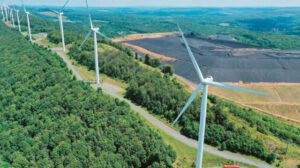
The new Special Spatial Planning Framework for Renewable Energy Sources seeks to address one of the most difficult equations of the coming period: how to increase investment in clean energy without creating new pressures on the country’s natural and cultural capital.
According to the objectives set by the ministry, clear exclusion zones and stricter siting criteria are established for photovoltaic and wind projects, with protection for sensitive areas, monuments, wetlands, and landscapes of particular natural beauty. Additional rules are provided for the islands, including specific landscape assessments for wind projects.
As emphasized, the importance of the framework for the economy is twofold: on the one hand, it creates greater clarity for renewable-energy investors and, on the other, seeks to reduce land-use conflicts that can delay or complicate the energy transition.
Tourism: Investments with Different Rules for Each Destination
In tourism, the reform shifts the emphasis from a horizontal approach to categorizing destinations according to the intensity of tourism activity. Areas are classified into Zones A–E and islands into Groups I–III, with the classification affecting the terms of new investments, the minimum requirements for plots of land, accommodation capacity, and environmental protection requirements.
According to the MEEN, this is a critical change for a sector that is a major pillar of the Greek economy. The new framework seeks to direct investment to areas where space and infrastructure are available, reduce pressure on saturated destinations, and strengthen the diversification of the tourism product.
“The Big Challenge: Turning Spatial Planning into an Investment Tool”
The substance of the reform ultimately lies beyond individual prohibitions and building requirements. According to official sources, for the first time the three main productive sectors — industry, energy, and tourism — are being addressed through a more coherent spatial planning system.
This could transform spatial planning from a source of uncertainty into a tool for attracting investment. The challenge now is implementation: fast approvals, functional Business Parks, consistent application of the rules, and the rapid completion of urban and spatial planning.
Ask me anything
Explore related questions




