





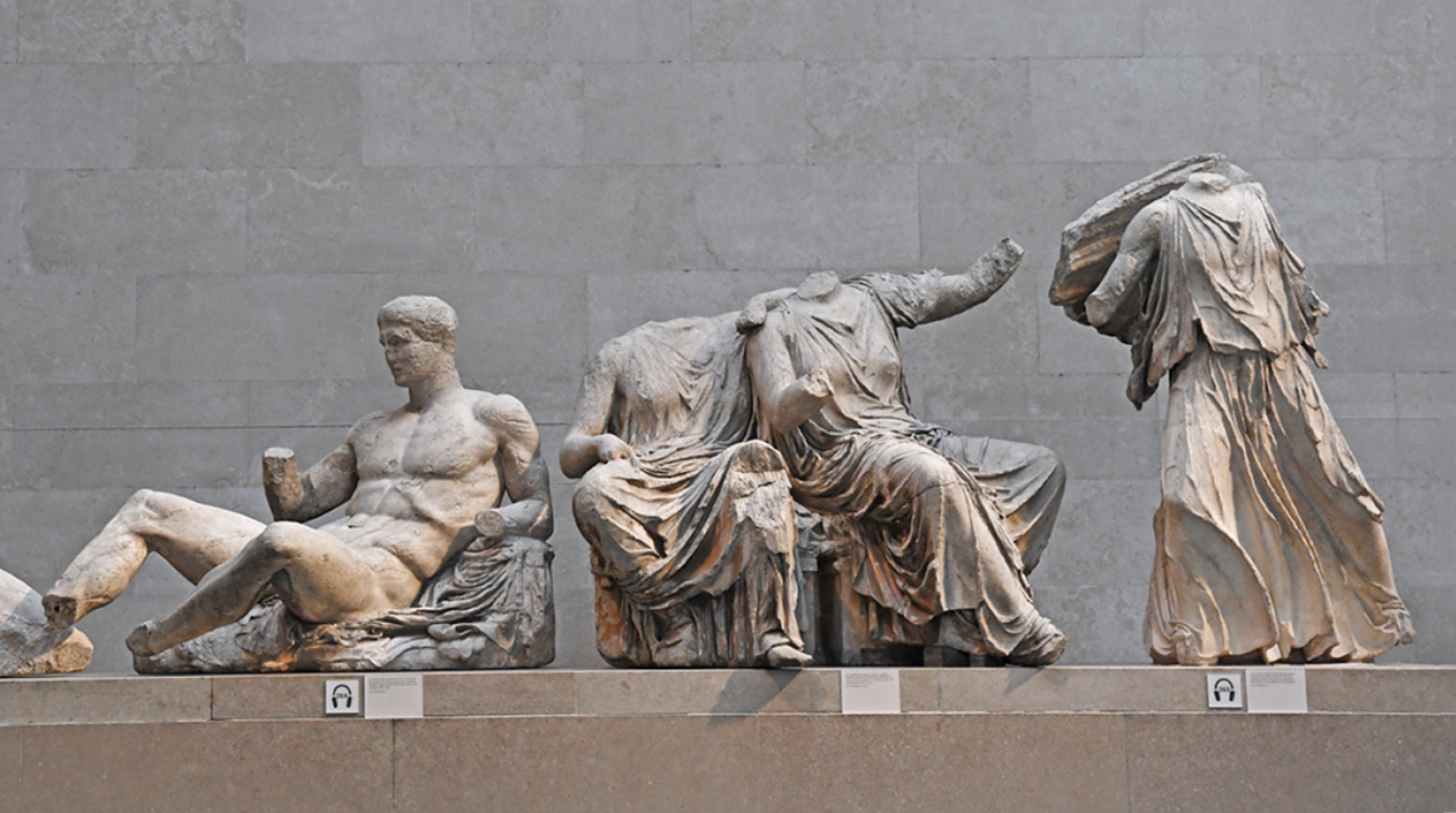
British Prime Minister Andy Burnham is now distancing himself from his previous, unequivocal statements in favor of returning the Parthenon Sculptures to Greece, referring the matter to the British Museum.
In 2023, Burnham said that the Sculptures should be returned to Greece “without conditions,” while as early as 2002 he had supported a legislative initiative that would have facilitated their transfer. However, speaking to the Financial Times this week, he appeared considerably more cautious.
“Ultimately, it is a matter for the British Museum, isn’t it?” he said, adding that “legally, that is where the issue lies.”
At the same time, however, he voiced support for using culture as a tool of international diplomacy, describing himself as a strong advocate of British “cultural diplomacy.”
His current position marks a clear departure from what Burnham had argued before becoming prime minister.
In 2023, when he was mayor of Manchester, he was asked directly whether the chairman of the British Museum, George Osborne, should return the Sculptures.
“Yes, George Osborne should return the Elgin Marbles,” he replied.
Shortly afterward, he went even further, writing on social media: “Send them back, without conditions. And let’s use culture to change the way the world sees Britain.”
His support for the return of the Sculptures, moreover, dates back even further. In 2002, just one year after being elected to the House of Commons, he co-sponsored an unsuccessful legislative initiative aimed at facilitating their transfer to Greece.
Burnham’s rise to the premiership had raised expectations in Athens that a politician who had taken such a categorical position in favor of their return could help resolve the long-running dispute.
As the Financial Times points out, the Greek side had closely followed his previous interventions. His latest statement, however, suggests that as prime minister he is not, at least for the time being, prepared to assume direct political responsibility for resolving the issue.
A British Museum official notably commented that there is a difference between what someone may say as a member of Parliament and what they advocate once they become prime minister, suggesting that the government does not appear willing to spend political capital on the issue.
Ask me anything
Explore related questions




