





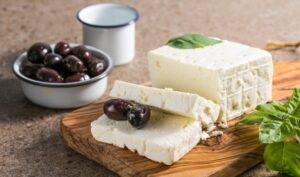
The two animal diseases and the decline in livestock numbers, and therefore in sheep’s milk production, combined with huge demand, make for an explosive combination that is now visibly threatening one of Greece’s leading agri-food products: feta.
The situation was described quite vividly by Michalis Sarantis, president of the National Interprofessional Organisation for Feta, at the annual conference of PSE, where he revealed, among other things, that feta stocks may not last until the end of 2026.
The decline in sheep’s milk is estimated at around 80,000 tonnes, creating a shortfall of around 20,000 tonnes for feta. Despite this shortage, demand from foreign markets continues to rise — with exports up by around 7% this year — putting even greater pressure on stocks.
At the same time, according to Sarantis, the price increases that have already occurred and will continue due to the current situation are pushing a significant section of consumers towards the alternative of “white cheeses”.
Based on his estimates, it will take at least two years for sheep’s milk production to return to pre-sheep pox levels, and even then only with considerable effort. It is therefore not considered unlikely that the price of feta could climb to €15–16 per kilo, from the €12–13 range it is currently in.
Sarantis: I will ask ELGO for more than €3 million a year to promote feta
Referring to the greatest risk to production, he said that it was the raw material.
“All my colleagues have invested a great deal of money and we are at a good level. The goal is to develop the livestock population and increase milk production. From my experience, however much feta we produce, it will be sold, provided prices are also kept in check. We need to ensure biosecurity standards at the farms and have knowledgeable livestock farmers and professionals with a vision.”
Beyond the efforts of the private sector, according to Sarantis, the state and the government must do more. “Public-sector agronomists need to leave their offices and go out into the countryside to help raise production levels,” he said, citing a characteristic example.
He also made particular reference to the product’s recognition. “Feta and meat are two sectors that provide money to ELGO every year; there is a reserve of around €70 million at the Bank of Greece. Now that I have become president of EDOF, I will ask for more than €3 million a year from our own money, so that we can make feta even better known and give it added value. So that consumers know that feta is one thing and white cheese is another.”
The example of the Greek salad
SEVGAP president Christos Apostolopoulos also offered his perspective on the discussion, citing the example of the Greek salad, which for many years was required by law to contain 50 grams of feta. This was abolished after the crisis; however, he said, no government to date has sat down to change the legislation.
“I am not mentioning this because we have feta to spare, but because the tourist is being exposed to white cheese,” Mr Apostolopoulos added.
Ask me anything
Explore related questions




