





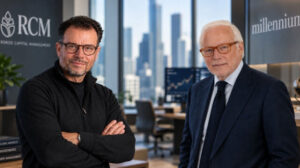
Greece is moving from attracting wealthy tax residents to establishing international investment firms in the country. The big news of recent days is not that Chris Rokos, one of the world’s most powerful fund managers, has chosen Greece as his tax residence, taking advantage of the Greek Non-Dom regime for high-net-worth investors. What matters is that, alongside its founder, Rokos Capital Management is planning to establish a presence in Greece, with an office, employees and professional services.
The gateway for hedge funds to enter Greece was first opened in late September by Millennium Capital Management, one of the world’s leading hedge funds, which manages $100 billion in investment capital. The company announced its decision to open an office in Athens following meetings between its management and the prime minister and his economic team.
And this is only the beginning. Rokos Capital and Millennium are paving the way for others: according to reports, representatives of at least eight other international investment firms have recently approached the Ministry of National Economy and Finance with the same objective.
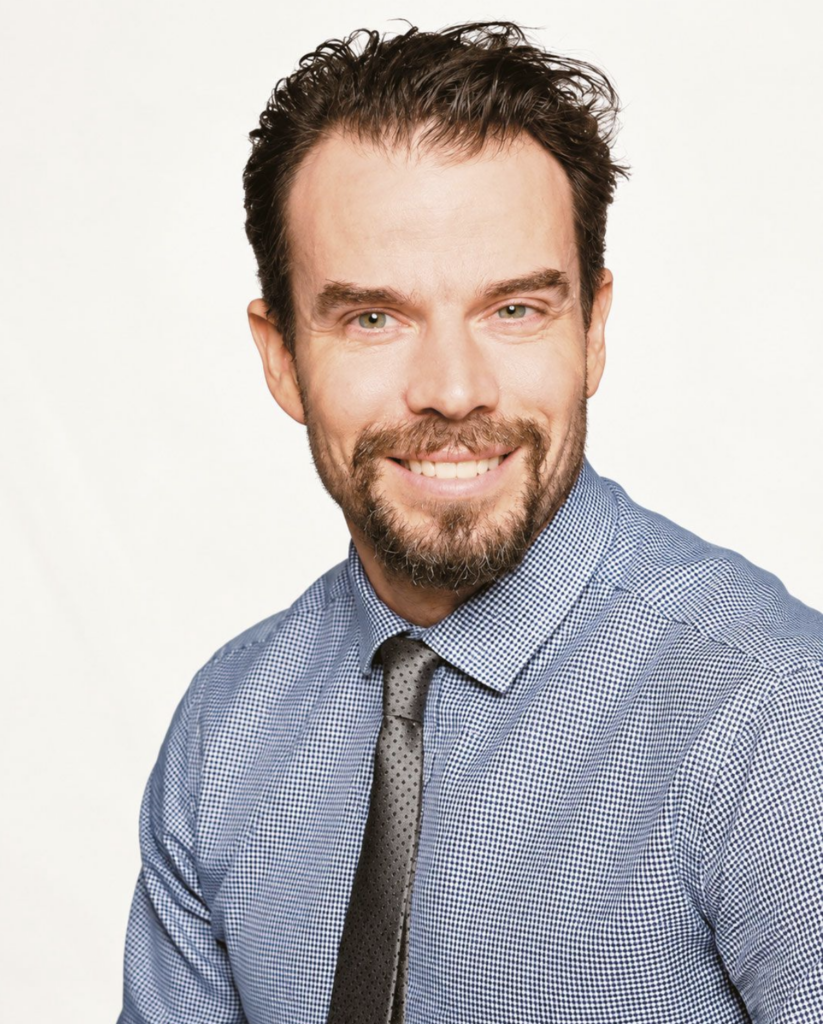
Chris Rokos of Rokos Capital Management
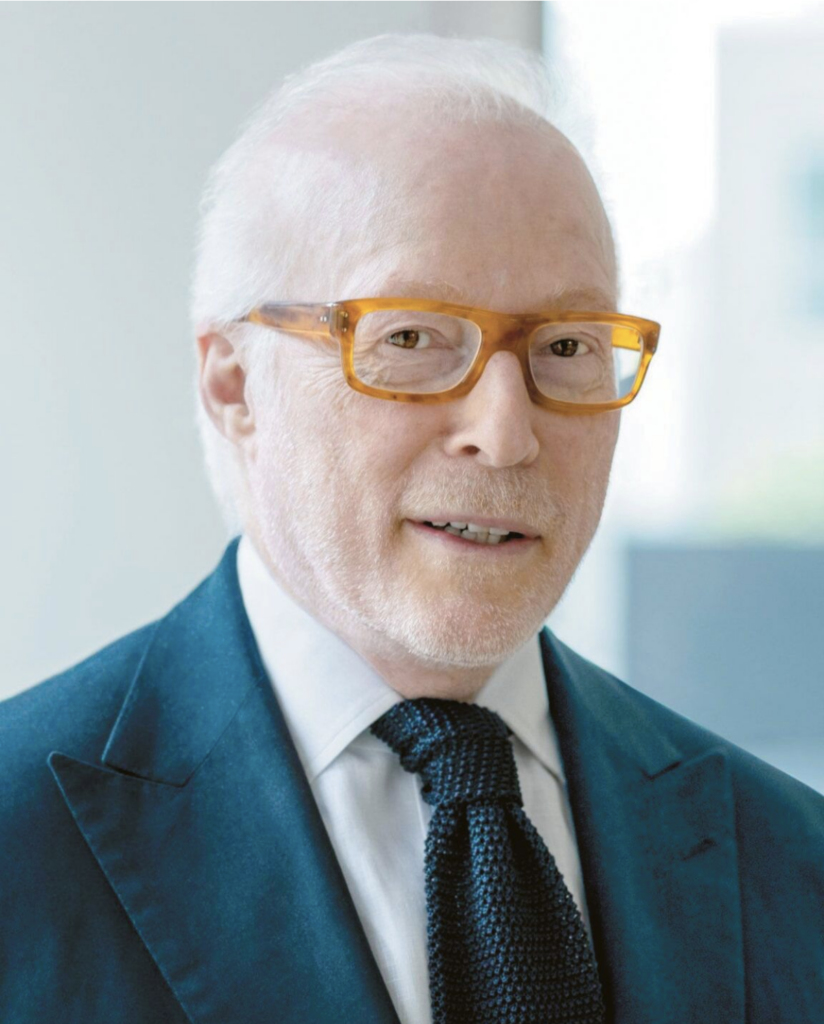
Izzy Englander of Millennium Management
At this stage, discussions are exploratory. “They are coming from Dubai and Abu Dhabi, from Switzerland and London, and also from New York,” says a source who is in contact with those interested. The starting point and common denominator for all of them is the new framework for establishing alternative investment firms, introduced by the Ministry of National Economy in June.
The goal now is to make Greece “part of the next generation of European investment hubs”. Kyriakos Pierrakakis puts it more simply: “We do not want Greece to be merely a place where capital is consumed. We want it to become a place where capital is managed, decisions are made and economic value is generated.”
The City of Athens
The plan to attract hedge funds to Greece represents an evolution of the Non-Dom regime. Having first sought to attract wealthy individuals transferring their tax residence from abroad, the government’s economic team is now moving towards attracting and establishing investment firms that manage portfolios worth trillions.
The government’s strategy is not aimed at securing a spectacular announcement by major investment firms declaring their confidence in Greece. It has a more ambitious objective: “If around 10 major international players establish themselves in Greece by 2028, their number could reach 100 within five to six years,” allowing, according to officials, a financial ecosystem to begin developing around them in Greece.
Everyone benefits
Companies that transfer genuine business activity to Greece will rent offices, employ staff and use Greek professional services. Their presence will create demand for financial analysts, technology specialists, traders, lawyers, accountants, tax advisers, consultants, and administrative and technical support staff. Employees hired in Greece will pay tax in the country on their earnings, and the corresponding social security contributions will be paid.
The benefits for Greece will continue through purchases of property and services—including office space, technical works, equipment, legal and accounting services, banking and insurance services, custody, auditing and technology—and will extend to the recruitment of Greeks, the return of professionals from abroad and the transfer of expertise.
The big prize: the money makers
Most importantly, however, investment decisions will be made here. Until now, in the calculations and decision-making frameworks of traders and portfolio managers, Greece has always seemed a long way from London, New York and other international financial centres.
But if fund managers who spend their days looking for opportunities in stocks, bonds, technology, shipping, real estate, infrastructure and start-ups are based in Greece, the Greek economy will be much closer to their radar. A technological idea could attract investment not because it was presented at an international exhibition or a roadshow in London or New York, but because of a chance encounter—or simply a walk around the city.
Advertisement
How would this happen? These companies are opening offices so that their executives can come and work in Greece, managing billions of euros in investments across Europe and the rest of the world from their computer screens.
Although they are not initially targeting Greece as an investment destination, that could change over the long term, as they live in the country and become more familiar with the domestic market. Through chance encounters or simple observation in the areas where they work and live, the schools their children attend, or the places they visit, they will meet people involved in the Greek economy in their everyday lives. This will bring investment and development opportunities into view that they might never have discovered while working in London or New York.
A fund manager who is constantly looking for investments—almost as instinctively as breathing—might, for example, recognise the value of a productive idea that nobody is backing, envision a different use for an abandoned factory or hotel, or identify new prospects for a company or technological innovation that could make a difference.
For professionals in this field, the distance between conceiving an idea and taking the risk of financing it—or recommending it to a specialist investor within their client network—is short. Even if they do not invest themselves, they can refer a proposal to an investor who is their client, a business associate or another office within their group specialising in investments in that particular sector.
Advertisement
They are looking for young talent at universities before even setting up
From the opening of their offices to the first investment, the benefits for the broader ecosystem these companies create in Greece will be tangible: new jobs for everyone.
Indeed, even before establishing themselves in the country, the first hedge funds have already knocked on the doors of Greece’s leading universities. The search for economics graduates to recruit as analysts has begun. Every company planning to come to Greece in 2027 or 2028 is already in contact with three or four accounting and law firms with a view to working together. A fund needs highly skilled Greek professionals who have so far been leaving the country—and paying them handsomely.
As a representative of a hedge fund that says it intends to open an office in Greece in 2028 told associates, his company in London hires engineers who do not have “even half” the qualifications of graduates from Greek engineering schools, while paying them five times the salaries they would earn in Greece.
However, they are not looking only for graduates and postgraduate degree holders. The offices they are opening have specific requirements for soundproofing, thermal insulation, technical support, data security and more. This means they are also looking for skilled tradespeople and professionals involved in construction, leasing and maintenance, including refrigeration technicians, electricians and computer technicians.
Why now?
Against this backdrop, the government’s vision is to make Greece the City of the East in Europe—a gateway from Asia and an international hub for investment decisions and expertise.
For decades, Greece’s disadvantages have been its small size and its considerable distance from Europe’s financial centres. The government’s plan seeks to change this perception: for the EU, Europe ends in Greece, but for Arabia and Asia, Europe begins in Greece.
Such a tectonic shift would change the investment map. It could not happen, however, without changes to the geopolitical landscape brought about by developments in the wider region.
Athens has therefore recognised the right timing:
- On the one hand, London is “closing”. Following Brexit, the United Kingdom abolished its Non-Dom regime and raised taxes on investments, inheritances and capital gains. Chris Rokos is not the only person leaving; he is simply the most prominent. More than 120 Greeks, senior banking executives, have already returned to Greece from abroad. They have even acquired the unofficial nickname “Ithacans” and have a shared social media communications group. To date, more than 240 wealthy individuals have transferred their tax residence to Greece, most of them from London.
- On the other hand, the Middle East is being shaken by wars. Many funds, particularly American ones, had established management operations in Dubai and Abu Dhabi. Taxation there was low, especially for executives earning $150,000–$300,000 a year, most of whose income came from performance-related bonuses. The war, however, overturned all the region’s established assumptions within 100 days: closed ports and airports, risks of hijacking and terrorism, and missile and drone attacks on buildings and hotels. “Everyone is looking for a way out,” says a source in contact with those interested in relocating.
Against this backdrop, Greece is playing its safe-haven card: it is a member of the EU and the eurozone, with economic growth and stability, and is very close to the source of Arab and Asian capital—yet far enough away from the dangers and better protected against them.
How companies will be taxed
Security and stability are also what Greece’s new framework for attracting investment firms and executives from abroad promises.
Last June, amid an international crisis and war in the Middle East, the Ministry of National Economy and Finance introduced a new law (Law 5313/2026) providing tax and legal certainty for foreign companies that establish teams of employees in Greece.
A major obstacle for these companies had been uncertainty over how their activities in Greece would be taxed, with wider implications for their parent companies based in the United States, London or elsewhere.
The framework governing permanent establishment was introduced to address these concerns about operating conditions and taxation. The new law clarified that:
- International groups will know in advance which activities are taxable in Greece, without the risk of the tax authorities adopting a different interpretation several years later.
- The Greek office will be able to provide services to its foreign parent company, covering a specific part of its global operations.
- The parent company will finance the Greek office’s operating expenses and pay it for the services it provides.
- The company’s taxation in Greece will be calculated using the cost-plus method, in accordance with internationally accepted transfer-pricing rules.
Under this method, an agreed profit margin is added to the Greek company’s operating expenses, and corporate tax is imposed on that margin in accordance with OECD rules.
For example, if the Greek office has expenses of €50 million and a 10% margin is applied, it will report taxable profits of €5 million.
The deal for the dealers
Another key to success is the incentive offered to fund managers at companies establishing a presence in Greece: a special tax rate of 5% is provided for bonuses or additional performance-related fees—which, for top professionals in the field, account for the largest part of their annual remuneration.
The incentive is expected to be used by investment firms themselves to attract Greek and foreign professionals currently working in financial centres abroad. A company could, for example, offer an executive working in London, New York or at a competing fund the opportunity to move to its Greek office. To attract or retain these professionals, competing companies will have to offer similarly attractive employment and tax packages in Greece.
Although this may sound theoretical, this is how other financial centres have developed and competed: not through a mass relocation all at once, but by initially establishing a small office with two or three people, which subsequently paved the way for larger teams. This is what happened in Abu Dhabi, for example, where the initial presence of a limited number of executives helped attract hundreds of investment firms.
Ask me anything
Explore related questions




