





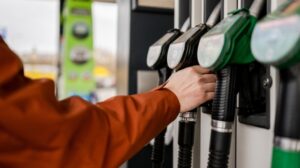
The government is planning support measures that, in the first phase, will cover the first 15 days of October in an effort to limit increases in fuel prices.
On September 30, the measures for motor fuels will be announced, covering the first 15 days of the month. On October 14, further announcements will follow, together with the measures for heating oil, sales of which begin the following day.
New Decisions Depending on Prices
The decision to limit the first intervention to 15 days is linked to the high volatility of international prices. Subsequent decisions will be taken based on a more up-to-date picture of the market, with the first milestone being the announcements on October 14.
The pressure is already significant on diesel. The average price in Greece stands at €2.224 per liter, compared with €2.226 in the European Union and €2.262 in the eurozone.
In several parts of the country, prices are significantly higher: in Santorini, they reach as much as €2.669 per liter, in Rhodes €2.619, in Athens €2.548, in Corfu €2.489, in Thessaloniki €2.429 and in Heraklion €2.427.
Filling a 50-liter tank today, based on the national average price, costs around €111, compared with €78.50 in February, meaning more than €32 extra. The burden is considerably greater for professionals, transport companies and farmers.
For diesel, the continuation of support in October has already been announced by the Prime Minister, although the amount has not yet been disclosed. In August and September, the state subsidy stood at 10 cents per liter, while in April and May it had reached 20 cents and in June 15 cents.
Different levels of intervention are being considered for October, with the final decisions depending on the prices prevailing at the end of September.
The increase in diesel prices is burdening transport and businesses’ operating costs, with the risk of these costs being passed on to the prices of goods and services. Farmers are expecting tax-free diesel at the pump from November, while fishermen are calling for additional support for fuel costs.
The pressure is not limited to Greece. The global diesel market is facing limited supply, as conflicts in the Middle East and Ukraine have affected production, refineries and exports from major suppliers.
In Europe, which depends on diesel imports, inventories at key hubs are at low levels, while the ability of refineries worldwide to further increase production is limited.
What Other EU Countries Are Doing
European governments are responding with different measures.
Germany is cutting the energy tax on gasoline and diesel by 14 cents per liter from October 1, with the total relief, including VAT, reaching approximately 17 cents. The overall cost of the intervention is estimated at around €2.5 billion.
France has announced a new package of targeted measures for workers and professional sectors, with a total cost of €450 million.
In Greece, priority has been given to heating oil and the continuation of support for diesel. The Prime Minister has made clear that, based on current data, no corresponding intervention for gasoline has been announced, while he has rejected a permanent across-the-board reduction in the Special Consumption Tax because of the fiscal cost.
For heating oil, a two-pronged intervention has been announced, affecting both the pump price and the heating allowance. The state and refineries will participate in the first measure, with the Prime Minister setting a target for the starting price on October 15 to be lower than the approximately €1.75 per liter at which last year’s sales season ended in April.
At the same time, a across-the-board increase in the heating allowance has been announced, although the percentage has not yet been disclosed. The allowance does not apply only to heating oil, but also covers, under the applicable conditions, other forms of heating.
Ask me anything
Explore related questions




