





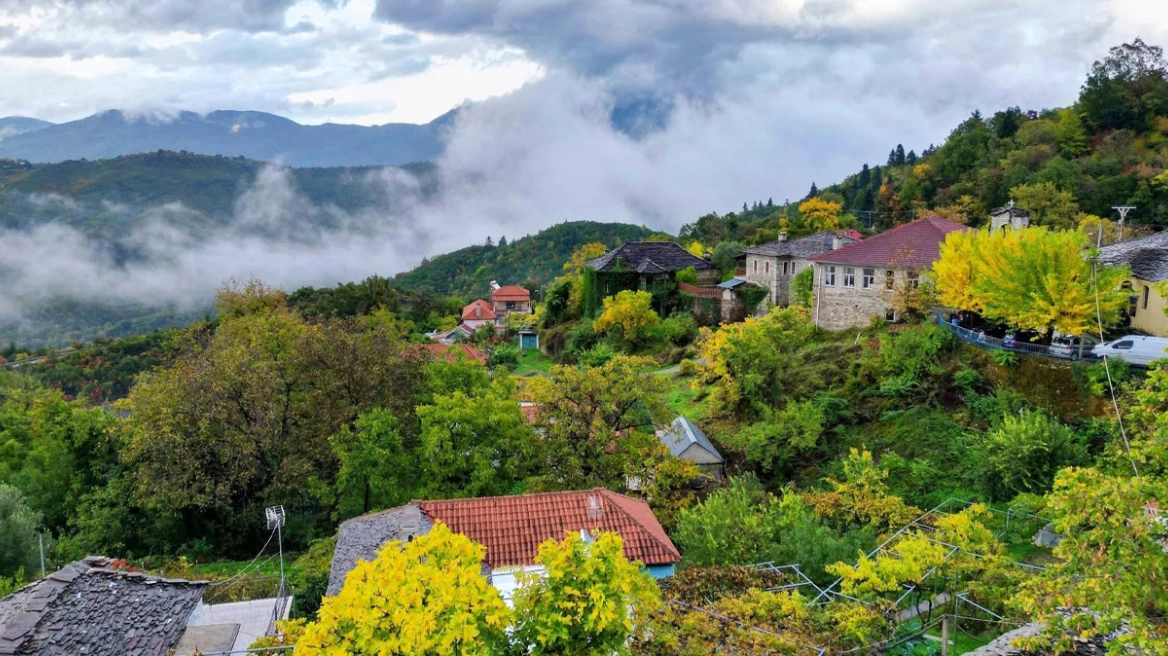
On 4 January 2020, we published an article on protothema.gr entitled: “The Border Region of Pogoni in Epirus and the Villages Located on Albanian Territory”.
At the end of the article, we also made a brief reference to Kosovitsa, the village of Northern Epirus that was divided between the two states (Greece and Albania), initially in 1913, under the Florence Protocol, and finally in 1923, by a decision of an International Commission. Its final cession to Albania took place under the Second Florence Protocol in 1925. Between 1926 and 1928, the border between Greece and Albania was definitively closed and the frequent contacts between the residents of Kosovitsa and the Greek villages of the Lakka Pogoniou region were interrupted.
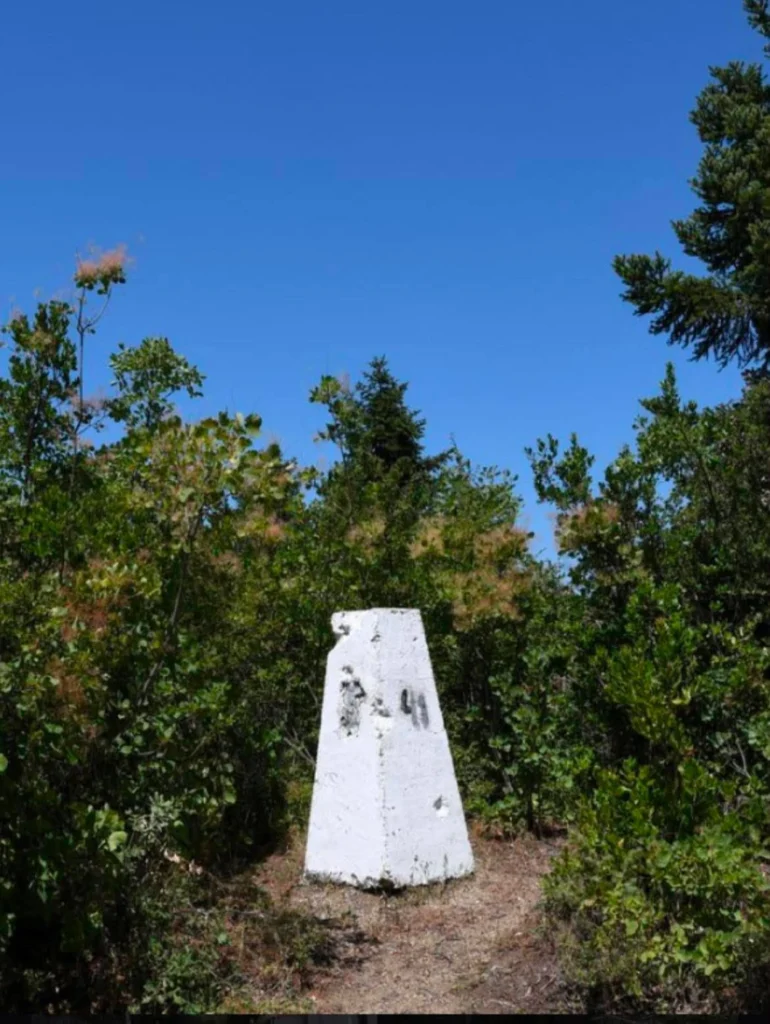
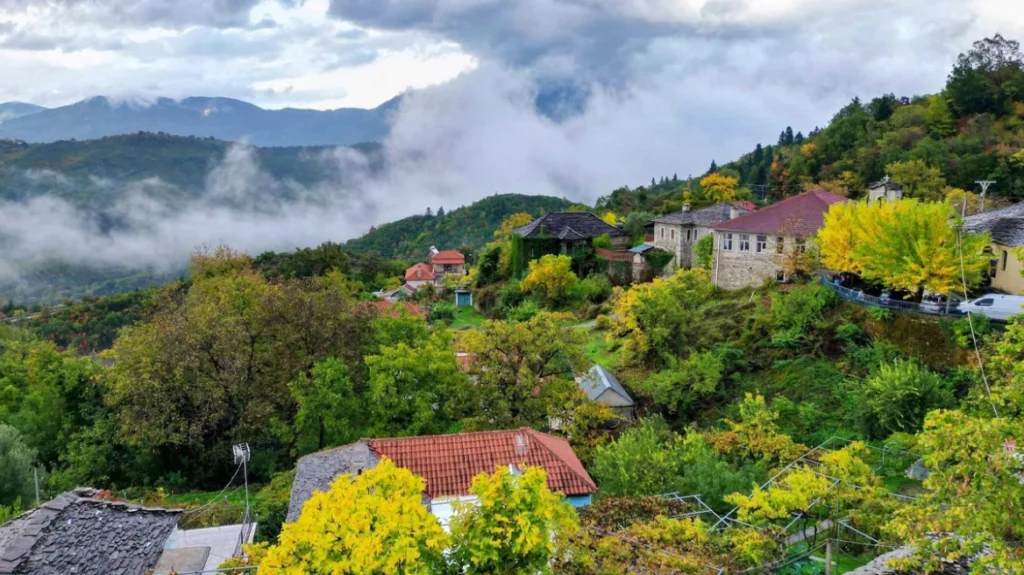
An extensive area – a district of Kosovitsa – known as Vatsounia, where there were also several barns and huts, remained, due to the peculiar drawing of the border on the map, in Greece. A purely Greek village, with 1,050 Greek residents and eight schools, all Greek, in 1914 (Census of the International Commission of Ethnological Control), was partially ceded to Albania. This district, where additional houses were also built, mainly by residents of Kosovitsa who did not want to remain in Albania, became the nucleus of the border village of Agia Marina, in the Municipality of Pogoniou. Agia Marina, as Vatsounia was named, is characterised by the large distances between its houses and covers the whole of southern Kosovitsa.
The centuries-old history of Kosovitsa – The battles fought there in September 1948
Kosovitsa is located on Mount Mourgkana, which is also known from the years of the Civil War, very close to the Greek-Albanian border. Although it belonged to the kaza of Gjirokastër, it was more closely connected with the villages of the Lakka Pogoniou region. From the “Chronicle of Dryopida”, published by “Parnassus”, Athens 1871, pp. 19 and 22, and the “Chronicles of Epirus” by Leandros Vranousis, Ioannina 1962, p. 121, we learn that Kosovitsa existed during the reign of Alexios Komnenos (1081–1118). In a chrysobull of the Serbian Despot Symeon Palaiologos, dated 1361, Kosova is mentioned together with Sotira. Sotira is a neighbouring village of Kosovitsa in Northern Epirus. In the Ottoman census of 1431, Kosovitsa appears to have been abandoned.
This may have been due to the preceding Ottoman conquest of the Pogoniou region and the Albanian raids that accompanied it. However, the village was gradually resettled and, as we have seen, by 1914 it had 1,050 Greek residents. The strategically important location of Kosovitsa, like that of Kastaniani Pogoniou, resulted in the villages being subjected to numerous attacks by various raiders. Characteristically, as Ioannis Lambridis reports, Kastaniani had, in the past, probably before the Ottoman conquest, 1,200 families and, according to the average estimated by historians (between 4.7 and 5.2 people per family), at least 6,000 inhabitants!
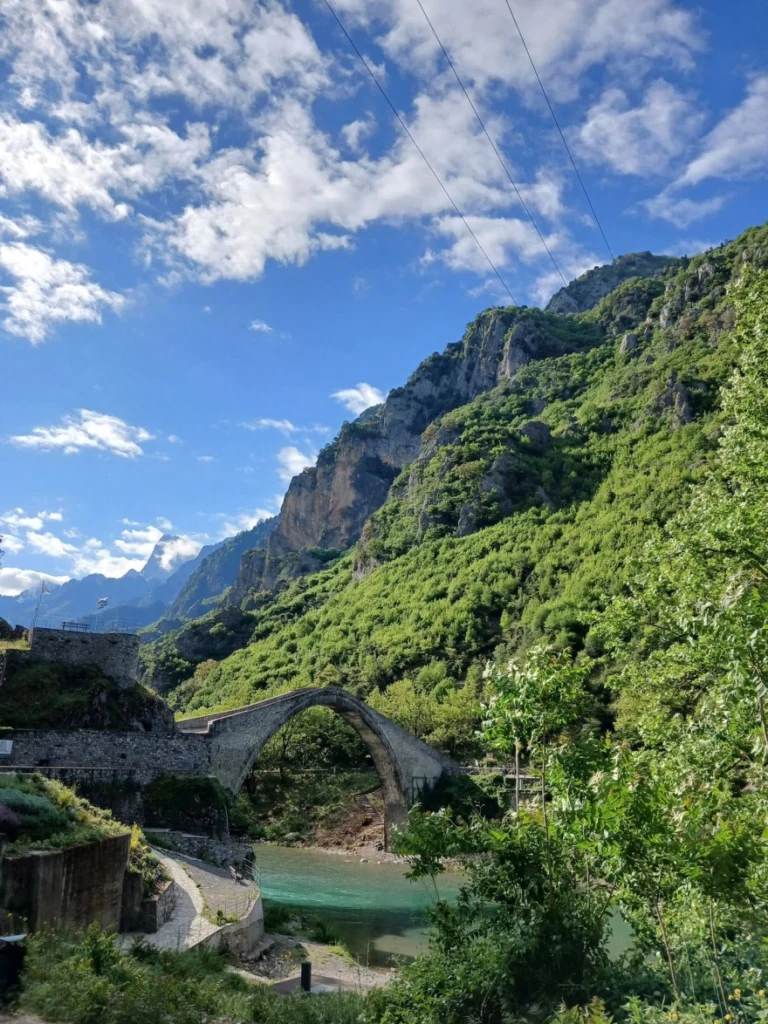
It should be noted that during the important Battle of Mourgkana, in September 1948, units of the Hellenic Army, which came under machine-gun fire from Kosovitsa(!), although it is not known whether this came from DSE fighters or Albanians, as well as from neighbouring Sotira, climbed the steep peaks of Mourgkana above Kosovitsa and found themselves behind the rebels (Evangelos Averoff, “Fire and Axe”, pp. 365–367). The DSE fighters were taken by surprise and fled to Albania through the Kosovitsa area, while others headed through Lakka Pogoniou towards the wooded areas of Pindus. Thrasyvoulos Tsakalotos, commander of the National Army forces at Mourgkana, ordered the Artillery to strike Sotira in order to silence the guns there. This was achieved, although some houses in the village were damaged. A Company also advanced towards the machine guns on Albanian territory and neutralised them. Most probably, the ES men who carried out the encircling manoeuvre also entered Albanian territory.
However, there is no official written reference to this in Greek documents, while Albania also did not dare to protest over a violation of its territory. We believe that this brief and interesting digression was necessary in order to highlight the important position of Kosovitsa, but also to give protothema.gr readers some little-known information about the Battle of Mourgkana.
How did Kosovitsa get its name?
P. Aravantinos considers the name Kosovitsa to be Greek. This is probably not the case. According to M. Vasmer, it is connected with the Slavic toponym Kosovo (= a place with blackbirds). The suffix -itsa, added to Kosovo, means a small place with blackbirds. H.P. Symeonidis considers that: Kosovica < Serbo-Croatian toponym Kosovica. K. Oikonomou, after noting that some, such as Soustal, consider the toponym to be connected with the name of the Emperor Alexios I, Kosobitza, derives the place name Kosovitsa from the Slavic adjectival form *kosovo < kosb “blackbird” + the adjectival suffix -ovo and the suffix -ica, by which adjectival forms are substantivised.
The Monastery of Kosovitsa
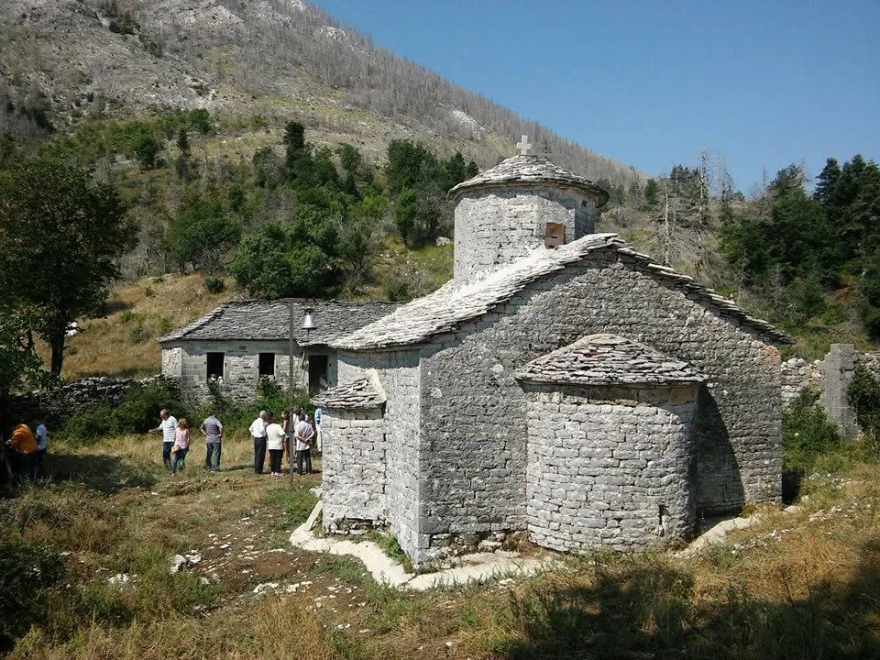
Southeast of the village lies the Monastery of Kosovitsa, dedicated to the Dormition of the Virgin Mary. It is only a few metres from the Greek-Albanian border. In a 1917 list of monasteries in its district, the Greek Consulate in Gjirokastër states that the monastery was founded in the 18th century. V. Baras and F. Oikonomou share the same view. However, H. Niakaris of Kosovitsa reports that it was built in 1600 by a certain Zaglis Koutsis, a notable from the village of Koutsi, located between Himara and Kurvelesh. He was under pressure from the Ottomans to convert to Islam. He refused, however. He left his village and found refuge in Kosovitsa. H. Niakaris states that the monastery has many cells, that its church is Byzantine in style and that its paved floor lies below ground level. One had to descend six steps to reach it. It is the least known of the monasteries in the area. It appears to have had some property, as V. Baras reports that its income was 40 Turkish liras.
The Battle of Kosovitsa (1912–13)
In late 1912 and early 1913, the Hellenic Army was besieging Ioannina. Further north, however, in Pogoni, on what is today the Greek-Albanian border, organised guerrilla groups were fighting fierce battles with Turco-Albanians. One of these groups, led by Gioris (Giorgos) Liontos or Liontopoulos, from Dimokori in Pogoni, and several guerrillas (from the villages of Kastaniani, Dimokori and Stratinista in Pogoni, Sotira in Northern Epirus, as well as one Albanian), fought, among other engagements, a fierce battle on the heights between Kosovitsa and Kastaniani with a battalion of Turco-Albanians from Gjirokastër, which was heading towards Kosovitsa in order to eliminate the groups of the chieftains Liolios, Kolovos and Pantos. The battle lasted two hours and the few Greeks routed the Turco-Albanians. This victory was celebrated in Kosovitsa and Sotira.
Epilogue
After the cession of Kosovitsa to Albania, as mentioned above, the part of it that remained in Greece became the nucleus of the village of Agia Marina, named after the area’s church of the same name.
As we learned, the Greek-Albanian border in the Kosovitsa area, on the Albanian side, is also guarded by men and women of FRONTEX! Albania is neither a member of the European Union nor a country in the Schengen Area. How is the presence of FRONTEX there justified, based at least on what was stated on the official FRONTEX/European Union Agency website?
After 1926, many Kosovitsans settled in America. With the assistance of Kosovitsans from the Kosovitsa Brotherhood, which was founded in Athens in 1925, they bought back the area of their village, which until then had been a chiflik owned by beys from Gjirokastër.
Main source of the article: K.D. Papanikolaou, “THE LAKKA POGONIOU AND PSILOKASTRO OF IOANNINA”
Ask me anything
Explore related questions




