





With the conserved ancient enclosure of the Sanctuary of the Cabeiri on Lemnos being incorporated into the visitor route through the archaeological site for the first time, the Ministry of Culture is completing a project to showcase one of the most important archaeological sites in the North Aegean.
The Sanctuary of the Cabeiri is one of the most important mystery sanctuaries of the ancient Greek world and the most significant on Lemnos. Its function as a place of worship extended from the 8th century BC to the 3rd century AD, during which period the worship of the Cabeiri expanded as a result of Macedonian policy, while its long history is also reflected in its successive architectural remains. It was excavated by the Italian Archaeological School between 1937 and 1991. More recent excavations have revealed new evidence about the ancient enclosure, shedding light on the organisation and development of the Sanctuary, which was dedicated to the mystery cult of the pre-Hellenic deities known as the Cabeiri — deities of fire and metallurgy and sons of Hephaestus.
The central concept of the project is the preservation, conservation and enhancement of the original material up to its highest surviving level, as well as improving the legibility of the historical, structural and typological characteristics of the enclosure.
Within this framework, the project provides for systematic archaeological investigation and exposure of the enclosure, the conservation and consolidation of its surviving sections, as well as limited, documented additions where these are absolutely necessary for the preservation and legibility of the monument.
All interventions follow the principles of minimal intervention, material compatibility and reversibility. On the southern terrace stands the Archaic ceremonial building, in the form of an altar or “Bema”, dating to the 7th century BC. On the northern terrace is the Hellenistic ceremonial building, which was looted and destroyed during the Roman period.
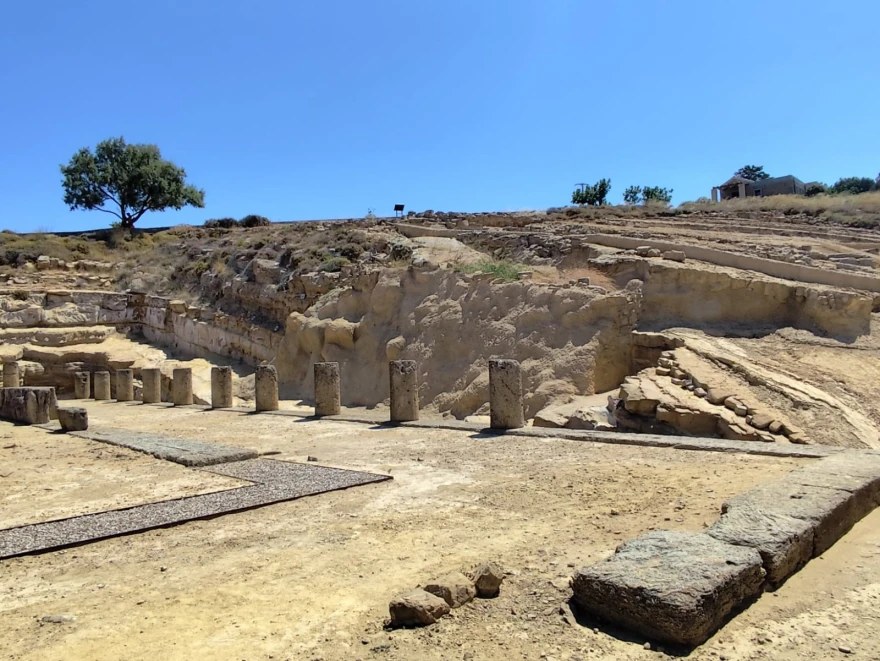
“The approval of the study for the enhancement of the ancient enclosure of the Sanctuary of the Cabeiri represents the next step in a comprehensive plan being implemented by the Ministry of Culture for the overall protection and enhancement of one of the most important archaeological sites in the North Aegean,” Minister of Culture Lina Mendoni said, adding: “Following the completion of projects with a total budget of €4 million, which secured the protection and enhancement of the Sanctuary’s three distinct architectural phases, the creation of new visitor facilities, the development of visitor routes and universal accessibility, we are now proceeding with the enhancement of a crucial element of the Sanctuary’s organisation. With absolute respect for the natural terrain and the archaeological remains, the new route allows safe access to the ancient enclosure, creates new views towards the Sanctuary and Pournias Bay, and ensures full accessibility for all visitors.”
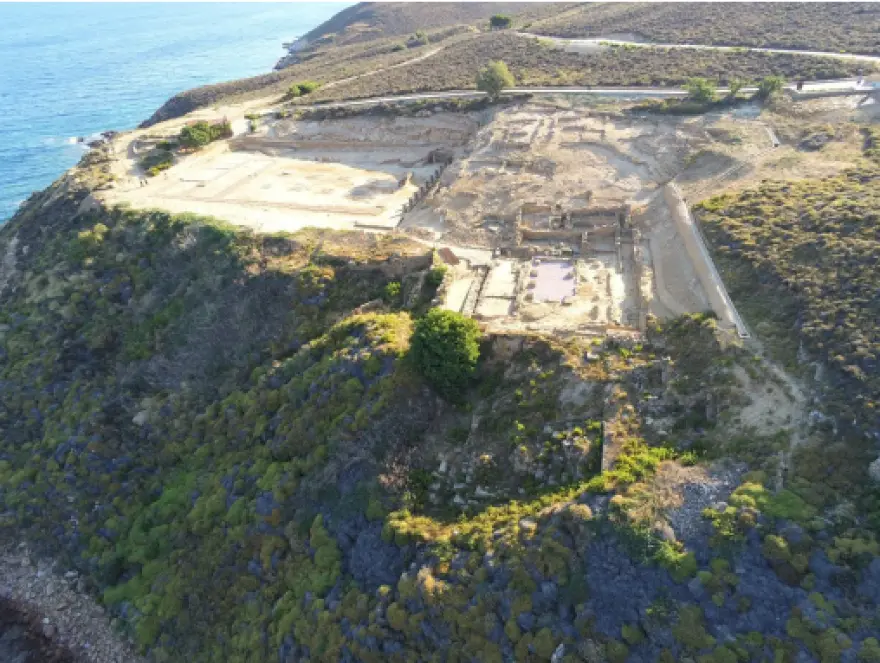
Ms Mendoni also stressed that the Ministry of Culture’s commitment to Lemnos is comprehensive and ongoing: “Alongside the Sanctuary of the Cabeiri, over the past seven years we have been implementing a coherent programme of interventions at the island’s most important archaeological sites, such as Poliochni and Hephaistia, as well as at Byzantine and more recent monuments. Lemnos has outstanding archaeological sites and monuments, as well as a very important Archaeological Museum with exhibits of exceptional significance, which was handed back to the island’s residents and visitors in 2025 following its complete restoration after the damage caused by the 2014 earthquake. Our aim is not only to protect the monuments, but to return them to society as living places of history, knowledge and culture,” she noted.
As part of the project to enhance the archaeological site, funded with €1.6 million from the “North Aegean 2014–2020” Operational Programme of the National Strategic Reference Framework (NSRF), the site’s development and enhancement study was updated and extensive interventions were carried out to improve visitor access and protection. The works included stabilising slopes, creating visitor routes and resting areas, installing visitor facilities, new fencing and a drainage network, as well as restoring, conserving and enhancing the ancient architectural remains. Accessibility for people with disabilities was also ensured, and an outdoor events area was created.
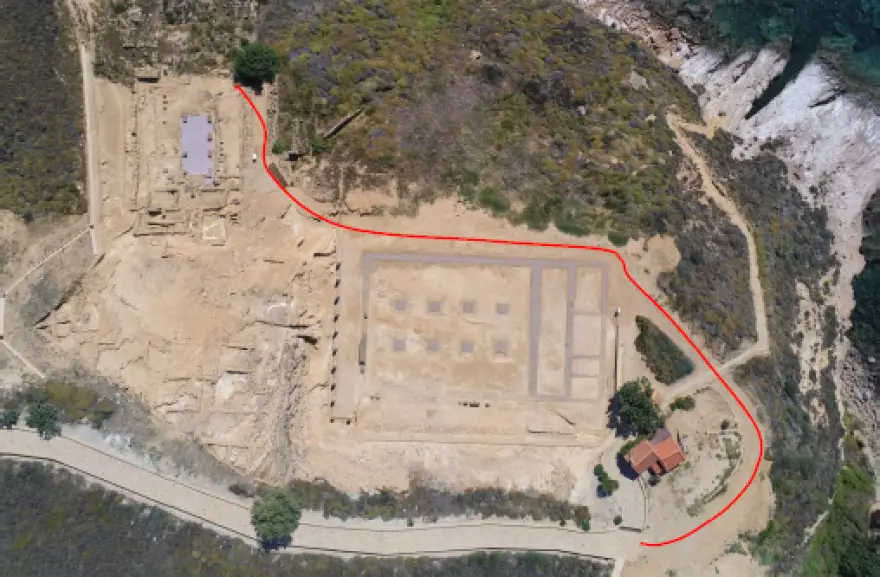
Today, visitors can explore the eastern side of the archaeological site, approach the ceremonial buildings, ancillary structures and the cave of Philoctetes, while a new route to the “Bastion” is nearing completion. By contrast, the southern section remains undeveloped and inaccessible to visitors. To enhance the site and ensure universal accessibility, a new 270-metre visitor route is proposed, following the natural terrain. The route is divided into two main sections: the first with steps and gentle ramps, and the second suitable for the simultaneous movement of pedestrians and electric wheelchairs for people with disabilities, with ramps and landings meeting accessibility specifications.
Ask me anything
Explore related questions




