





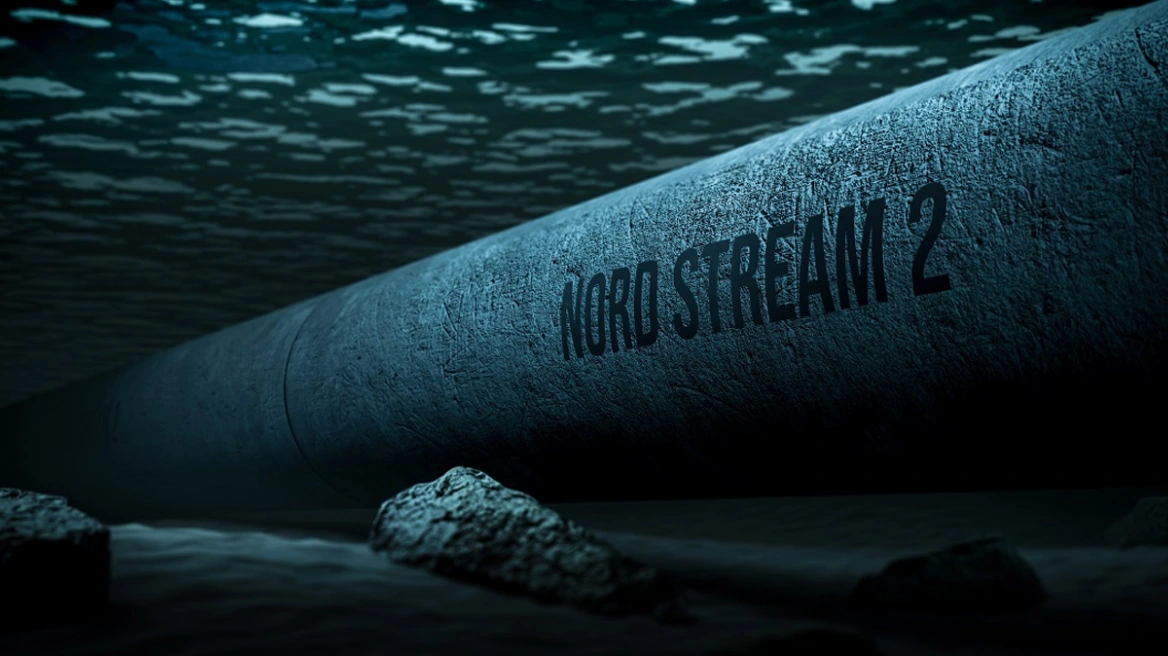
The possibility of a U.S. investor participating in the Nord Stream pipelines, through which Russian natural gas was transported to Germany before Russia’s invasion of Ukraine, has reportedly been discussed by senior officials in Washington and Moscow, according to five sources familiar with the talks cited by Reuters.
According to the same sources, the discussions involved Kirill Dmitriev, a close adviser to Russian President Vladimir Putin, and U.S. special envoy Jared Kushner, Donald Trump’s son-in-law.
Kushner, who is seeking to help broker a ceasefire between Russia and Ukraine, reportedly views economic cooperation as a key element in restoring peace. A possible Nord Stream deal would allow U.S. investors to benefit from the resumption of energy flows to Europe after the end of the war.
Kushner and Dmitriev have met in recent weeks in Moscow and New York. While it is unclear how far the discussions on Nord Stream progressed, two sources told Reuters that the issue remains on the agenda.
The White House and the obstacles to the talks
Asked by Reuters about the discussions concerning the pipelines, a White House official said that any agreement would have to be negotiated between Russia, the U.S. International Development Finance Corporation (DFC), and the Treasury Department, and would have to benefit American taxpayers and U.S. businesses.
The official nevertheless said that “there have been no recent talks about Nord Stream.”
Dmitriev, who supports the resumption of Russian natural gas sales to Germany, met last month with representatives of the U.S. Departments of Energy and Treasury regarding possible energy initiatives between Washington and Moscow. It nevertheless remains unclear how willing the U.S. administration is to genuinely pursue the resumption of Russian gas flows to Germany.
A U.S. official estimated that, given the significant obstacles, a deal is unlikely in the medium term. The Nord Stream pipelines are subject to sanctions from both the United States and the European Union, making any restart currently illegal.
Trump could ease or lift the U.S. sanctions, but if the Democrats take control of Congress in the November midterm elections, any such move could be derailed.
Germany categorically opposed
Germany and other European countries are expected to strongly oppose a possible reopening of Nord Stream.
A spokesperson for the German Ministry for Economic Affairs and Energy pointed out that both Nord Stream and Russian natural gas are subject to European sanctions and noted that Germany has already found alternative sources of supply. As the spokesperson stressed, any resumption of pipeline operations would require approval from the German government, which does not want such a development.
Before Russia’s invasion of Ukraine in February 2022, Germany covered more than half of its natural gas needs with supplies from Russia, much of which arrived through the Nord Stream system.
The pipelines were effectively taken out of operation when Moscow restricted energy flows to Europe, while in September 2022 they suffered severe damage from underwater explosions.
Berlin speaks of a possible “dirty deal” between the U.S. and Moscow
The Washington-Moscow talks are taking place amid deep distrust in Europe over Russia’s intentions.
Earlier this year, the heads of five European intelligence agencies told Reuters that, in their assessment, Moscow was not seeking a rapid end to the war and was using talks with the United States to simultaneously advance business deals.
Michael Köllner, a German lawmaker who was responsible for the country’s energy policy following Russia’s invasion, warned that such a deal “threatens to turn into a dirty deal that will cost Europe dearly.” “Americans and Russians will share the profits,” he said.
Germany’s coalition government opposes reopening the pipeline. By contrast, the Alternative for Germany (AfD) supports resuming Russian gas imports. According to Reuters, Dmitriev is expected to meet with the AfD leadership early next year to discuss the issue.
The Nord Stream ownership “puzzle”
Another obstacle is the shareholding structure of the company that controls the pipelines.
Fifty-one percent is owned by Russian state energy giant Gazprom, while another 31% is split between two German companies. The remaining stake is held by a French and a Dutch company.
The two German shareholders, according to a Reuters source, are seeking to retain their stakes so that Berlin can continue to have influence over the project if Gazprom decides to sell its own share.
Kushner’s “prosperity deals”
A few days after the meetings in Moscow, Kushner said in Kyiv that he had discussed with European officials how the war had driven up energy prices.
At the same time, he advocated entering into “prosperity deals” which, he argued, could serve as an incentive for peace and offer the leaders involved an economic outlook for the day after.
A potential natural gas deal would be positive for the Kremlin, but could cause deep divisions both in Germany and across the rest of Europe.
Poland and the Baltic countries, which regard Russia as a direct threat to their security, are particularly strongly opposed to restoring energy ties with Moscow. Poland’s leadership is monitoring the discussions over Nord Stream but remains categorically opposed to reopening it, according to a source familiar with Warsaw’s position.
Lukoil assets also on the table
According to Reuters, the Kushner-Dmitriev discussions are not limited to Nord Stream.
The two sides have also examined the sale of a number of assets belonging to Russian energy company Lukoil, including refineries and fuel stations in Europe and elsewhere.
Under the plan currently being discussed, a consortium involving the U.S. DFC and investors from Qatar and the United Arab Emirates would purchase the assets, while U.S. authorities would lift the relevant sanctions.
A White House official said that Steve Witkoff and Jared Kushner worked with the DFC to negotiate a significant upfront payment and a share of future profits for the United States.
Neither Lukoil nor Gazprom responded to Reuters’ requests for comment.
Ask me anything
Explore related questions




