





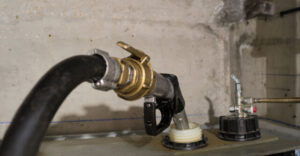
The Greek government has announced reductions of 40 cents per litre for heating oil, 20 cents for road diesel and 10 cents for unleaded petrol, alongside a 30% increase in the heating allowance, as it seeks to ease the pressure on households and motorists from the escalating global energy crisis.
The measures, detailed by the leadership of the Ministry of Environment and Energy, combine direct fuel subsidies with discounts offered by refineries, while providing additional financial support to households facing higher heating costs.
New fuel subsidies from 15 October
Three government subsidies will take effect at the pump between 15 and 31 October, reducing the price of heating oil by 20 cents per litre, road diesel by 15 cents per litre and 95-octane unleaded petrol by 10 cents per litre. The petrol subsidy will come into force on 17 October.
The discounts will be applied directly to retail prices, without the need for applications or means testing, ensuring that consumers benefit immediately. The three subsidies will cost the government €46 million during the second half of October.
Additional discounts announced earlier by oil refining companies will bring the total reductions to 40 cents per litre for heating oil and 20 cents for road diesel.
| Fuel | Government subsidy | Refinery discount | Total reduction |
|---|---|---|---|
| Heating oil | €0.20 | €0.20 | €0.40 |
| Road diesel | €0.15 | €0.05 | €0.20 |
| 95-octane petrol | €0.10 | — | €0.10 |
Heating oil price expected to fall to €1.55 per litre
Heating oil was expected to go on sale at an average price of approximately €1.95 per litre, with estimates ranging from €1.90 to €2 depending on international market developments.
Following the combined government subsidy and refinery discount, the estimated retail price will fall to €1.55 per litre, potentially ranging between €1.50 and €1.60 depending on global oil prices.
For households eligible for the increased heating allowance, the effective cost is estimated at approximately €1.35 per litre. This compares with the €1.75 per litre recorded at the end of April, meaning that the combined support will offset most of the price increase for eligible households.
Heating allowance increased by 30% for the entire winter
Beyond the immediate reduction in fuel prices, the government is increasing the heating allowance by 30% across the board for the 2026–2027 winter season.
The increase will apply to all eligible heating sources, including heating oil, electricity, natural gas, firewood, pellets and other qualifying fuels.
The maximum allowance will rise from €1,200 to €1,560, while income and property eligibility criteria will remain unchanged. Last year, 1.17 million households received heating support across all forms of energy, while approximately 750,000 households — nearly 60% of those using heating oil — are estimated to qualify for the relevant allowance.
Under the new arrangements, a household previously entitled to €500 will receive €650, while one that received €800 last year will be eligible for €1,040 this winter.
The application platform is expected to open by 10 November, with advance payments, which will also increase by 30%, scheduled to be made by 23 December 2026.
The additional fiscal cost of the increase is estimated at €52 million, bringing the total heating allowance budget from €173 million to €225 million, based on last year’s figures.
€98 million in additional support for fuel and heating costs
The latest package comprises €46 million in direct fuel subsidies for the second half of October and an additional €52 million to fund the 30% increase in the heating allowance throughout the winter.
According to the government, the measures are designed to provide two levels of protection: immediate, across-the-board reductions in fuel prices and additional targeted financial assistance for households most in need.
The government says its priority is to contain fuel and heating costs, protect household purchasing power and limit the impact of the energy crisis on everyday life.
Energy crisis measures announced so far
The government also released a breakdown of the wider measures introduced to address rising energy costs and support household incomes.
Fuel subsidies: A total of €262 million has been allocated to fuel subsidies at the pump. These include road diesel subsidies of 20 cents per litre, including VAT, for April and May, 15 cents for June, 10 cents for August and September, and 15 cents for October. Heating oil will receive a subsidy of 20 cents per litre, including VAT, during the second half of October, while 95-octane unleaded petrol will receive 10 cents per litre over the same period.
Heating allowance: The 30% increase for the 2026–2027 winter season is expected to cost an additional €52 million.
Fuel pass: A fuel card scheme for April and May 2026 provided €60 to eligible recipients in island regions and €50 in the rest of Greece, at a total cost of €113 million.
Agricultural fertilisers: Professional farmers received subsidies equivalent to 15% of fertiliser invoices for the period from 15 March to 31 August 2026, at a cost of €48 million.
Ferry operators: Compensation for mandatory ticket charges carries an annual cost of €60 million.
Industrial electricity: Electricity subsidies under the CISAF/METSAF framework are intended to contain prices throughout the supply chain. At least 50% of the subsidy must be directed towards investments that reduce CO₂ emissions and energy costs. The measure has an estimated cost of €95 million, which will be charged to the 2027 budget.
Support for families: An emergency payment of €150 per child was introduced in June 2026, covering 80% of families with children, equivalent to one million households. The measure cost €232 million.
Rent refunds: Income thresholds for rent refunds were increased from €20,000 to €25,000 and from €28,000 to €35,000, plus €5,000 for each child. For single-parent families, the threshold was set at €39,000, with an additional €5,000 for every child after the first. The changes cover 85% of renters, bringing approximately 70,000 additional tenants into the scheme and raising the total number of beneficiaries to one million, at an annual cost of €25 million.
Pensioner support: In April, the government announced an expansion of the income thresholds for pensioners receiving the €250 allowance, extending eligibility to 85% of pensioners. An increase in the payment to €300 was also announced, at an additional annual cost of €215 million. Following the subsequent extension to all pensioners aged over 65, covering 2.2 million beneficiaries, and the increase to €400 announced at the Thessaloniki International Fair, the additional cost compared with 2025 will reach €516 million.
The government estimates the total cost of the measures at €1.4 billion, comprising €862 million in emergency measures to address energy costs and €541 million for the permanent increase in pensioner support and the expansion of rent refunds.
Ask me anything
Explore related questions




