





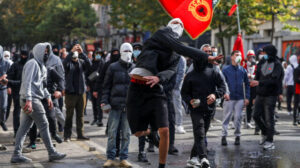
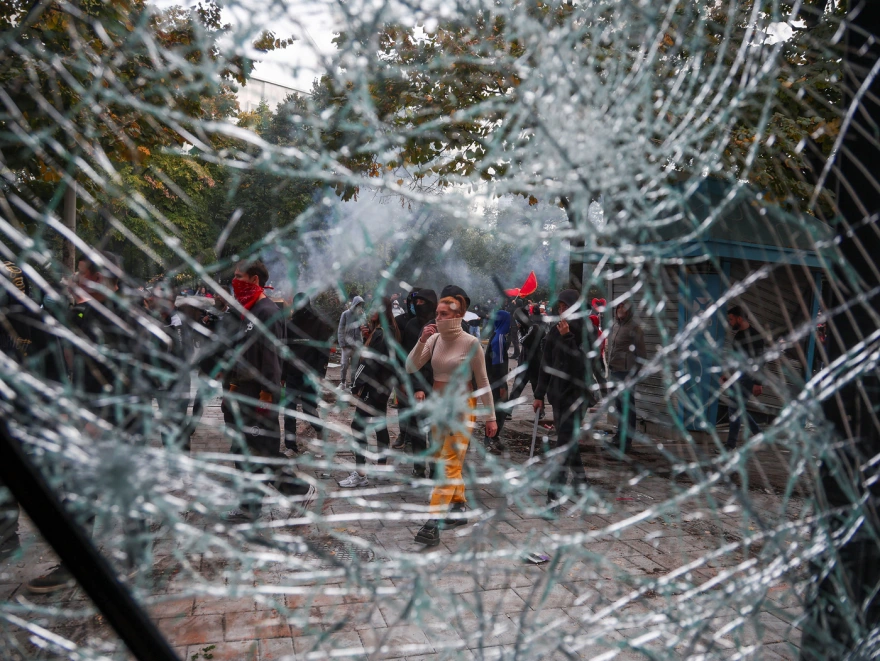
A new wave of clashes has broken out on the streets of Tirana as anti-government protests by university and school students continue for a third day. Government buildings have been attacked, fires set, businesses damaged and protesters clashed with police, while tensions have also spread to other Albanian cities. Albanian Prime Minister Edi Rama, for his part, has made clear that he will not resign despite mounting pressure.
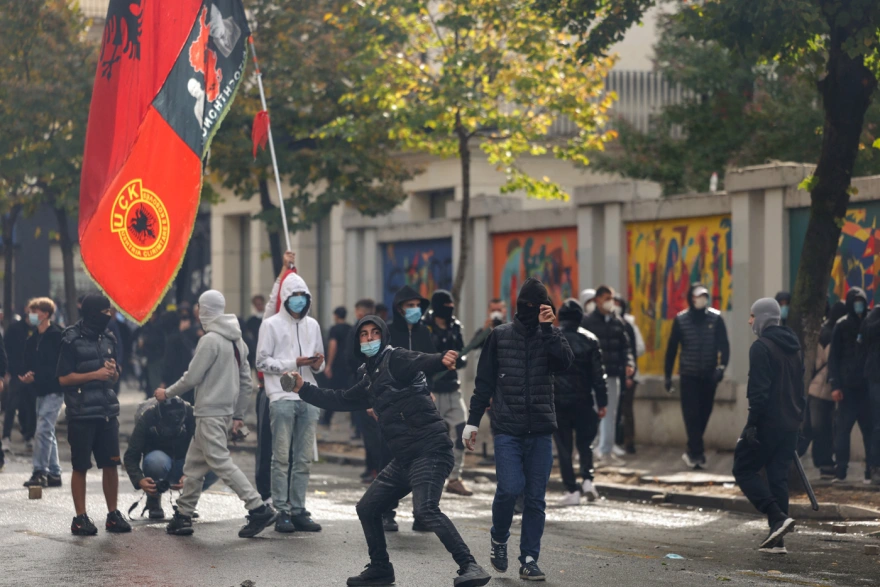
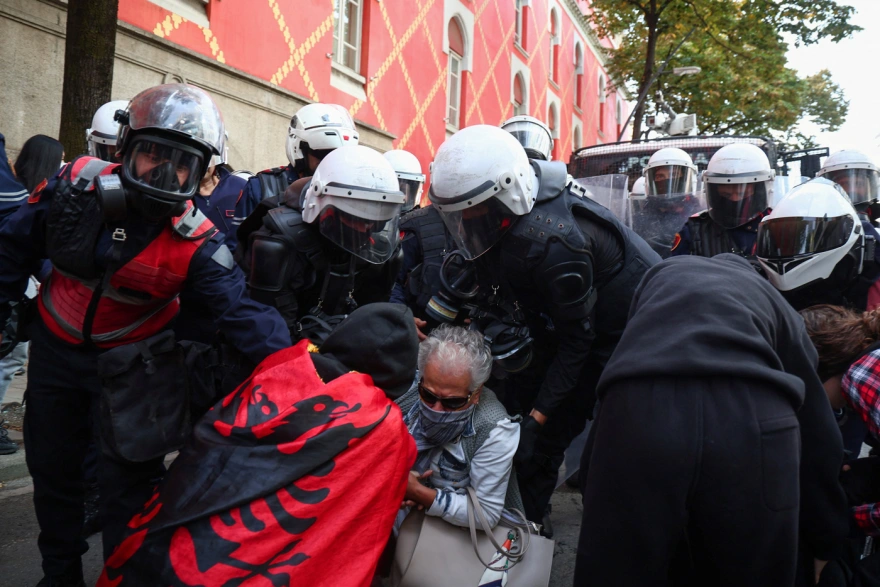
The latest clashes began early Thursday afternoon (October 15), when groups of protesters moved toward ministries, Parliament and other government buildings, throwing stones, pieces of wood and metal objects at police officers. Security forces responded with tear gas and water-cannon vehicles.
According to Albanian media, protesters staged successive marches through central Tirana, with tensions concentrated around the Ministries of Education, Finance and Infrastructure, as well as the area surrounding Parliament.
Outside the Ministry of Finance, protesters threw stones at police officers, who used tear gas to push them back. Similarly, near the Ministry of Economy, two masked individuals reportedly seized a metal railing and hurled it at police, while other protesters threw stones and pieces of wood.
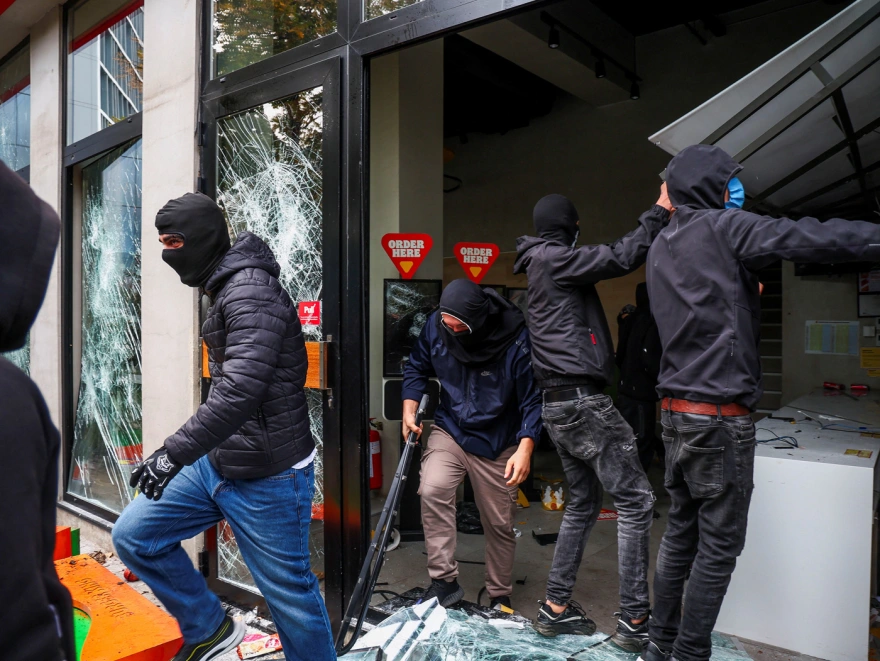
The most extensive damage had been recorded during the previous 24 hours at the Ministry of Education, where protesters smashed windows and set part of the building on fire. Fires also broke out at two bank branches.
Images broadcast by Albanian media show damaged facilities, shattered shop windows and damage to offices. Attacks were also reported against commercial businesses and the headquarters of the ruling Socialist Party.
According to Reuters, tens of thousands of university students took part in Wednesday’s demonstrations, with police attempting to disperse the crowds using water cannons and tear gas.
Rama: “I Will Not Resign” — Blames Opposition for the Violence
Despite the escalation of the protests, Prime Minister Edi Rama made clear in remarks to Reuters on Thursday that he had no intention of resigning. The Albanian prime minister argued that the violent incidents must not jeopardize the country’s path toward European integration, insisting that his government would continue its work.
Earlier, in a recorded message filmed outside a damaged building belonging to the College of Europe in Tirana, he accused the opposition of being behind the destruction. Rama argued that acts of violence did not represent the students, while also stating that his government remained willing to engage in dialogue over their demands.
How the Protests Began
The demonstrations initially focused on problems in the education system, with students protesting the rising cost of studying, conditions at universities, inadequate financial support and limited career prospects after graduation.
Over time, the demands took on a broader anti-government character, with protesters denouncing corruption and calling for the prime minister to leave office.
The demonstrations have also drawn groups from the wider protest movement known as the “Flamingo Movement,” which has organized rallies in recent months, including protests against a major tourism investment project in southern Albania linked to Jared Kushner, son-in-law of US President Donald Trump.
Ask me anything
Explore related questions




