





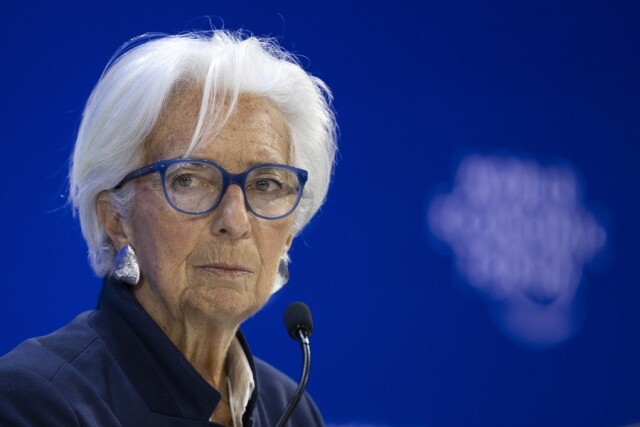
The early departure of Christine Lagarde on 7 February 2027 opens a new round of negotiations over the leadership of the European Central Bank (ECB). Potential successors, inflationary pressures, banking union and the digital euro are all shaping the agenda for the period ahead.
Lagarde’s departure from the ECB presidency, announced today, 29 October, marks a significant change for the eurozone. Her term was due to end on 31 October 2027, but she informed the ECB’s Governing Council and European Council President António Costa that she would leave on 7 February 2027.
The change concerns more than who will occupy the ECB’s top job. It comes at a time when Europe must contend with renewed energy-driven inflationary pressures, maintain confidence in government bond markets and pursue critical institutional reforms. Other positions on the ECB’s six-member Executive Board will also be renewed in the coming months, turning the succession into a broader negotiation among eurozone countries.
The contenders’ policy positions
The two names that have featured prominently in media reports are Dutch economist Klaas Knot, the former governor of the Netherlands’ central bank, and Spaniard Pablo Hernández de Cos, general manager of the Bank for International Settlements and former governor of the Bank of Spain. These are potential candidates under discussion, not officially appointed successors.
Knot has extensive experience on the ECB’s Governing Council, where he took part in interest-rate decisions from 2011 to 2025. He has historically been associated with a more cautious approach to excessively accommodative monetary policy, although his position during Lagarde’s presidency was characterised by greater alignment with the ECB leadership.
Hernández de Cos also comes from the heart of European central banking, with experience in both monetary policy and international financial cooperation.
The choice will not be determined solely by the candidates’ economic positions. It will require a qualified majority in the European Council, following a recommendation from the Council of the European Union and consultations with the European Parliament and the ECB’s Governing Council. Behind the scenes, the negotiations are linked to the allocation of the bank’s other senior positions.
Germany has said it will nominate a candidate for the position of Isabel Schnabel, who is due to leave on 3 January 2027 to take up a post at the International Monetary Fund (IMF). Meanwhile, the term of ECB chief economist Philip Lane expires on 31 May 2027.
France, Germany, Italy, Spain and the Netherlands will seek to secure roles in these key positions, with the balance of power also influenced by domestic political developments.
Ask me anything
Explore related questions




