





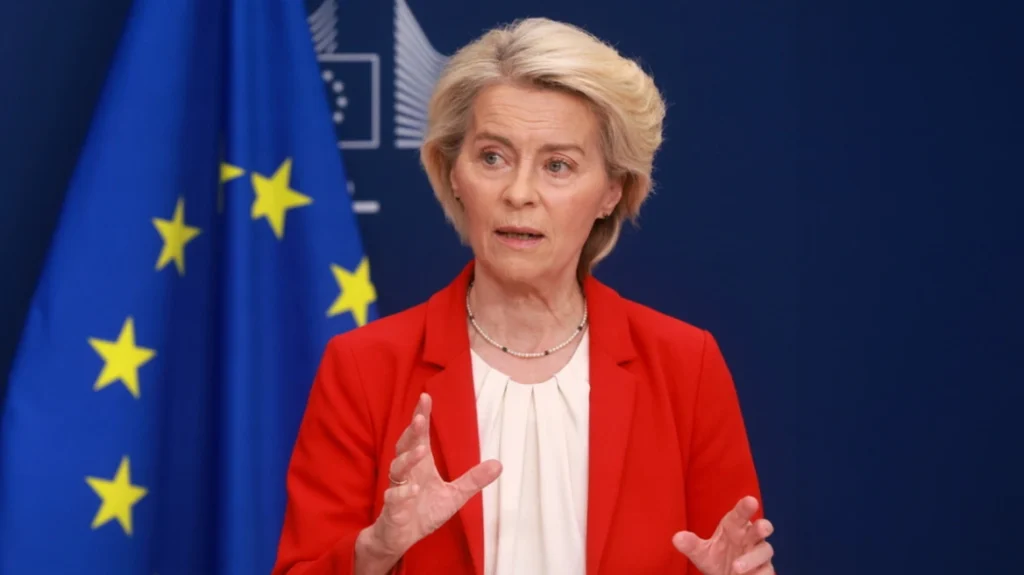
The European Union and Canada are seeking to deepen their cooperation in the fields of artificial intelligence, climate, energy and security, while exploring the possibility of Canada becoming the EU’s first “associate member,” European Commission President Ursula von der Leyen said today. The term, which many EU countries oppose, has no legal standing.
Canada is a “reliable partner” for the European Union at a time when “trade is becoming a tool of economic pressure,” von der Leyen said, apparently referring to the United States and China. “We are witnessing in real time an attack on our sovereignty,” she added, arguing that this requires the EU to “adopt a more strategic approach with reliable partners who face the same challenges.”
Closer ties with Europe form part of Canadian Prime Minister Mark Carney’s strategy to reduce his country’s dependence on the United States, both economically and in terms of security, following President Donald Trump’s imposition of tariffs on Canadian goods. However, Ottawa’s efforts to move closer to the EU risk provoking Trump’s anger at a time when trade negotiations between Canada and the United States are still ongoing.
“Our idea is simple: this is association without accession,” von der Leyen said in a speech in Montreal during the Canada-EU summit. “We can build a partnership that comes closer to membership than anything we have done before.”
“We can work together on everything from artificial intelligence and climate to energy and security,” she added.
Nevertheless, the leaders of Canada and the EU made no reference to “associate membership” in their joint statement, a copy of which was seen by Reuters. Instead, they agreed to pursue an “ever-closer association.”
The statement, which officials plan to publish tomorrow, October 30, says that work to define the Canada-EU relationship will continue until the next summit, scheduled to take place next year.
According to diplomatic sources, von der Leyen first proposed the idea of “associate membership” for Canada six weeks ago. The proposal met with opposition from several countries, led by Germany, which argued that they could not accept a concept that lacks legal status and has yet to be clearly defined.
Ask me anything
Explore related questions




