





The “manosphere”, a network of online communities promoting beliefs about masculinity, male victimisation and often misogynistic attitudes towards women, should be treated as a public health issue, much like smoking or obesity, according to a report published in the British medical journal The Lancet.
The report’s authors argue that tackling the manosphere and online misogyny requires a coordinated response from governments, schools, health services and community organisations, rather than relying solely on removing harmful content from social media.
The manosphere encompasses a loose collection of online communities, influencers and content creators focused on male identity, relationships between men and women, and perceived threats to masculinity. Some promote explicitly anti-feminist and misogynistic views.
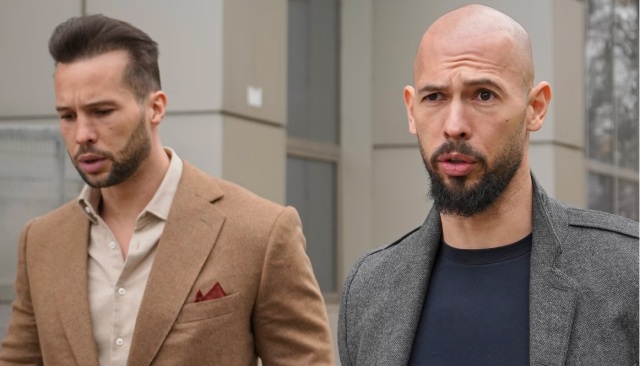
Influencers such as Andrew Tate and Clavicular have helped popularise aspects of this online culture, which has gained momentum in recent years through content that can be hostile and, at times, encourage violence against women.

Why researchers consider the manosphere a public health threat
“By reframing the manosphere as a public health issue rather than just a regulatory issue, we open up a number of additional policy levers that public health approaches can provide,” Professor Sarah Hawkes, a co-author of the report, told BBC Radio 4.
She argued that such an approach would allow governments to address the underlying causes of the phenomenon while encouraging cooperation across policy areas, including employment, education and healthcare.
The researchers identify several harms associated with the manosphere, ranging from violence against women and girls to mental health problems among boys and men. They also warn that some communities discourage men from seeking psychological support.
According to the authors, these online spaces frequently present men’s difficulties as consequences of feminism rather than broader social and economic conditions.
“Men’s problems are framed as the result of feminism rather than structural conditions,” the report states, while masculine identity is increasingly commercialised through products and paid content.
The “looksmaxxing” livestreamer Braden Peters — known as Clavicular — pleaded not guilty to charges that he raped a 17-year-old girl at his family’s Massachusetts home. He has agreed to a $10,000 bail, surrendered his passport and will not contact or post about the woman who has accused him of assault. #Clavicular #BradenPeters #Looksmaxxing
— The Associated Press (@AP) October 22, 2026
A lucrative online industry built on anger and resentment
The researchers describe the manosphere as a highly profitable digital ecosystem in which influencers monetise the frustrations and insecurities of their audiences.
Followers may be encouraged to invest in financial schemes or purchase expensive, unregulated supplements and other products marketed as ways to improve masculinity, physical appearance or personal success.
Professor Kent Buse, another co-author, argues that the phenomenon operates as a commercial model rather than simply a collection of fringe online communities.
He warns that digital platforms financially reward increasingly extreme content, creating incentives for influencers to amplify anger and resentment.
The researchers compare these commercial practices with those historically employed by the tobacco industry, particularly the tendency to place responsibility on individuals while portraying regulation as an attack on personal freedom.

Regulation should target platforms, not individual users
Rather than treating boys and men who encounter manosphere content as the problem, the authors recommend focusing regulation on the platforms that distribute and promote harmful material.
Their proposals include stronger content moderation, measures to limit harmful online environments and changes to recommendation algorithms to promote more positive messages.
They also caution against presenting masculinity itself as inherently toxic or suggesting that boys and men are inherently problematic.
The report highlights increasing social isolation, educational disengagement and economic insecurity among some boys and young men, arguing that these underlying factors must also be addressed.
Among the proposed measures are improved access to employment and training, efforts to reconnect boys with education, and better access to mental health services.
Published today in The Lancet. "The manosphere, a diffuse commercial ecosystem and loose collection of online communities united by shared beliefs about masculinity, misogyny, and male victimisation, is an under-recognised determinant of health harms. This network has been implicated in considerable health harms: widespread mental health impacts, especially in young people; violence against women, girls, and gender minorities; and delegitimising help-seeking in boys and men. In this Viewpoint, we argue that the manosphere is best understood and addressed as a public health problem."
— James L. Nuzzo, PhD (@JamesLNuzzo) October 30, 2026
“We need to offer boys something better”
Hawkes emphasised that the manosphere can appeal to young men because it offers a sense of identity, belonging and an explanation for their personal difficulties.
She warned that efforts focused exclusively on suppressing online communities would be ineffective unless credible alternatives were available.
The researchers conclude that governments must address both the commercial structures supporting online misogyny and the social conditions that make boys and young men vulnerable to its influence.
Their central argument is that tackling the manosphere requires a sustained public health strategy that protects women and girls while also recognising the genuine challenges faced by young men.
Ask me anything
Explore related questions




