





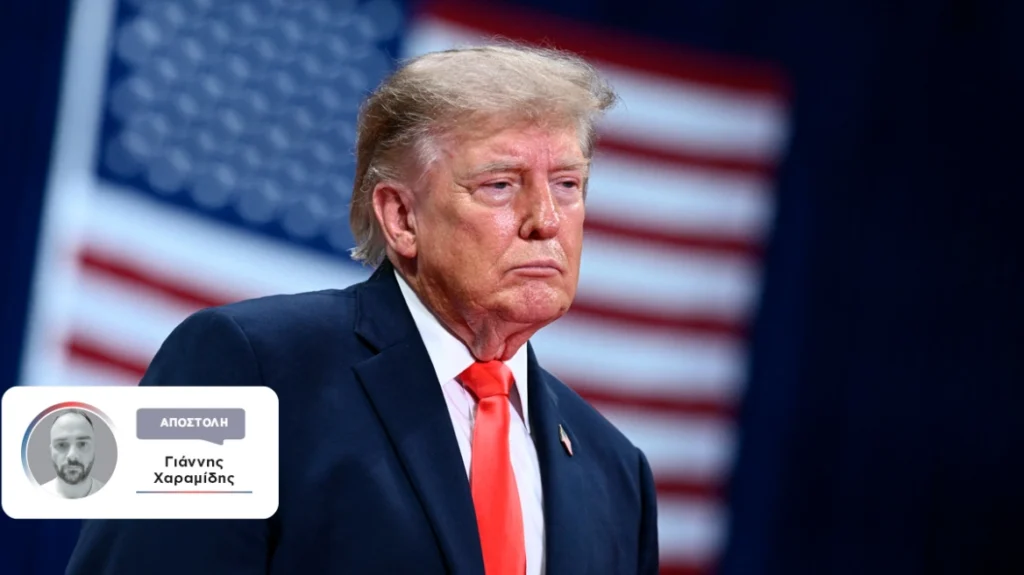
Americans head to the polls today for the midterm elections, the first nationwide electoral test of Donald Trump’s second term. Democrats are seeking to regain control of Congress, Republicans are fighting to retain their majorities, and millions of voters are being called upon to make their decisions based primarily on the economy, the cost of living, immigration, and foreign policy.
The United States votes today in an election that could substantially alter the political balance of power in Washington over the next two years. The November 3 midterm elections represent the first nationwide electoral assessment of Donald Trump’s second term and are taking place at a time when American society appears deeply divided over the economy, immigration policy, the role of the United States abroad, and the functioning of federal institutions.
The result will not determine who occupies the White House. It will, however, largely determine the room for maneuver available to the American president as he seeks to implement his policies through 2028. For Republicans, retaining control of the House of Representatives and the Senate is a basic prerequisite for continuing their legislative agenda. For Democrats, regaining control of even one chamber would create the opportunity for stronger congressional oversight and limit the White House’s ability to advance legislative initiatives without bipartisan agreement.
Today’s vote is particularly significant for another reason as well. Trump remains the central figure in the political confrontation, even though his name does not appear on the ballots. Democrats are seeking to turn the election into a verdict on his presidency, while Republicans are trying to emphasize the local dimensions of the races, immigration policy, and their differences with the opposition.
The latest analyses by American media outlets broadly agree that dissatisfaction with the administration is considerable, although this does not automatically translate into a corresponding shift in congressional representation. The geographical distribution of voters, turnout, and the behavior of independents are decisive factors, particularly in districts where the two parties are separated by narrow margins.
The Polling Picture and Trump’s Economic Problem
The latest Reuters/Ipsos poll, completed on Monday, puts Donald Trump’s approval rating at 32%, close to the lowest levels of his political career. In the nationwide question on party preference for the congressional elections, Democrats receive 46%, compared with 38% for Republicans.
That represents an eight-percentage-point lead, although it is smaller than the 11-point margin recorded the previous week. The shift underscores that the final days of the campaign were not characterized by a complete standstill in the balance of support.
The most interesting finding concerns registered independent voters. According to the same poll, half say their choice is motivated by opposition to Trump, while only 13% say they are voting in support of him. The finding illustrates the extent to which the presidency influences voting behavior even in elections for Congress.
The economy, and particularly the cost of living, is at the center of the debate. Some 78% of respondents describe rising everyday expenses as a very or extremely important factor in their voting decision. On the question of which party is better equipped to handle this issue, 43% prefer Democrats and 32% Republicans.
These figures explain why the economy dominates the pre-election debate. Rising housing costs, food prices, transportation expenses, and pressure on household budgets affect Americans’ daily lives more directly than the overall picture presented by macroeconomic indicators.
Republicans are highlighting their economic choices, tax policy, and the need to reduce government spending. Democrats insist that the administration has failed to meet households’ expectations for lower living costs.
Two Different Battles for Congress
All 435 seats in the House of Representatives are up for election today. Voting takes place in single-member districts, making local electoral geography just as important as the nationwide gap between the two parties.
The Cook Political Report has examined a potential swing of 15 to 25 seats in favor of Democrats. This is an analytical estimate, not a recorded result. The final distribution will depend on how candidates perform in competitive districts and which voters turn out at the polls.
The Senate presents a different mathematical picture. Thirty-five seats are at stake today, and Democrats need a net gain of four seats to reach 51, provided they retain the seats they already hold.
The challenge for the Democratic Party stems from the fact that several of the Republican-held seats it is contesting are in states that supported Trump in the 2024 presidential election. Consequently, even a favorable nationwide trend is not enough to guarantee corresponding gains in the Senate.
The difference between the two chambers has direct institutional consequences. The House can exert decisive influence over the legislative process, the budget, and congressional oversight. The Senate also plays a crucial role in confirming important government and judicial appointments.
The States in the Spotlight
The attention of both parties is focused today on a limited number of states where Senate races could affect the overall balance of power.
In Texas, Democrats are seeking to broaden their appeal in a state with a strong Republican electoral tradition. The significance of the race extends beyond the particular seat, as the result will provide indications of how suburban voters, younger age groups, and Hispanic communities are behaving.
In Kansas, the electoral battle has attracted particular interest because the state was placed in the competitive-races category by the Cook Political Report. This change reflects the organization’s assessment that the national political climate could influence even areas traditionally aligned with Republicans.
In North Carolina, Democrats are seeking to capitalize on changes in the population’s composition and the significant presence of voters in major urban centers. The state combines expanding metropolitan areas with strongly conservative districts.
In Maine, the race is a test of the Republicans’ ability to maintain congressional representation in states that behave differently in presidential elections. In Michigan, meanwhile, the contest is linked to the industrial economy, the working-class electorate, and the political behavior of suburban communities.
In its latest assessment, dated November 2, the Cook Political Report identifies six Senate races as toss-ups. This picture explains why both parties have concentrated substantial financial and organizational resources in a relatively small number of states.
Abstention, Independents, and Voter Turnout
One of the key questions raised by The Washington Post is how voters who supported Trump but are now dissatisfied with government policy will behave.
The difference between abstaining and switching to the Democrats is substantial. In states where Republicans enjoy a significant numerical advantage, lower turnout among their voters does not necessarily mean a change in the election result. To alter the balance of power, it is often necessary to attract voters beyond the traditional Democratic base as well.
The latest Reuters/Ipsos poll also records a difference in the level of enthusiasm among the two parties’ supporters. Some 49% of Democrats say they are very enthusiastic about the prospect of voting, compared with 33% of Republicans.
This difference is particularly important in elections where turnout is usually lower than in presidential contests. However, expressions of enthusiasm are not a measure of actual voter participation. Today’s turnout and the composition of the electorate will show whether the enthusiasm reflected in the polls translates into votes.
The War with Iran and Foreign Policy
This year, an important international dimension has also entered the American electoral debate: the war with Iran and its economic consequences.
According to an analysis by the Associated Press, the prolonged conflict, rising fuel prices, and the effects of tariffs have intensified the political pressure facing the administration. The connection between foreign policy and the everyday economy is a defining feature of today’s election.
Democrats are focusing on the economic cost of government decisions and calling for greater accountability over the United States’ military involvement. Republicans are defending the administration’s policy with arguments centered on national security and deterrence.
The significance of this issue is not confined to foreign policy. Rising fuel prices feed into the cost of transportation, goods, and services, ultimately affecting households’ purchasing power.
At the same time, trade tariffs are the subject of political debate over their consequences for agricultural production, industry, and US trade relations.
Millions in Campaign Spending and Trump’s Influence
The financial dimension of the election is not limited to policies on inflation and economic growth. Campaign spending has become a decisive factor in the race.
The Associated Press reports that organizations politically aligned with Trump have spent nearly $277 million to support Republican candidates.
The figure reflects the importance that the President’s political circle attaches to maintaining congressional majorities. It does not, however, represent total Republican campaign spending, as additional funding comes from candidates, party committees, and independent organizations.
The financial strength of the campaigns allows for extensive television advertising, digital voter targeting, and the operation of organized voter-mobilization networks.
Trump’s personal influence within the Republican Party also remains significant. His endorsement has influenced internal party processes and the selection of candidates, while several Republicans are now being called upon to strike a balance between maintaining their relationship with the President and attracting independent voters.
The Day After: Three Scenarios for Washington
The outcome of today’s vote will create different institutional conditions for the final two years of Trump’s second term.
The first scenario is that Republicans retain control of both chambers. In that case, the White House will continue to have congressional majorities to advance its legislative initiatives. This does not rule out internal party disagreements, particularly on fiscal policy and government spending.
The second scenario is that Democrats regain control of the House while Republicans retain the Senate. Such an outcome would lead to divided legislative control, giving Democrats greater opportunities for congressional oversight and creating a greater need for bipartisan compromises.
The third scenario is that Democrats regain control of both chambers. In this case, the administration will face a different balance of power in Congress, both in the legislative process and in oversight and appointment-confirmation procedures.
In any event, the President will retain his constitutional powers, including the authority to exercise a veto and the powers of the executive branch.
Disputes over federal government funding and the public debt ceiling will be major tests in 2027, regardless of today’s electoral outcome.
The Greek Dimension and Relations with Europe
For Greece, the midterm elections are of interest beyond the broader political direction of the United States.
Greek-American relations have acquired a strong defense, energy, and investment dimension in recent years. The functioning of Congress affects defense appropriations, foreign policy legislation, and congressional oversight of American strategy in the Eastern Mediterranean.
The balance of power that emerges could influence the debate over US commitments to NATO, relations with Turkey, and policy toward the European Union.
The significance of the result is also economic. US trade policy, tariffs, and Washington’s energy decisions directly or indirectly affect European markets and, consequently, the Greek economy.
However, US foreign policy is not determined exclusively by the party holding a majority in Congress. The executive branch retains broad powers, while bipartisan initiatives also exist on issues such as security in the Eastern Mediterranean.
The Electoral Test and the Road to 2028
Midterm elections are traditionally a difficult process for the party that controls the White House. Historical experience shows that governing parties often lose seats, although this does not mean that every election follows the same pattern.
Today’s election is taking place in a different political environment, with Trump serving his second term, the Republican Party having changed significantly under his influence, and Democrats seeking a new political balance following the 2024 presidential election.
For Democrats, the result will measure their ability to reach social groups that have moved away from the party. For Republicans, it will provide an indication of the resilience of the electoral coalition Trump assembled and its ability to mobilize when he himself is not a candidate.
The contest will also affect political preparations for 2028, when the two parties will be called upon to choose their presidential candidates.
For now, however, the immediate stakes are clear: who will control legislative power in Washington, and under what conditions will Donald Trump govern until the end of his term?
The polls will also provide answers to two questions that dominated the entire campaign: whether dissatisfaction with the President can change the balance between the parties, and whether Democrats can turn their improved polling position into greater congressional representation.
Tonight, as voting concludes in the first states and results begin to be released, attention will turn to the competitive House districts and the closely contested Senate races. It is there that the political arithmetic governing Washington from January 2027 onward will take shape.
Ask me anything
Explore related questions




