





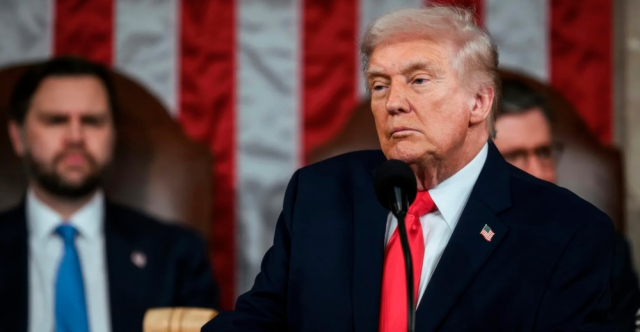
JD Vance faces an uphill struggle as Ron DeSantis and Ted Cruz criticise the party’s disastrous performance, while Trump shows little appetite for changing course
A bitter blame game has erupted within the Republican Party following its historic defeat in the US midterm elections, with President Donald Trump facing growing criticism from senior party figures as potential successors begin positioning themselves for the 2028 presidential race.
The scale of the Republican collapse has exposed deep divisions within a party dominated by Trump for more than a decade, raising questions about its future direction and the political ambitions of Vice President JD Vance, Florida Governor Ron DeSantis and Texas Senator Ted Cruz.
Vance, widely regarded as the frontrunner for the Republican presidential nomination in 2028, appeared to distance himself from both Trump and the war against Iran on Wednesday, blaming the party’s defeat on the Middle East conflict, the cost of living and US relations with Israel.
The vice president acknowledged that the war had cost Republicans control of the Senate for at least six years.
Addressing angry voters who wanted to say they had warned the administration about the consequences, Vance wrote in a lengthy social media post: “You’re right, you did warn us.”
DeSantis condemns Republican ‘annihilation’ and targets corruption
Florida Governor Ron DeSantis, who had previously played down the possibility of another presidential campaign in 2028, was quick to seize on the election results.
With Florida emerging as one of the few bright spots for Republicans, DeSantis sought to present himself as a potential leader capable of rebuilding the party after its crushing defeat.
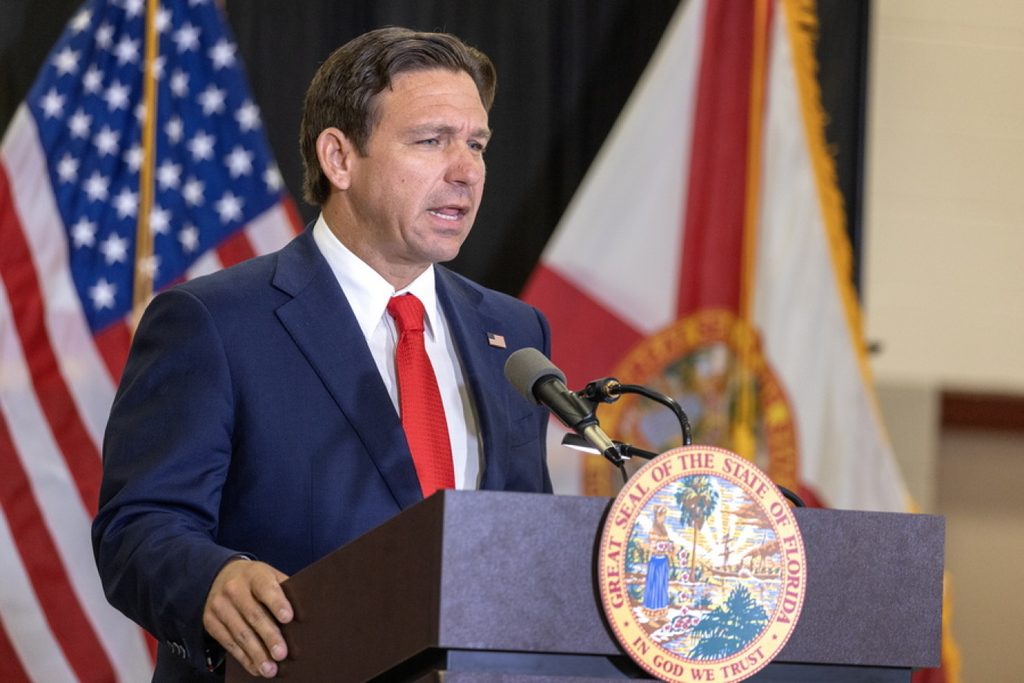
“Let’s be clear about what happened the other night – for Republicans in many parts of the country, this amounts to almost total annihilation,” DeSantis told a press conference.
He also called on Congress to prohibit lawmakers from trading stocks, arguing that the restrictions should extend to members of the executive branch.
The proposal came as polling showed government corruption had become one of voters’ leading concerns about the Trump administration.
The intervention was widely interpreted as a direct criticism of the president, whose financial disclosures showed tens of thousands of securities transactions during the first year of his second term.
The White House maintains that Trump’s investments are independently managed and that no conflict of interest exists.
According to a person familiar with the situation who spoke to Bloomberg, DeSantis has strengthened his political standing through his campaigning for Byron Donalds, the Republican candidate seeking to succeed him as Florida governor.
Although his presidential ambitions suffered a major setback during the 2024 Republican primaries, DeSantis remains popular among the party’s voters in his home state, the person said.
Ted Cruz says Republicans must listen to voters
Texas Senator Ted Cruz, another potential contender for the 2028 nomination, described the election results as a historic rejection of the Republican Party.
He pointed to public anger over Trump’s tariffs, the war in the Middle East and the unchecked construction of data centres as major factors behind the defeat.
“We have to listen and respond. We need to champion economic policies that make a real difference in working people’s lives and address the consequences,” Cruz said on his podcast.
“Texas turned blue,” he added, acknowledging the extraordinary significance of Democratic victories in a state that had long been considered a Republican stronghold.
The remarks marked some of the first exchanges in what is shaping up to be a prolonged struggle over the party’s political identity.
After a decade in which Trump exercised extraordinary control over Republican politics, a new generation of party figures appears increasingly prepared to challenge his leadership and redefine the party’s priorities.
Other prominent Republicans also used the aftermath of the election to revisit warnings they had previously issued.
Texas Senator John Cornyn argued in a Wall Street Journal opinion article that Republicans had committed a series of “unforced political errors”.
Among them was the pressure to support scandal-plagued Ken Paxton, who had defeated Cornyn in the Republican primary for the Senate seat.
Mitt Romney, the party’s 2012 presidential nominee, criticised Republican candidates for embracing Trump’s tariffs, what he called an “impulsive” war and “obvious corruption”, among other mistakes.
“Bad policies and bad character produce bad politics,” Romney wrote on X.
“I hope for a course correction, both for the country and for my party.”
Trump shows little sign of changing course
While Republicans debated the causes of their defeat, Trump appeared largely unmoved by the scale of the electoral setback.
On Wednesday, the president visited the construction site of the White House ballroom, suggesting that he was unlikely to abandon the controversial personal projects that have occupied much of his attention during his second term.
Speaking to reporters, Trump played down the election results and denied reports of tensions with Vance.
He also rejected a CBS News report suggesting that he had been consulting allies about potentially removing Defence Secretary Pete Hegseth.
“No, I think he’s doing a fantastic job,” Trump said.
The president has also publicly ruled out a sweeping overhaul of his administration.
A person familiar with Trump’s thinking told Bloomberg that he had little appetite for major changes, remarking that “there was no ketchup thrown at the walls”.
The comment referred to earlier testimony alleging that Trump had thrown his lunch against a wall following his 2020 election defeat, an account the president denied at the time.
Nevertheless, several lower-ranking administration officials are preparing to leave their positions, according to the same person.
Some Trump allies have also continued to speculate about the future of White House chief of staff Susie Wiles, despite the president previously insisting that she would remain in her position “for a long time”.
Democrats secure historic victories in Republican strongholds
The scale of Tuesday’s defeat has intensified the pressure on Republican leaders.
The party lost at least seven Senate seats, while Democrats are on course to secure their largest majority in the House of Representatives since the aftermath of the Watergate scandal in the 1970s.
Republicans suffered defeats in traditionally conservative states, including Texas, South Carolina and Kansas, while Democrats also recorded decisive victories across several competitive battleground states.
According to NBC News, Democrats will control at least 54 Senate seats and are expected to secure approximately 258 seats in the House, compared with 177 for Republicans.
The results have also triggered uncertainty over the party’s congressional leadership.
House Speaker Mike Johnson is expected to step down from his position as Republican leader in the chamber next year, setting the stage for another potentially divisive succession contest.
Vance faces an uphill battle for the 2028 nomination
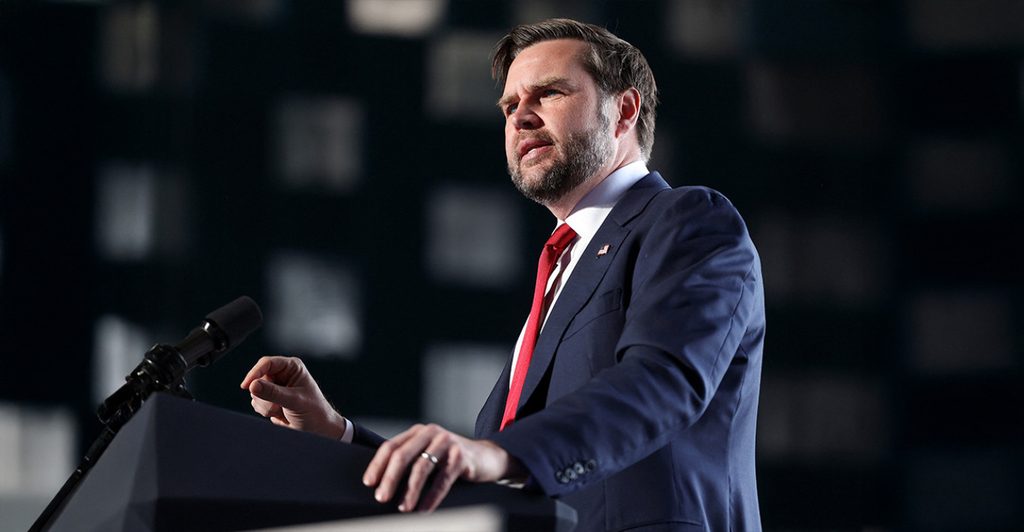
For JD Vance, the election outcome represents a particularly damaging setback to his presidential ambitions.
The vice president campaigned extensively alongside Trump in his home state of Ohio, only to see Republicans lose both the governor’s race and the special election for the Senate seat he previously held.
Those defeats have left Vance facing the prospect of entering the 2028 presidential contest closely associated with an increasingly unpopular president and unable to point to electoral success in his own state.
“Vice President Vance has an enormous hill to climb if he wants to run for president in 2028. Whether he likes it or not, this is the Trump-Vance administration,” Megan Hays, a former White House official under President Joe Biden, told Bloomberg.
“Voters are rejecting the administration’s failed economic policies and do not want them to continue. It’s difficult to see what message Vance could run on that would resonate with voters.”
Vance’s campaigning in Ohio has also attracted criticism over his support for a controversial advertisement produced by Republican gubernatorial candidate Vivek Ramaswamy.
The advertisement featured the estranged mother of Ramaswamy’s Democratic opponent, Amy Acton, provoking widespread criticism during the campaign.
Acton went on to become the first Democrat elected governor of Ohio in 20 years.
Former New Jersey Governor Chris Christie, who twice sought the Republican presidential nomination, condemned Vance’s support for the advertisement.
“JD Vance will be remembered for backing Vivek and his ad. A man who wrote a book about Catholicism. Shameful,” Christie wrote on X.
Even Trump’s own comments have added to the uncertainty surrounding his vice president’s prospects.
Although the president told reporters on Wednesday that he broadly agreed with Vance’s social media remarks about Iran and Israel, he also suggested that Vance might not seek the Republican nomination in 2028.
“Maybe he won’t run. I don’t know who’s going to run,” Trump said.
Trump’s candidate choices come under scrutiny
The president’s personal involvement in selecting Republican candidates has also become a central focus of the post-election recriminations.
Trump backed Ken Paxton over John Cornyn in Texas, pushed Republicans to nominate Darlene Graham in South Carolina and supported his ally Michael Whatley in North Carolina after incumbent Senator Thom Tillis, who had fallen out of favour with the president, decided not to seek re-election.
Republicans lost all three Senate contests.
The party narrowly retained Louisiana, where Trump had also pressured a sitting Republican senator to retire.
He also strongly endorsed Ramaswamy’s controversial campaign advertisement in Ohio.
The series of defeats has raised questions about the effectiveness of Trump’s interventions in Republican primaries and whether candidates selected primarily for their loyalty to him can appeal to the broader electorate.
Former Trump chief of staff Mick Mulvaney argued that the president’s decisions had not been guided by any broader electoral strategy.
“It wasn’t a decision by an adviser. There was no focus group. It was entirely Donald Trump,” Mulvaney wrote on X on Wednesday.
With the Republicans now facing two years outside congressional control, the struggle over the party’s direction is only beginning.
For Vance, DeSantis, Cruz and other potential contenders, the question is no longer simply who will inherit Trump’s political movement in 2028, but whether remaining loyal to his policies will be an advantage or a liability in the next presidential election.
Ask me anything
Explore related questions




