





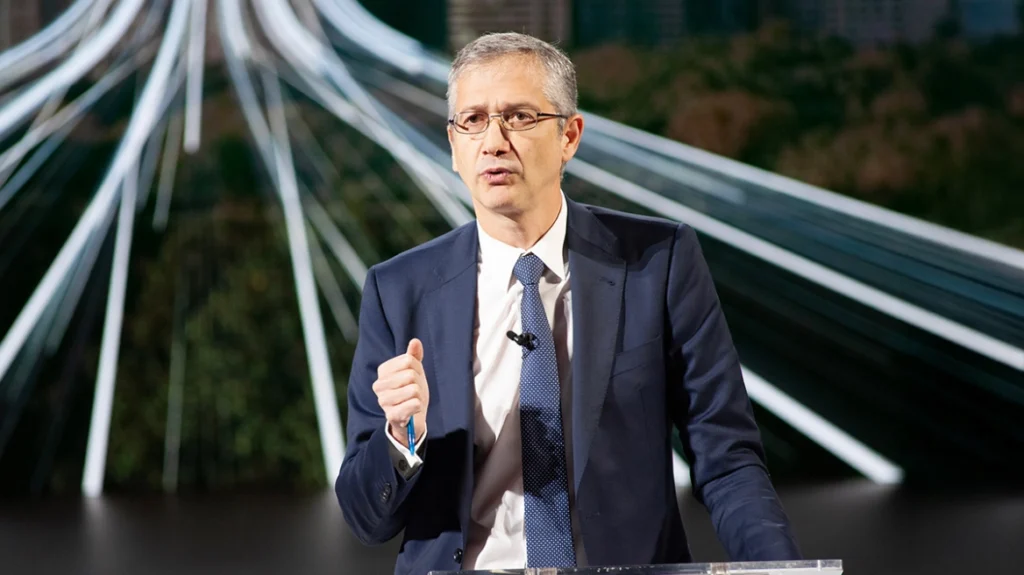
Spanish economist and current General Manager of the Bank for International Settlements (BIS), Pablo Hernández de Cos, has been selected by the heads of state and government of Eurozone member states (during the extraordinary European Council meeting) to succeed Christine Lagarde as President of the European Central Bank (ECB).
Pablo Hernández de Cos was part of the European Central Bank’s (ECB) core decision-making body for six years (2018–2024). As Governor of the Bank of Spain, he was an ex officio member of the ECB’s highest decision-making body, which sets the key interest rates and determines monetary policy for the Eurozone. He also participated in the ECB’s General Council and chaired the Advisory Technical Committee of the European Systemic Risk Board (ESRB) from 2019 to 2024. Earlier in his career, he had worked at the ECB as an adviser to the Executive Board, gaining first-hand knowledge of how the institution operates.
His Stance on Monetary Policy
Mr. de Cos is considered a pragmatic centrist with a slight inclination toward looser monetary policy, emphasizing gradual interest rate adjustments so as not to abruptly undermine economic growth.
He has jokingly described himself as an “owl” (combining characteristics of both a “dove” and a “hawk”). He supported negative interest rates and large-scale quantitative easing (QE) bond-buying programmes during the pandemic and the period of low inflation. At the same time, he voted in favor of the aggressive interest rate-hiking cycle following the 2022 energy crisis, insisting on vigilance against inflationary risks.
While he favors maintaining a broad range of instruments to support the bond market in terms of monetary policy, he has taken a strict stance on fiscal policy. As head of the Bank of Spain, he frequently criticized the Spanish government over debt sustainability and pension expenditure.
The Outstanding Challenges of His New Term
Mr. de Cos will be called upon to manage, from his very first day, a combination of persistent inflation, fiscal turmoil in France and extensive changes in the bank’s leadership.
Inflation in the Eurozone is running at levels almost twice the 2% target. The European Commission forecasts average inflation of 3.1% for 2027, before it falls to 2.1% in 2028. The new president will have to strike a balance between the need for further interest rate increases to bring prices under control and the risk of undermining European economic growth.
At the same time, the gradual reduction of the ECB’s bloated bond portfolio will have to continue without creating a squeeze in financing conditions for governments and businesses.
He is expected to take office just a few weeks before France’s presidential elections in spring 2027. The state of French public finances creates risks of sudden pressure in bond markets. In the event of speculative pressure on government bonds, de Cos will have to decide whether and under what conditions to activate the Transmission Protection Instrument (TPI), a move that could reignite tensions between “hawks” and “doves” on the ECB’s Governing Council.
At the same time, Mr. de Cos will have to work on the digital euro, as the full-scale pilot implementation is scheduled for the second half of 2027, marking a crucial milestone ahead of a possible first issuance in 2029.
Meanwhile, the further integration of climate risks into monetary policy, as well as institutional support for completing the Banking Union and the Savings and Investments Union, remain outstanding challenges inherited from Christine Lagarde’s term.
The Broader Agreement on ECB Leadership
Eurozone leaders, with France and Germany playing a decisive role, appear to be reaching a broader compromise that concerns not only Christine Lagarde’s succession by Pablo Hernández de Cos, but also the redistribution of other important positions within the ECB.
In this context, German economist Markus Brunnermeier is reportedly being considered for the position of the ECB’s Chief Economist, while France’s Laurence Boone may take on a portfolio relating to market operations.
An official recommendation by the Council of the EU will follow, to be submitted to the European Parliament and the ECB’s Governing Council for their formal opinions.
The final decision is expected in December. The permanent representatives of the member states will discuss these changes to the ECB’s leadership today.
Ask me anything
Explore related questions




