





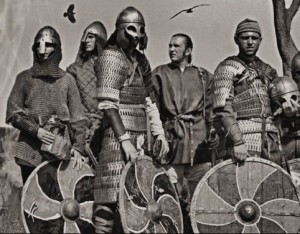
There are a lot of stereotypes circulating about the Vikings and their habits and traits. A lot of the things said about them are wrong and in many cases overexaggerated or missinterpreted. Here are 10 interesting facts about the Vikings that you probably didn’t know.
1. Vikings didn’t use horned helmets during battle
The typical Viking warrior costume in every Viking depiction implements a horned helmet. This is actually not true. Viking definitely used to wear helmets, although not horned ones. Depictions that come from their time don’t show any helmets like this. Also, the only authentic Viking helmet that was found was without any horns. The idea of them wearing helmets like this was probably born among painters in the 19-th century, who were inspired by the descriptions of ancient Greek and Roman chroniclers. The only truth is that long before the Vikings appeared, Norse and Germanic priests used to wear horned helmets but only for certain rituals.
2. Vikings used to take great care for their body hygiene
Yes, in the movies you always see them greasy, dirty, and messy, with blood stains all over them, but again, this is not exactly true. When Vikings weren’t working, sailing or fighting, they used to devote their time on personal hygiene and making themselves look good. Archeological digs on Viking settlement locations have showed up a lot of tweezers, razors, combs and ear cleaners made from animal bones and antlers. Archeologists are certain that they bathed at least once a week (more than some other Europeans from that time) and also enjoyed the natural hot springs very often.
3. Vikings were capable of sustaining and carrying fire
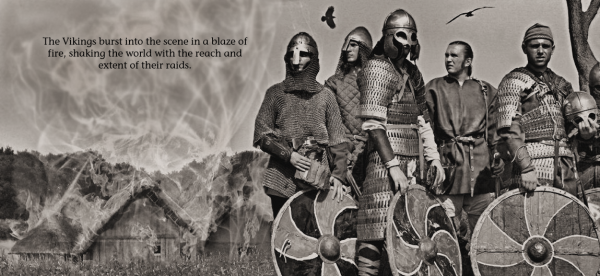
The used to collect decayed wood (touchwood) and boil it for several days in urine. After the boiling process was over, the pounded this material into something similar to felt. The Vikings realized that urine – the sodium nitrate found in urine, causes the tinder to smolder and not to burn. This way they could carry fire with them for later usage, even on their boats.
4. Vikings buried their dead in boats
Boats were a major part of the Viking culture. Boats were an integral part of their lives and defined them as people. They were even laid for their final rest on their boats. It was considered a great honor to be buried on your ship and be taken in the afterlife on it. The vessel that served the warrior well during his life will serve him one more time for one last journey. Vikings were sent on their journey to the afterlife surrounded by their weapons, valuable goods, and sometimes even with sacrificed slaves.
5. The Vikings were slave traders
Many Vikings earned their status and profit by getting involved in human trafficking. During their raids, they used to capture and enslave young men and women. Most of the people that they enslaved were taken from Anglo-Saxon, Celtic, and Slavic settlements. The slaves, or “thralls”, as they used to call them, were sold on the slave markets in Europe and on the Middle East as well.
6. Vikings had laws that guaranteed some rights and freedoms to women
Viking women had a lot of freedom when you consider other women from the area back in those days. The only women that didn’t have rights were “thrall” women. There were a lot of laws that guaranteed the rights of Viking women: they were able to inherit property, to request a divorce and to reclaim their dowry (wealth) if the marriage has ended.
7. Most Viking men spent their time in farming instead of pillaging
It maybe sounds strange and unbelievable, but instead of swords, most Vikings used farming tools on an everyday basis. Of course, some of them were pirates, warriors, and raiders, but most of the Viking population were farmers. They used to cultivate barley, rye, oats and other plants. They also had herds of cattle, goats, sheep and pigs.
8. Vikings worshiped skiing and used to ski a lot
Scandinavian people invented primitive skis probably 6,000 years ago, but Russians maybe invented them even earlier. During the Viking age, Norse people used skis as a means of transportation across the harsh winter terrain, but also as a past time activity. Even one of the gods they worshiped (Ullr), was devoted to skiing.
9. Viking men liked their hair blond
Viking culture had a fascination with blonde hair. Their ideal for beauty was a person whit a blond hair. That is why Viking that had black hair, usually men, used a strong soap with a high potash concentration in order to bleach their hair. Some groups of Vikings bleached their beards also. Besides being used as a cosmetic product, this soap, and its ingredients probably helped the Vikings get rid of pesky head lice too.
10. Vikings were never organized in a bigger unified group.
Not only didn’t they recognize the ruling of other Vikings, the probably didn’t even call themselves Vikings. This term was used for all Scandinavians that ventured in overseas expeditions. The land that is today Denmark, Norway and Sweden, was a huge area ruled by chieftains of many tribes that were in a constant war with each other.
Ask me anything
Explore related questions




