

×
GreekEnglish

×
  • Politics
  • Diaspora
  • World
  • Lifestyle
  • Travel
  • Culture
  • Sports
  • Cooking
Friday
01
May 2026
weather symbol
Athens 12°C
  • Home
  • Politics
  • Economy
  • World
  • Diaspora
  • Lifestyle
  • Travel
  • Culture
  • Sports
  • Mediterranean Cooking
  • Weather
Contact follow Protothema:
Powered by Cloudevo
> Culture

The Ancient Greek roots of Feta Cheese

Given that the “Odyssey” was written in 8th century BC, the origin of feta is indisputably Greek

Newsroom January 30 09:31


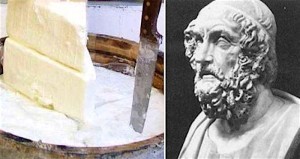
As Greece fights to maintain the name of feta cheese as a Protected Designation of Origin (PDI) product, the Real Greek Feta website provides great evidence that the first mention of the famous cheese is as old as Homer’s “Odyssey”.

When Odysseus and his men enter the cave of Cyclops Polyphemus, the first thing they notice is the smell and sight of the rich, white cheese made with goat and sheep milk in brine. Homer writes:

“We entered the cave, but he wasn’t there, only his plump sheep grazed in the meadow. The woven baskets were full of cheese, the folds were full of sheep and goats and all his pots, tubs and churns where he drew the milk, were full of whey. When half of the snow-white milk curdled he collected it put it in the woven baskets and kept the other half in a tub to drink. Why my good ram are you the last to leave the fold? You have never been left behind by the flock before. You were always first walking ahead to graze the tender sheets of grass”.

>Related articles

The 5-year-old boy who had his finger amputated at a kindergarten in Evosmos was operated

New Euroepean pharmaceutical hub in Tripoli

Chrysochoidis and Agapidaki in Ilion after big fire destroyed apartments

According to myth, Cyclops Polyphemus made the cheese that was later to be called feta by accident. Transporting the milk that he collected from his sheep in skinbags made of animal stomachs, one day he realized that the milk had curdled and had taken a solid, tasty and conservable form. Given that the “Odyssey” was written in 8th century BC, the origin of feta is indisputably Greek.

The ancient Greeks called the product that came from the coagulation of milk “cheese”. The name Feta, literally meaning “slice,” originated in the 17th century, and probably refers to the practice of cutting the cheese in slices to be placed into barrels. The name Feta prevailed in the 19th century, and since then has characterized a cheese that has been prepared for centuries using the same general method, and whose origin is lost in time.

Source: Philip Chrysopoulos/greekreporter.com

Ask me anything

Explore related questions

#ancient greece#feta cheese#gastronomy#greece#Greek cuisine#history#Homer#Odyssey
> More Culture

Follow en.protothema.gr on Google News and be the first to know all the news

See all the latest News from Greece and the World, the moment they happen, at en.protothema.gr

> Latest Stories

The 5-year-old boy who had his finger amputated at a kindergarten in Evosmos was operated

May 1, 2026

Iran submits new proposal to US to end the war

May 1, 2026

Rain and strong winds bring a cooler start to May

May 1, 2026

New Euroepean pharmaceutical hub in Tripoli

May 1, 2026

1.7 million euros would be made by the circuit from the half ton of skunk found in Igoumenitsa

May 1, 2026

Eurovision 2026: 95,000 tickets already sold to fans from 75 countries

May 1, 2026

Heavy traffic on national highways as May Day weekend getaway continues – Delays also reported on Attiki Odos (Livefeed)

May 1, 2026

Emotional video shows Aegean pilot’s final landing after 45 years of service: «Today I am not changing profession, but way of life» (video)

May 1, 2026
All News

> Greece

In reverence, the emotional deposition in Jerusalem, see photos & video

The Holy Temple of the Resurrection opened after many days due to the war between Israel and Iran

April 10, 2026

In the final stretch for the accreditation of joint master’s degrees: Aiming for their launch in the coming academic year

April 10, 2026

Schedule for Epitaph Procession today (10/4)

April 10, 2026

Perfect weather for Easter excursions, according to Tsatrafyllia’s forecast

April 10, 2026

Easter in Greece: The customs that continue in Greek tradition – From Nafpaktos to Corfu

April 10, 2026
Homepage
PERSONAL DATA PROTECTION POLICY COOKIES POLICY TERM OF USE
Powered by Cloudevo
Copyright © 2026 Πρώτο Θέμα



