

×
GreekEnglish

×
  • Politics
  • Diaspora
  • World
  • Lifestyle
  • Travel
  • Culture
  • Sports
  • Cooking
Saturday
07
Feb 2026
weather symbol
Athens 14°C
  • Home
  • Politics
  • Economy
  • World
  • Diaspora
  • Lifestyle
  • Travel
  • Culture
  • Sports
  • Mediterranean Cooking
  • Weather
Contact follow Protothema:
Powered by Cloudevo
> Culture

Ancient Greeks painted their gods in vibrant colours (PHOTOS)

Scholars and art lovers are slowly getting warmer to the idea of "statuary polychromy"

Newsroom February 1 08:06

For 15 years now, the traveling exhibition Gods in Colour, has been constantly moving from one city of the world to another, challenging the long-established idea that ancient art is a celebration of ‘pure marble white’.
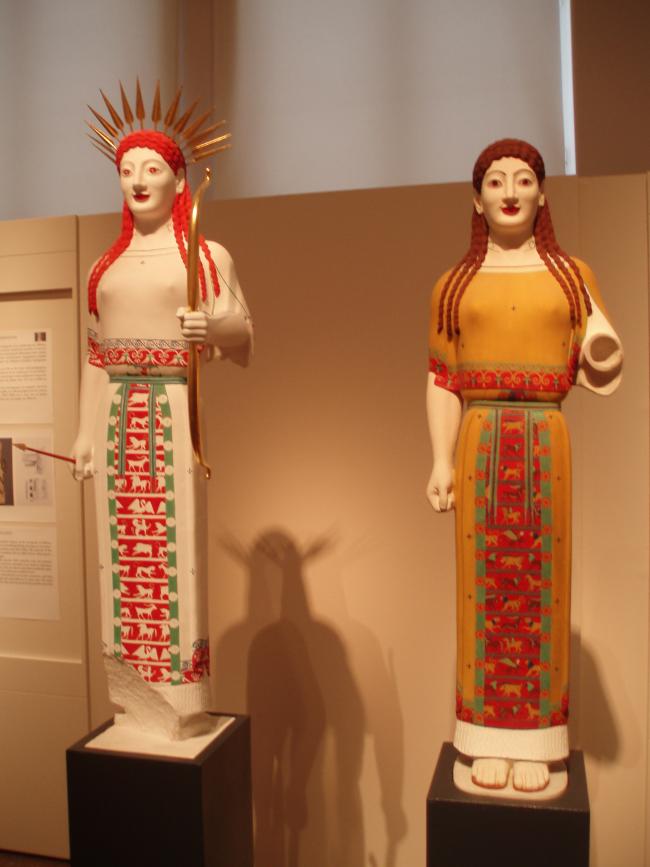
NFstatues_peplos_kore_as_athena-artemis

(The Peplos Kore of the Acropolis museum, recreated in vibrant colour as Athena and Artemis)

The exhibition is the love child of the German archaeologist Vinzens Brinkmann, who has been researching ancient polychromy since the early 1980s. Brinkmann, along with other archaologists, have been using ultra-violet light to trace colour on marble statues which retain no signs of their original decorations. The technique has managed to confirm what had been suspected for at least a couple of centuries, since pioneering Hellenist, historian and archaeologist Johann Joachim Winckelmann published his two-volume history of ancient art in 1764: that ancient art would have been a riot of colour and glitzy decoration.

Last week, BBC revisited the issue, after the end of yet another successful run of Gods in Color, this time in San Francisco (it has previously been, among other cities, in Mexico City, Oxford, Vienna, Stockholm, Berlin, Madrid, Amsterdam, Istanbul, Rome and of course, Athens, at the National Archaeological Museum).
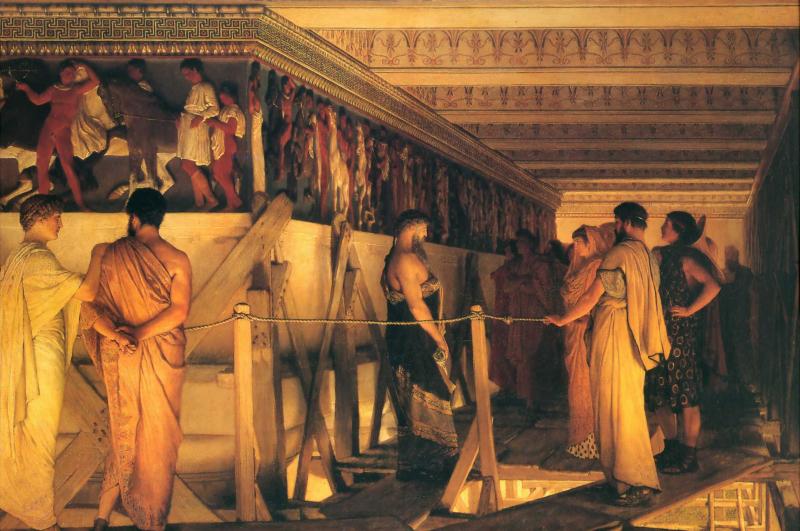
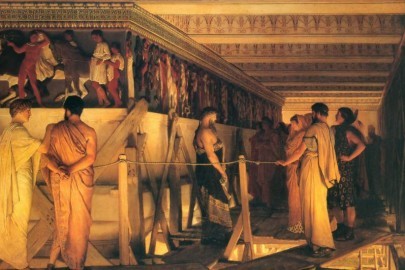
1868_Lawrence_Alma-Tadema_-_Phidias_Showing_the_Frieze_of_the_Parthenon_to_his_Friends_1

Written by Natalie Haynes, the BBC story focuses on a 1868 painting by Lawrence Alma – Tadema, titled ‘Phidias Showing the Frieze of the Parthenon to his Friends’. It depicts the sculptor, one of the most significant artists of the classical era, presenting his work on what is now considered one of the most important monuments in the world. What caused a stir at the time was that the painter chose to present the sculptures in vibrant colours, something that was considered a kind of sacrilege.

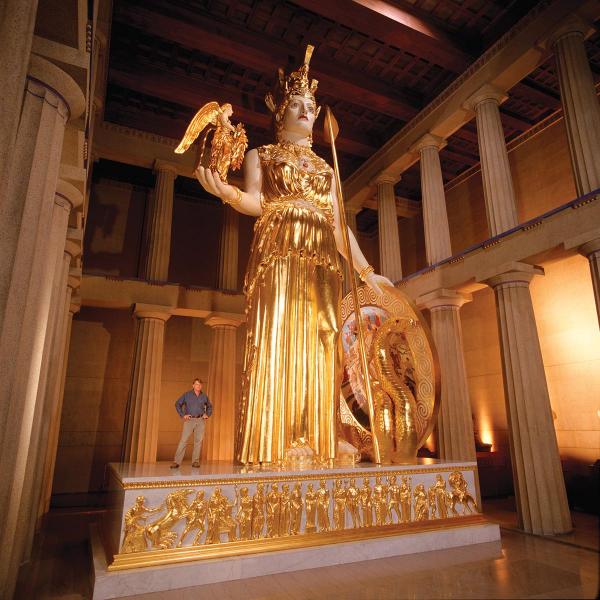
Phidias also created a huge statue of Athena Parthenos to stand inside the Parthenon, which has acquired legendary status since its destruction, though a modern day replica in Nashvill, by Alan LeQuire is acknowledged as the larger indoors statue in the world. It is covered in gold and ivory, as the original was, evidence of the multicolor nature of Ancient art. Other evidence comes from roman murals, depicting painted statues.
>Related articles

AHI President highlights U.S.–Greece relations and hosts key Hellenic leaders in Washington

The dethroning of Bitcoin: Prices in free fall as Trump-driven euphoria expires

Thriller session on the Stock Exchange: Second consecutive decline, but weekly gains held

lequire_athena-2

Despite all evidence and historical analysis, the idea of colored statues still unsettling for an audience long educated to consider classical Greek art as a sea of white serenity. But, as Natalie Haynes writes, “the global audience for Brinkmann’s Gods in Colour exhibition has surely proved that there is an appetite for modern recreations of the brightness of ancient statuary.”

Source: neoskosmos.com

Ask me anything

Explore related questions

#acropolis#ancient greece#archaeology#art#culture#Exhibition#greece#Greeks#history#museum
> More Culture

Follow en.protothema.gr on Google News and be the first to know all the news

See all the latest News from Greece and the World, the moment they happen, at en.protothema.gr

> Latest Stories

Epstein case rocks Hollywood: Jay Z, Leonardo DiCaprio, George Clooney, and the “Interesting girls of Copenhagen”

February 6, 2026

Olympiacos – Virtus Bologna 109-77: Returned to winning ways with an out-of-this-world performance

February 6, 2026

AHI President highlights U.S.–Greece relations and hosts key Hellenic leaders in Washington

February 6, 2026

The dethroning of Bitcoin: Prices in free fall as Trump-driven euphoria expires

February 6, 2026

Regional and international developments discussed at Dendias–Indian Foreign Minister meeting

February 6, 2026

AHEPA Mourns the Passing of Former AHEPA Canada President Nicholas Spillios

February 6, 2026

Athens’ journey from the 1821 Revolution to World War II told through three documentaries

February 6, 2026

The Commission targets TikTok for its addictive design that harms children

February 6, 2026
All News

> Greece

Felony charges and suspension for Air Force Colonel over espionage for China – How he confessed everything

He has been given a deadline to testify next Tuesday and remains in custody – The 54-year-old commander of the 128th Air Base had been active for at least 18 months

February 6, 2026

Kakousis steps away from journalism while involved in the Panagopoulos case and declares his innocence

February 6, 2026

How the Chinese recruited the wing commander spy, his handler, and the trip now under investigation

February 6, 2026

Hellenic Revenue & post office scams: How fraudsters exploit forgotten tickets via SMS—Spot the red flags & protect yourself

February 6, 2026

Orestiada: High alert as Ardas and Evros rivers swell with rising water levels

February 6, 2026
Homepage
PERSONAL DATA PROTECTION POLICY COOKIES POLICY TERM OF USE
Powered by Cloudevo
Copyright © 2026 Πρώτο Θέμα



