





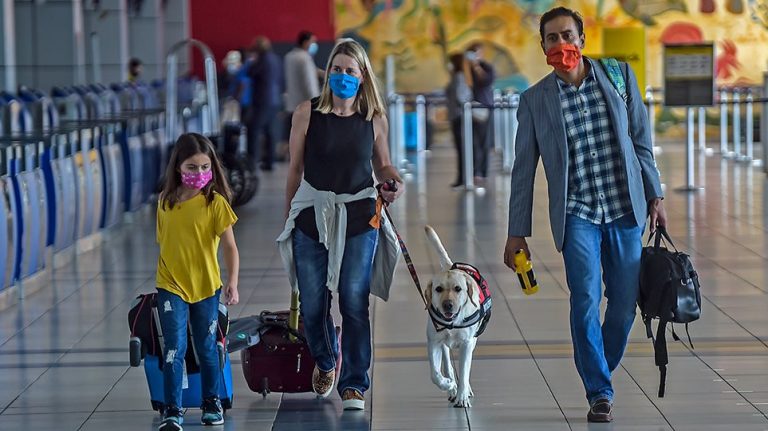
Today, the Commission presents a package of guidelines and recommendations to help Member States gradually lift travel restrictions and allow tourism businesses to reopen, after months of lockdown, while respecting necessary health precautions.
The Commission’s guidance aims to offer people the chance to get some well-needed rest, relaxation and fresh air. As soon as the health situation allows, people should be able to catch up with friends and family, in their own EU country or across borders, with all the safety and precautionary measures needed in place.
The package also aims to help the EU tourism sector recover from the pandemic, by supporting businesses and ensuring that Europe continues to be the number one destination for visitors.
The Commission’s Tourism and Transport package includes:
An overall strategy towards recovery in 2020 and beyond;
A common approach to restoring free movement and lifting restrictions at EU internal borders in a gradual and coordinated way;
A framework to support the gradual re-establishment of transport whilst ensuring the safety of passengers and personnel;
A recommendation which aims to make travel vouchers an attractive alternative to cash reimbursement for consumers;
Criteria for restoring tourism activities safely and gradually and for developing health protocols for hospitality establishments such as hotels.
For tourists and travellers
The Commission is looking to give people the ability, confidence and safety to travel again with the following measures:
Safely restoring freedom of movement and lifting internal border controls:
Free movement and cross-border travel are key to tourism. As Member States manage to reduce the circulation of the virus, blanket restrictions to free movement should be replaced by more targeted measures. If a generalised lifting of restrictions is not justified by the health situation, the Commission proposes a phased and coordinated approach that starts by lifting restrictions between areas or Member States with sufficiently similar epidemiological situations. The approach must also be flexible, including the possibility to reintroduce certain measures if the epidemiological situation requires. Member States should act on the basis of the following 3 criteria:
epidemiological, notably focusing on areas where situation is improving, based on guidance by the European Centre for Disease Prevention and Control (ECDC) and using the regional map developed by the ECDC;
the ability to apply containment measures throughout the whole journey including at border crossings, including additional safeguards and measures where physical distancing may be difficult to ensure and
economic and social considerations, initially prioritising cross-border movement in key areas of activity and including personal reasons.
The principle of non-discrimination is of particular importance: when a Member State decides to allow travel into its territory or to specific regions and areas within its territory, it should do so in a non-discriminatory manner – allowing travel from all areas, regions or countries in the EU with similar epidemiological conditions. In the same vein, any restrictions must be lifted without discrimination, to all EU citizens and to all residents of that Member State regardless of their nationality, and should be applied to all parts of the Union in a similar epidemiological situation.
Restoring transport services across the EU while protecting the health of transport workers and passengers:
The guidelines present general principles for the safe and gradual restoration of passenger transport by air, rail, road and waterways. The guidelines put forth a series of recommendations, such as the need to limit contact between passengers and transport workers, and passengers themselves, reducing, where feasible, the density of passengers.
The guidelines also include indications on the use of personal protective equipment such as face masks and on adequate protocols in case passengers present coronavirus symptoms. The guidelines also make recommendations for each mode of transport and call for coordination among Member States in light of re-establishment of gradual connections between them.
Safely resuming tourism services:
The Commission sets out a common framework providing criteria to safely and gradually restore tourism activities and developing health protocols for hotels and other forms of accommodation, to protect the health of both guests and employees. These criteria include epidemiological evidence; sufficient health system capacity being in place for local people and tourists; robust surveillance and monitoring and testing capacity and contact tracing. These guidelines will allow people to safely stay at hotels, camping sites, Bed&Breakfasts or other holiday accommodation establishments, eat and drink at restaurants, bars and cafés and go to beaches and other leisure outdoor areas.
Ensuring cross-border interoperability of tracing apps:
Member States, with the support of the Commission, agreed on guidelines to ensure cross-border interoperability between tracing apps so that citizens can be warned of a potential infection with coronavirus also when they travel in the EU. This will guide developers working with national health authorities. Such tracing apps must be voluntary, transparent, temporary, cybersecure, using anonymised data, should rely on Bluetooth technology and be inter-operable across borders as well as across operating systems. Interoperability is crucial: EU citizens must be able to receive alerts of a possible infection in a secure and protected way, wherever they are in the EU, and whatever app they are using. The Commission is supporting Member States in finding the right solution, in line with the principles set out in the EU toolboxand the Commission guidance on data protection.
Making vouchers a more attractive option for consumers:
Under EU rules, travellers have the right to choose between vouchers or cash reimbursement for cancelled transport tickets (plane, train, bus/coach, and ferries) or package travel. While reaffirming this right, the Commission’s recommendation aims to ensure that vouchers become a viable and more attractive alternative to reimbursement for cancelled trips in the context of the current pandemic, which has also put heavy financial strains on travel operators. The voluntary vouchers should be protected against insolvency of the issuer, with a minimum validity period of 12 months, and be refundable after at most one year, if not redeemed. They should also provide passengers sufficient flexibility, should allow the passengers to travel on the same route under the same service conditions or the travellers to book a package travel contract with the same type of services or of equivalent quality. They should also be transferable to another traveller.
For tourism businesses
The Commission aims to support Europe’s tourism sector by:
Ensuring liquidity for tourism businesses, in particular SMEs, through:
o Flexibility under State aid rules allowing Member States to introduce schemes, such as guarantee schemes for vouchers and further liquidity schemes, to support companies in the transport and travel sectors and to ensure that reimbursement claims caused by the coronavirus pandemic are satisfied. The schemes for vouchers can be approved by the Commission very rapidly, upon notification by the Member State concerned.
o EU funding: EU continues providing immediate liquidity to businesses affected by the crisis through the Coronavirus Response Instrument Initiative, under shared management with Member States. In addition, the Commission has made available up to €8 billion in financing for 100,000 small businesses hit by the crisis, with the European Investment Fund.
Saving jobs with up to €100 billion in financial relief from the SURE programme:
The SURE programme helps Member States cover the costs of national short-time work schemes and similar measures allowing companies to safeguard jobs. The Commission also supports partnerships between employment services, social partners and companies to facilitate reskilling, especially for seasonal workers.
Connecting citizens to local tourism offer, promoting local attractions and tourism and Europe as a safe tourist destination:
The Commission will work with Member States to promote a patronage voucher system under which customers can support their favourite hotels or restaurants. The Commission will also promote pan-European communication campaigns featuring Europe as a number one tourist destination.
To complement short-term measures, the Commission will continue to work with Member States to promote sustainable tourism in line with the European Green Deal and encourage a digital transformation of tourism services to offer more choice, better allocation of resources and new ways of managing travel and tourist flows.
The Commission will organise a European tourism convention with EU institutions, the industry, regions, cities and other stakeholders to jointly build the future of a sustainable, innovative and resilient European tourism ecosystem – the ‘European Agenda for Tourism 2050′.
source europeansting.com
Ask me anything
Explore related questions




