

×
GreekEnglish

×
  • Politics
  • Diaspora
  • World
  • Lifestyle
  • Travel
  • Culture
  • Sports
  • Cooking
Thursday
23
Jul 2026
weather symbol
Athens 30°C
  • Home
  • Politics
  • Economy
  • World
  • Diaspora
  • Lifestyle
  • Travel
  • Culture
  • Sports
  • Mediterranean Cooking
  • Weather
Contact follow Protothema:
Powered by Cloudevo
> World

Medieval scientists tried to make little people with semen, blood & an animal womb

The first known account of the production of the homunculus is said to be found in an Arabic work called the "Book of the Cow" purportedly written by Plato

Newsroom September 19 02:15

Δείτε περισσότερα άρθρα μας στα αποτελέσματα αναζήτησης

Add Protothema.gr on Google

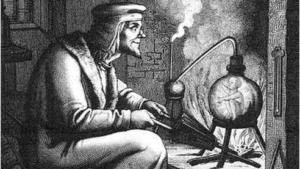
The question of how to create life does not just go back to Mary Shelley’s Frankenstein, when the eponymous character used forbidden science to create life. Medieval scientists tried for centuries to create miniature artificial people using human semen mixed with other substances and implanted in an animal womb!

The homunculus is first referred to in  alchemical writings of the 16 th century. It is likely, however, that this concept is older than these writings. The idea that miniature fully-formed people can be created has been traced to the early  Middle Ages  (400 to 1000 AD), and is partly based on the  Aristotelian belief that the sperm is greater than the ovum in its contribution to the production of offspring.

See Also:

For 70 years, Queen Elizabeth wrote to her pen pal in North Dakota who was born on the same day as her

>Related articles

Zelensky dismissed the Chief of the General Staff of the Ukrainian Armed Forces – Who is Mikhail Drapati, the “New Generation” General?

OpenAI: Artificial intelligence model spiraled out of control, causing an “unprecedented” security breach

Mary Linda, the legendary Greek singer, dies at 90

The first known account of the production of the homunculus is said to be found in an undated Arabic work called the Book of the Cow , purportedly written by the Greek philosopher Plato himself.

The materials required for the creation of the homunculus include human semen, a cow or ewe and animal blood, whilst the process includes the artificial insemination of the cow / ewe, smearing the inseminated animal’s genitals with the blood of another animal, and feeding it exclusively on the blood of another animal.

Read more: Ancient Origins

Ask me anything

Explore related questions

#animal#archaeology#blood#culture#history#homunculus#hybrid#science#semen#womb#world
> More World

Follow en.protothema.gr on Google News and be the first to know all the news

See all the latest News from Greece and the World, the moment they happen, at en.protothema.gr

> Latest Stories

Man arrested over killing of lawyer Stavros Georgiou: What happened on the fatal night, and the clue that gave away the suspect

July 22, 2026

Prime Minister: Macroeconomic stability no longer a problem for Greece

July 22, 2026

Missing Chinese woman’s phone found in central Athens; man who activated it says he found it on the street

July 22, 2026

Turkey still short of legal requirements for potential F-35 delivery, State Department tells Congress

July 22, 2026

Mati fire: mass grave at Nea Makri cemetery at heart of Supreme Court appeal by victims’ families and burn survivors; video

July 22, 2026

Israeli drone strike kills one, injures several in Nuseirat refugee camp, central Gaza

July 22, 2026

Greece’s power grid pushed to the limit for third day as demand tops 10,600 MW

July 22, 2026

Greek court blocks extradition of fugitive wanted for 1999 Sydney murder

July 22, 2026
All News

> Greece

In reverence, the emotional deposition in Jerusalem, see photos & video

The Holy Temple of the Resurrection opened after many days due to the war between Israel and Iran

April 10, 2026

In the final stretch for the accreditation of joint master’s degrees: Aiming for their launch in the coming academic year

April 10, 2026

Schedule for Epitaph Procession today (10/4)

April 10, 2026

Perfect weather for Easter excursions, according to Tsatrafyllia’s forecast

April 10, 2026

Easter in Greece: The customs that continue in Greek tradition – From Nafpaktos to Corfu

April 10, 2026
Homepage
PERSONAL DATA PROTECTION POLICY COOKIES POLICY TERM OF USE
Powered by Cloudevo
Copyright © 2026 Πρώτο Θέμα



