

×
GreekEnglish

×
  • Politics
  • Diaspora
  • World
  • Lifestyle
  • Travel
  • Culture
  • Sports
  • Cooking
Tuesday
11
Aug 2026
weather symbol
Athens 29°C
  • Home
  • Politics
  • Economy
  • World
  • Diaspora
  • Lifestyle
  • Travel
  • Culture
  • Sports
  • Mediterranean Cooking
  • Weather
Contact follow Protothema:
Powered by Cloudevo
> Culture

2,600-year-old stone busts of ‘lost’ ancient Tartessos people discovered in sealed pit in Spain

The carved stone faces, which archaeologists date to the fifth century B.C., were found hidden inside a sealed pit

Newsroom April 26 04:48

Δείτε περισσότερα άρθρα μας στα αποτελέσματα αναζήτησης

Add Protothema.gr on Google

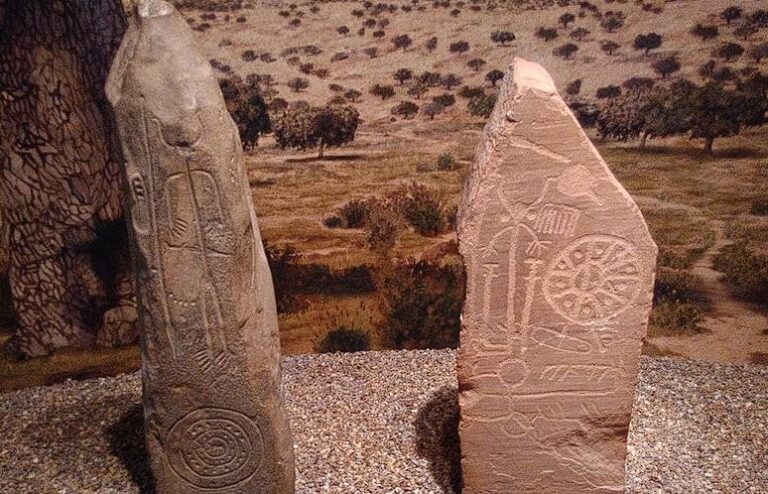
Archaeologists in Spain have unearthed five life-size busts of human figures that could be the first-known human depictions of the Tartessos, a people who formed an ancient civilization that disappeared more than 2,500 years ago.

The carved stone faces, which archaeologists date to the fifth century B.C., were found hidden inside a sealed pit in an adobe temple at Casas del Turuñuelo, an ancient Tartessian site in southern Spain. The pieces were scattered amongst animal bones, mostly from horses, that likely came from a mass sacrifice, according to a translated statement(opens in new tab) published April 18.

“The unusual thing about the new finding is that the representations correspond to human faces,” Erika López(opens in new tab), a spokesperson for the Spanish National Research Council (CSIC), said in the statement.

also read

Fire breaks out at Russian Cultural Center in Nicosia (video)

>Related articles

New heatwave sweeps Europe as Britain, France and Spain face red alert

Armed separatists threaten tourists & home buyers in Corsica: “Stay in your homes”

Mitsotakis in Politico: EU needs new measures to tackle the weaponization of migration

Marvel Universe’s Loki in Greece (photo)

Archaeologists from the CSIC called this discovery “a profound paradigm shift in the interpretation of [Tartessos],” since this ancient civilization, which existed from about the eighth to the fourth centuries B.C., was long considered an aniconic culture in which divinity was represented through animal or plant motifs, rather than idolized humans, according to the statement.

more at livescience.com

Ask me anything

Explore related questions

#ancient civilisations#archaeological excavations#archaeology#excavations#spain
> More Culture

Follow en.protothema.gr on Google News and be the first to know all the news

See all the latest News from Greece and the World, the moment they happen, at en.protothema.gr

> Latest Stories

“I killed her”: Florida man arrested 39 years after 1987 murder of young mother

August 11, 2026

Colombia earthquake: More than 250 dead and 1,310 injured as rescuers race against time to find missing in rubble

August 11, 2026

Trump, the catering cart and ‘Food Truck One’: AI memes flood social media after secret Turkey escape operation

August 11, 2026

Seven in 10 Greeks like Nolan’s The Odyssey, Kapa research poll shows

August 11, 2026

How a self-styled “fabulist” became Cambridge’s star professor, and what it suggests about academic system today

August 11, 2026

Special Spatial Planning Framework for Tourism: What changes for hotels, outside-plan development, islands and short-term rentals

August 11, 2026

Woman remanded over fatal Marfin Bank arson attack deemed ‘particularly dangerous’, court explains reasoning

August 11, 2026

Man dies in Spata fire started by his own car, body recovered by firefighters

August 11, 2026
All News

> Greece

In reverence, the emotional deposition in Jerusalem, see photos & video

The Holy Temple of the Resurrection opened after many days due to the war between Israel and Iran

April 10, 2026

In the final stretch for the accreditation of joint master’s degrees: Aiming for their launch in the coming academic year

April 10, 2026

Schedule for Epitaph Procession today (10/4)

April 10, 2026

Perfect weather for Easter excursions, according to Tsatrafyllia’s forecast

April 10, 2026

Easter in Greece: The customs that continue in Greek tradition – From Nafpaktos to Corfu

April 10, 2026
Homepage
PERSONAL DATA PROTECTION POLICY COOKIES POLICY TERM OF USE
Powered by Cloudevo
Copyright © 2026 Πρώτο Θέμα



