





It started as a queen’s vision and evolved into the country’s only botanical and at the same time historical garden, but mainly into an irreplaceable island of greenery in the concrete chaos of Athens.
The National Gardens is still today not only for ordinary citizens, but also for expert scientists a “known-unknown”, as revealed by the recent research of the University of Athens for the recording of its flora and fauna.
The same is true for all of us who have associated this place with our childhood memories. Those who were born and raised in Athens, but also those who have visited it still keep in their memory the image of the ducks in the central lake. For most of them, it was the first time they saw ducks in person in their lives. Thus, their feeding, along with the doves at the monument to the Unknown Soldier, were indelibly engraved in their immature minds.
From 1834
The historical route of this strategically important lung is intertwined with the creation of the modern Greek state and the emergence of Athens as the new capital in 1834. Almost at the same time, Queen Amalia began to pursue her vision of creating a botanical garden next to the palace.
The construction of the then Royal Garden was approved in 1836 and finally started in 1839, under the supervision of a special committee chaired by Professor of Botany Nicholas Carl Fraas, who was responsible for the work and the supply of plants. According to the original plan, its size was smaller and it was developed mainly on the side of present-day Amalia Avenue.
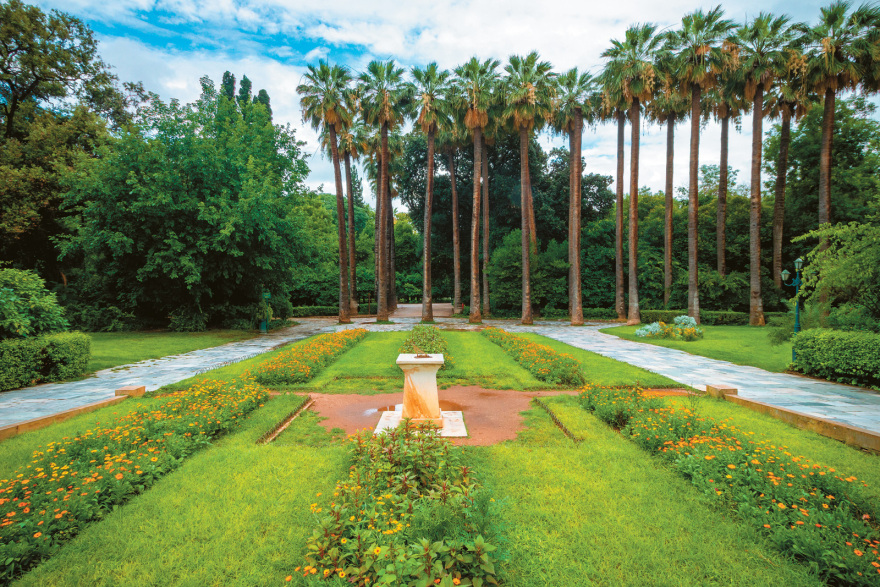
At that time, after contacts with eminent professors of Botany from Greece and abroad, tree planting began with the import of thousands of ornamental plants from Genoa and the newly established “Agrokipion Tyrinthos” of the Agricultural School of the same name, founded by Ioannis Kapodistrias. Among them stand out the Washingtonian, the tree row of which is still unique in Europe, as well as rare species of pines and other plants and trees from various parts of Greece.
Important information about the development of the National Garden comes from the letters of Queen Amalia to her father, whom she informed almost daily about how much her… garden was growing. Its curatorship was initially taken over by the Bavarian horticulturist Smarrat, assisted by the Prussian gardener Friedrich Schmidt, who succeeded him and remained the soul of the Garden until his death.
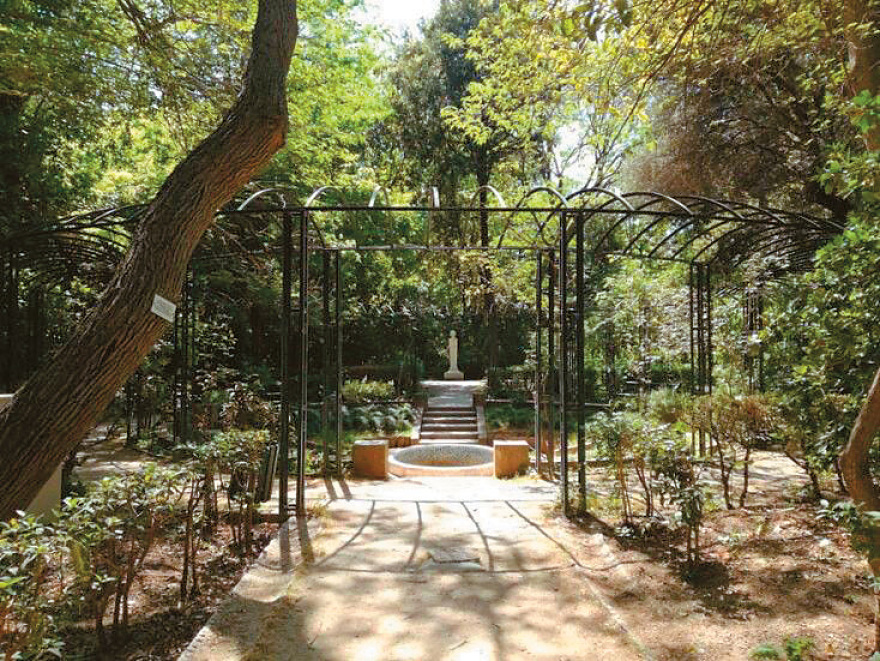
In 1847 the original boundaries were enlarged and its landscaping was entrusted to the French horticulturist François Louis Barot, who designed its network of pathways and determined the form and position of its small buildings, water features, and enclosures. The works were completed in 1852, when it took on its form according to the principles of the 18th-century English style, with bridges, benches, pergolas, caves, and small pavilions. At that time, to visit or pass through it, you had to be ‘decently dressed’. In its present extent and physiognomy, it was finalized in 1927.
The firsts and today
The National Garden has collected many firsts. It is the first botanical garden, the first landscaped green garden in modern Greece, and the first and only historic garden in the country to embody the memory, journey, and evolution of Athens into a European capital. At the same time, however, it plays a vital role in the city’s daily life as an important factor in its resilience to the challenges of the climate crisis.
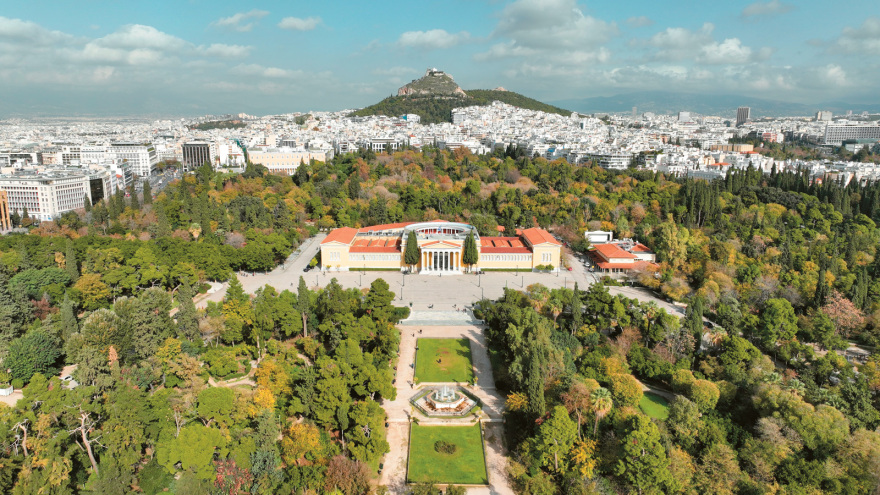
It is characteristic that in its 155 hectares of area, there are 80,000 trees, shrubs, and plants, thus acting as the largest lung in an overstructured desert. In other words, it constitutes a valuable green shield for Athens at a time when its temperature is rising rapidly and dangerously.
As for its special features, it is worth mentioning that it has seven entrances: the main one from Amalias Avenue, another one from Vassilissis Sofias, three from Herodou Atticus, and two from Zappeion.
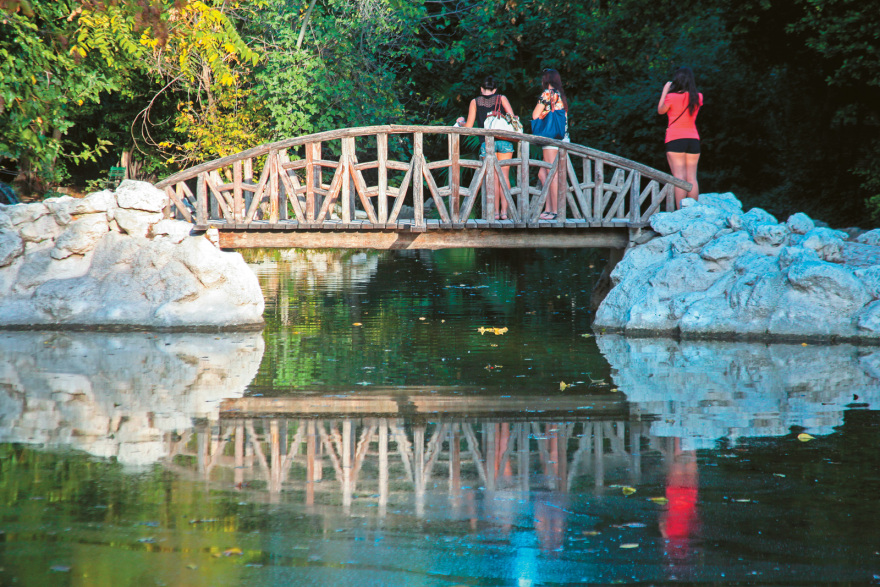
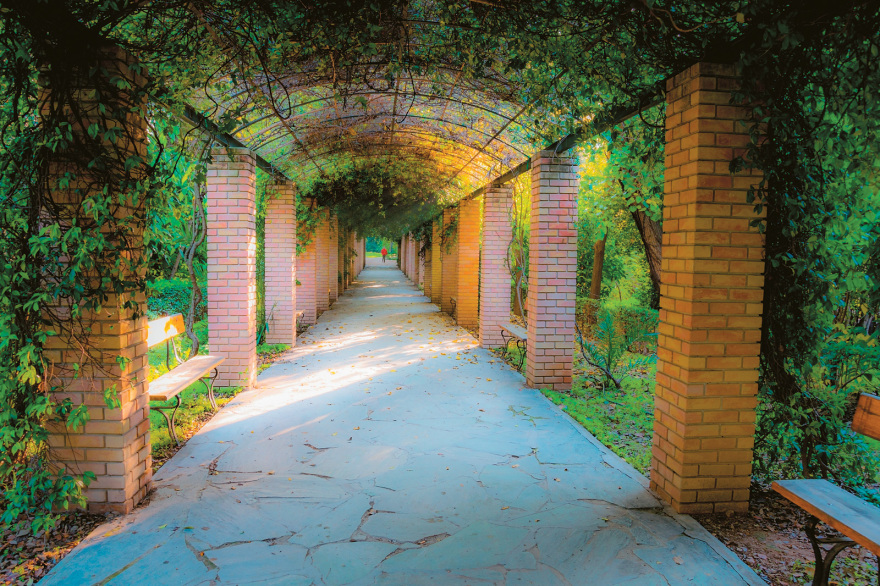
It also has seven lakes: the one near Vassilissis Sophia with the goldfish which overflows into the shallow Swan Lake. Also, the central lake with free waterfowl and the cave lake with fish, known as the “Lake of Constantine Karamanlis”, as he used to gaze at the garden from that spot. Furthermore, the water lily pond is full of water turtles, the small goldfish pond, and the oval side pond of the central one. One of its characteristic points is the so-called “terrace of Amalia”, which however has been enclosed in the area of the Parliament. The network of paths is 7 km long and 3-5 meters wide. Another characteristic feature is the seven pergolas.
In the National Garden, according to the information provided by the Municipality of Athens, one can find almost all types of vegetation: evergreen and deciduous trees, shrubs, perennial herbaceous plants, climbing plants, succulents, and cacti, annual flowering plants, lawns, ground cover plants, etc. The vegetation includes many typical Mediterranean species but is characterized by a high proportion of non-native species, most notably the Washingtonians, the palm trees that make up the unique tree row at the main entrance to Amalia Avenue, named in honour of US President George Washington. Furthermore, the eucalyptus and casuarinas of Australia, the phytolacas of South America, the pseudo-pepper trees of Central America, the Chinese ailanthus, etc.
Most important are the so-called “historic plantings”, i.e. those made during the first two decades of its creation, and which survive to this day. In addition to the wasps, the same category includes some large pines and cypresses, yucca, peleas, plantains, wisteria, and many other scattered plants. This timelessness of much of the National Garden makes it a nucleus for connecting the past with the present and the future.
Esthetic habitat
.
Although predominantly botanical, the National Garden also has an important fauna, as several species shelter, nest and breed freely in it. Due to the special conditions with its dense vegetation, abundant liquid element, and the protection measures, with the curfew during the evening hours, it has become a rare urban habitat.
Visitors can observe a wide variety of animals living either freely or in protected areas in the centre of the Garden. These include birds such as the… famous ducks, geese, parrots, parakeets, peacocks, chaffinches, many small animals such as turtles, rabbits, goats, fish, frogs, etc.
Thus, the National Garden is still a great example of 19th century landscape architecture that retains its basic features unchanged. It is what made it a cultural monument of Europe, as it has been classified by the International Commission on Historic Gardens and Cultural Landscapes (ICOMOS-IFLA). Most of all, however, it is an oasis in the centre of Athens, but also an important attraction for Greek and foreign visitors.
In order to develop and survive through so many years, water plays a dominant role. Thus, the system of lakes, water features and fountains, as well as the extensive network of stone irrigation ditches are distributed over its entire area.
Among its top historical features, the fact that the National Garden’s main source of water is still the Pisistrata Aqueduct. An underground collecting gallery in the natural ground dating back to the 6th century BC, 6.5 km long and 10-12 m deep, which begins to draw water from the base of the hill of St. John the Theologian in Hymettus, above Papagos. It then follows the bed of the Ilisos river, passes by the square of St Thomas and the National Garden and ends at the Ancient Agora, which was watered in antiquity. It is estimated that every day it brings a significant amount of water, about 1,000-1,200 cubic metres, to the lake on Vasilissis Sophia Avenue and additional water at other points.
Management and projects
Rich, of course, is the history of the management of the National Garden. In 1923 the then Royal Garden was designated a National Garden by the Ministry of Agriculture, which also had oversight of it. In 1927, the Public Gardens and Trees Committee – National Garden was established and operated for many years. In the late 1990s, its supervision was transferred to the Region of Attica. From 2005 to 2011 its management was transferred to the Municipality of Athens, but with the establishment of an independent legal entity and the late banker Yannis Kostopoulos as its chairman. At that time the National Garden was under special care.
In 2011 it was officially designated a historical site based on a decision of the Ministry of Culture. In the same year, however, the independent administration was abolished and it passed to the responsibility of one of the Greenery Departments of the Municipality of Athens, while for a time during that period it experienced conditions of decline. Since March 2020, the National Garden – Metropolitan Green, Inc., which is subordinate to the Municipality of Athens, was established and has taken over its responsibility.
In the period 2020-2023, significant reconstruction and planting projects were carried out, as well as efforts to find the right scientists and professionals to lay the foundations for proper management. Since then and as a priority, the protection of the historical trees was initiated in cooperation with Italian arborists and the Benaki Phytopathological Institute.
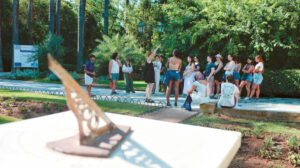
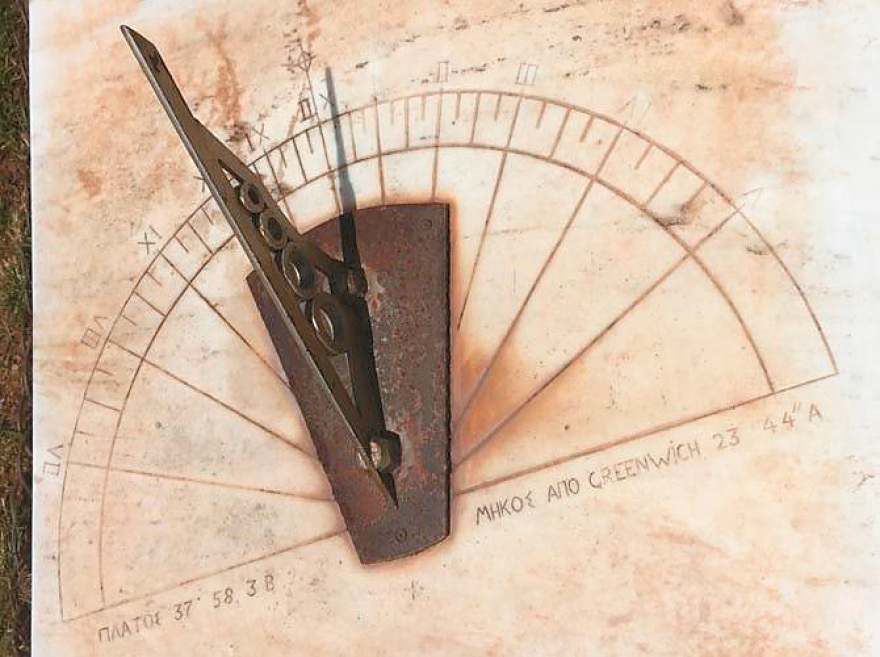
Since 2020, horticultural interventions have been studied and the landmarks of the National Garden have been identified: the sundial, the rows of trees with wassingdonias, the large pond, the rock of Amalia, the pergola of the Zappeion, the pergola with wisteria, the rhododendron, the hill of the upper pines, the Spanish anemone and the central circular flowerbed. During the same period, the study of the recording of the Pisistratio Aqueduct was also carried out, while in the spring of 2023 the radical reconstruction of the playground was completed with the sponsorship of the couple Thanasis and Marina Martinou.
Information with QR code
Last year a major programme of interventions by the Municipality of Athens, initiated by the previous municipal authority, was completed, with the reconstruction of paths and walkways, a modern irrigation system and, most importantly, 11,155 new plantings, which include 112 new trees, 331 shrubs, 2,343 additional shrub plantings, 3,582 perennial herbaceous plants, 4,775 seasonal and 12 climbing plants.
The Municipality of Athens has prepared a study for the restoration of important buildings, such as the Botanical Museum, the café etc., the necessary approvals have been obtained and the building permits are awaited in order to start the planned construction. The next steps include the provision of information to the public via QR code, where visitors and passers-by will be informed in two languages about each plant, its history and other details in a popularized form.This is an action promoted by the National and Kapodistrian University of Athens in cooperation with the Bodossaki Foundation and the National Bank of Greece.
The National Garden is a living ecosystem and as such it will never cease to amaze even the experts. At the same time, it is one of the few extensive green areas within the urban fabric and is classified as one of the so-called “urban islands”, places that have retained their natural characteristics in modern metropolises. The importance of the National Garden as a historical monument and botanical garden prompted the Bodossaki Foundation to finance the recording of its flora and fauna, which was implemented by the National University of Athens, in an effort to preserve, upgrade and enrich its biodiversity.
The survey of its fauna was carried out by the professor of the Department of Biology of the Faculty of Sciences of the University of Athens Panagiotis Paphilis and his team, while the corresponding survey of the flora was carried out by the postdoctoral researcher, Dr. Aikaterini Stefhi.
During the presentation of the research, which took place in mid-May, Professor Paphilis described the National Garden as an “island of biodiversity” within the great Athenian archipelago. It is an urban sea of concrete and expressways, where in some parts some “urban islands”, the green islands of Athens, such as the National Garden, Lycabettus, the Field of Areos, are preserved.
The Garden of Athens, the Garden of Eden, the Garden of Athens and the Athens Garden of Athens.
In order to demonstrate the overheating of the city centre, he said that in a measurement taken on the same day and time in July in Kanigos Square and in Kissos Kifissia, the difference was 22 degrees Celsius. This in itself highlights the irreplaceable role of the National Garden in the “thermal desert” of Athens, where with its lower temperature and other characteristics it is an oasis of life for hundreds of different species of the animal kingdom.
The survey found 201 animal species, a high number for 155 acres of land in the center of a metropolis. Among them, 76 vertebrates and 125 invertebrates, but also about 50 species of birds, 97 species of insects, 26 species of ants and 20 alien species, i.e. species that do not exist in our country but have been brought by humans, such as parrots from Africa or Senegal, but also … flying squirrels. There are also 13 species of reptiles, most of them turtles. Among them nine species of water turtles, of which only two are Greek and the other seven are alien. In fact, of the 511 water turtles, only four are Greek.
Frogs are also of interest. One species, the well-known Balkan frog, can be found in the suburbs of Athens, such as in the Rematia of Halandri, in Filothei, in Pikrodafni on the coastal front and now in the centre of Athens. It is estimated that these are remnant populations of the Ilissus River. “Because it may have been buried, but the memory of the water remains, and so these organisms continue to live in the National Garden,” Paphilis said.
A second species, the mountain frog, is mountainous, with the closest population found in Parnitha, and it is a mystery how it got to the National Garden. Furthermore, Athens turns out to be the only European capital to host an endemic snail in its National Garden. But research has also shown the dangers of invasive species that have established themselves and act in competition with the natives, pushing them towards extinction.
At the flora level, Dr Stefi revealed, 1,271 populations of native herbaceous plants were recorded, more than 3,900 shrubs were classified, and the bush archive was enriched with 85 plant species. The majority of the species are either Mediterranean or cosmopolitan, i.e. those that began to arrive from abroad from the time of Amalia to the present day. There are also invasive species that limit the growth of native plants and need to be brought under immediate control. Among all these, two Greek endemic species have been identified, which is particularly important.
Battlefield
The National Garden, which is of course a point of unity, was a battleground a decade ago between leading players in the economic and business life of the country.
It was in 2013 when the businessman, then chairman of SEV but also a keen collector of modern art Dimitris Daskalopoulos, wanted through the NEON organization to make interventions in eight areas of the Garden in order to exhibit pieces of his collection. The programme “Discovering the National Garden” included the gardening of these sites and a programme of contemporary art exhibitions for two months every two years.
Despite its exorbitant budget, this initiative, which had the support of the then municipal authority, met with strong opposition from the Society of Friends of the National Garden, with industrialist Michalis Mailis as its president and the painter and wife of the late banker Yannis Kostopoulos, Irini Molfesi, as its vice-president. The controversy reached the courts with the participation of well-known law firms, while decisions were needed even from the Council of State.
Ask me anything
Explore related questions




