





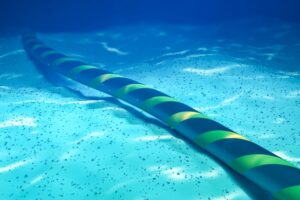
The Crete-Cyprus electricity interconnection project is a project of major economic, political and strategic importance.
It is a practical move to interconnect the most remote member of the EU. It is the most distant member of the European Union and the European energy network, it abolishes the energy isolation of Cyprus from the European network, it cancels the hegemony of Turkey and the declaration that no energy project will be implemented in the Eastern Mediterranean without its participation and approval, it turns Greece and Cyprus into a critical hub for the transfer of green energy to and from Asia with future expansion to Israel. All this with the benefit to Cypriot and Greek consumers of the electrical interconnection and energy security that the Great Sea Interconnector project can provide.
The question of course is why, with so many advantages offered by this project and despite the fact that it has secured unprecedented and by European standards unprecedented European funding, it is in danger of being crushed.
The takeover of the project by ADMIE in early 2024 and the transformation of the Eurasia Interconnector into the Great Sea Interconnector (GSI) has led to a change in the facts. The Cypriot competent authority RAEK, after months of consultations and ferment, requested a new economic study of the project, which was delivered late by ADMIE but the condition for payment of amounts by consumers from the beginning of the project’s works and not upon completion was the point of friction that has not been overcome to date. Thus, this controversy, which has taken an acute form, has so far prevented decisions from being taken.
The controversial provision provides for consumers in Cyprus and Greece to cover 63%-37% of the project’s costs from the start of construction, i.e. from around 1/1/2025, instead of the completion of the project, which is estimated for 2030. The relevant provision has already been accepted by the Greek government. In Cyprus, however, there is also strong opposition from power generators who will lose a large market share with the electricity interconnection.
For the time being, the Cypriot government, despite pressure from both Athens and Brussels, has not opened its cards by referring to RAEK and there has been no explicit commitment to participate in the shareholding with the 100 million euros from the Recovery Fund. The Cypriot government,after the Vasilikos terminal fiasco, is very wary of decisions that will have a very high cost and a very high electricity price burden for consumers (who are already paying the most expensive electricity in the EU) for a very important project, but which there are no guarantees that it will be completed.
The major additional obstacle is the geopolitical risk clause which, if it prevents the completion of the project, there will be no recovery of the sums paid by consumers and other costs according to forecasts. Speaking of geopolitical risk, this refers mainly to Turkey’s stated opposition to projects which it considers to be “built” in maritime zones belonging to the Blue Homeland without its permission.
Already the Kassos incident a month ago showed that Turkey is determined to block the cable laying surveys in the areas extending east of the territorial waters of the Greek islands (Kassos and Karpathos) and within the delimited Greek EEZ (under the Greek-Egyptian Agreement) and within the potential Greek EEZ and continental shelf, if its claim in the area is not confirmed, even indirectly, to the detriment of the Greek and Cypriot continental shelf. As the exploration and laying of cables in international waters is free according to the Law of the Sea, Turkey seeks to create a fait accompli by the practice (for the time being) of requiring notification to the Turkish authorities of any kind of work (even in the Greek EEZ) so that a Turkish NAVTEX is issued for this work.
There are now two critical milestones for the project: the decisions concerning the economic and business course of the project with the participation of the Cypriot RAEK, and dealing with the Turkish stance concerning the geopolitical risk.
As the EU and the Commission have given significant priority to the project wanting to facilitate the delicate negotiations, they were quick in a letter from Catharina Sikow-Magny, Director of Green Transition and Energy Systems Integration at the Commission’s Directorate General for Energy, to assure that the European Commission will use “all diplomatic means at its disposal” to protect the Cyprus-Greece-Israel Great Sea Interconnector (GSI) electricity interconnection project.
According to information from CYPE, the letter notes that the GSI project is a project of common interest under the EU 2022/869 regulation on trans-European energy infrastructure and is included in the Commission’s list of projects of common interest (PCi) adopted in November 2023, and as such has received a significant subsidy through the Connecting Europe Facility (€657 million).
This letter is of course of very little practical importance to allay Cypriots’ concerns about the possibility of cancellation or significant delay in the implementation of the project while Cypriot consumers will be paying for its financing from the beginning of 2025.
Another teleconference is scheduled today between RAEK, RAEA, ADMIE, Cyprus and Greek Energy Ministries, under the auspices of the EU Directorate General for Energy, on the final content of the regulatory framework for the electricity interconnection, although it is likely that the final decision of RAEK, which is engaged in an unprecedented obstructionism, has not yet been taken.
As for the geopolitical risk and a possible intervention by Turkey to block the laying of the cable in the maritime area that it considers to fall within the zone of the Turkish-Libyan Memorandum, information from Cypriot media reports that RAEK, in the absence of a political position of the Cypriot government, will not accept that electricity consumers will take the risk and pay the cost even if the interconnection is not completed. And it has informed the Cypriot government of its intention to do so.
The big question now is whether a way will be found to overcome the concerns and reservations of Nicosia and to proceed with the implementation of the project, so that Turkey is not given the right of a de facto “veto” right to EU energy projects in the Eastern Mediterranean, to prevent Turkey’s attempt to create a fait accompli against Greek sovereign rights on the occasion of the research for the project and if Turkey continues to react, then the EU itself will be held responsible.
Ask me anything
Explore related questions




