





The government is introducing a monetary reward system in the broader public sector that could offer up to one or even nearly two additional salaries per year—beyond the twelve employees already receive annually. A bill, soon to be put to public consultation by the Ministry of Interior, expands and extends the reward framework that was piloted in selected public sector entities and units over the past two years.
Starting from January 1, 2025, annual goals will be set for each ministry and even for legal entities governed by public law or local authorities (OTAs) that were previously excluded from the pilot performance and reward system. Benefiting employees will know from the start of the year the objectives and action plans assigned to them and will be able to estimate the amount of reward they are entitled to, based on a specific formula outlined in the bill.
According to information from the “THEMA” newspaper, after the bill’s consultation concludes, there is consideration of setting a minimum annual reward amount that all eligible employees will receive—potentially around 500 to 800 euros—to ensure the incentive is sufficient to motivate employees to contribute to critical tasks.
Rewards are planned not only for those who effectively contribute to saving resources for the public sector or completing significant reforms but also for employees who achieve substantial improvements in service delivery to citizens.
Distribution
The new model will allow the public sector to award up to two extra salaries (15% of total annual earnings) to employees in key units. So far, rewards have been given only to employees in the General Accounting Office, the General Directorates of Financial Services of all ministries, the Recovery Fund, and the Ministry of Development and Investments for absorbing EU funds, as well as to special categories involved in setting annual ministerial goals.
This opens the door for multiple pay grades and rewards across the entire public sector. From approximately 9 million euros annually, with the first mass implementation of the measure, the budget for extra monetary rewards will automatically increase to 40 million euros per year. It is estimated that this could potentially benefit 20,000 to 30,000 employees annually, who could receive an average bonus of 1,300 to 2,000 euros each. If the system proves effective, the “bonus pool” could be increased further.
This will be distributed among all key public services and legal entities that are selected annually for “special missions.” Based on the algorithm, the 40 million euros will be proportionally distributed to these services according to their share of the state budget. The money will be added to the annual funding but will only be released and distributed if targets are met.
The new bonus system will rely on annual targets set at the beginning of the year. From early 2025, employees will know what they have been tasked with and what rewards they will receive if they meet their objectives. Of each unit’s budget, 40% will be distributed evenly to all employees, while the remaining 60% will go to those deemed the most effective and valuable in achieving the final target, based on documentation submitted by their supervising directors. These high-performers could receive between 50% and 300% more than the others.
The maximum increase for each beneficiary will be capped at 15% above their annual earnings, meaning they could receive almost two additional salaries, factoring in any allowances received with their regular pay.
For example, in a service unit of 20 employees sharing a 40,000-euro bonus (out of the 40 million euros allocated annually), 16,000 euros will be distributed evenly, allowing everyone to receive an additional 800 euros. If 10 of them are singled out for their contribution and effectiveness, they will share the remaining 24,000 euros, with each receiving 2,400 euros, totaling 3,200 euros in bonuses.
However, this could only occur if their annual earnings exceed 21,000 euros (about 1,750 euros per month). Conversely, if they earn 1,500 euros per month or 18,000 euros per year, the 15% cap will limit their total bonus to 2,700 euros. Thus, for newly hired employees or those earning an average gross salary of 1,000–1,250 euros, the maximum allowable bonus will not exceed 1,800 or 2,200 euros, respectively. The bonus amount is limited for these beneficiaries but still approaches two additional salaries.
Performance
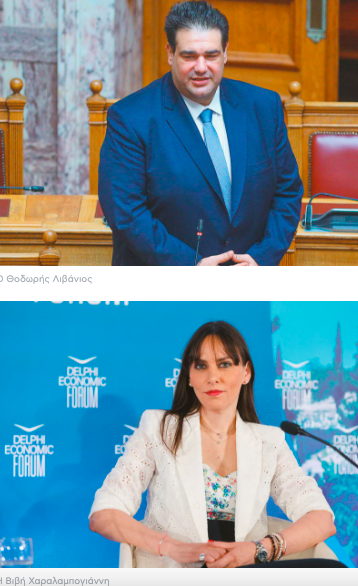
The new system proposed by Minister of Interior Theodoros Livanios and developed by Deputy Minister Vivi Charalambogianni aims to change the “impersonal” nature of the public sector. Rewards will not be given as blanket allowances but as incentives to enhance productivity, efficiency, initiative, and responsibility among public sector employees.
Furthermore, for the first time in decades, the status of public sector directors is being elevated. Directors will not only receive responsibility allowances but will also decide which employees will receive the bonuses. This creates a dynamic and creative competition between employees—or even entire departments or agencies—where previously the permanence and uniform salary structure of the public sector discouraged ambition and progress.
Payments and Recipients
The bonus will be paid retrospectively in a lump sum the year after the target is achieved. In 2025, rewards will be given for targets chosen and achieved this year, while in 2026, rewards will be given for 2025 targets. Starting in January, more employees will be included in the target and reward system beyond those covered by the pilot phase. Employees in ministries, municipalities, regions, hospitals, etc., will now be eligible for the productivity bonus.
To receive the bonus, an employee must have made a significant contribution to achieving a rewarded target.
At the beginning of each year, the rewarded targets of agencies will be determined by the Incentives and Rewards Committee, composed of senior staff and relevant general secretaries, based on the priorities of each ministry. Targets will be set using the SMART method, assisted by Artificial Intelligence, ensuring they are specific, measurable, achievable, relevant, and time-bound.
The degree of target achievement will be calculated using specific performance indicators, and the supporting evidence of progress will be recorded in the Rewards Information System, funded by the Recovery and Resilience Fund.
The selection of eligible employees and the amount of reward per recipient will be determined by their supervisors, not political leaders. To prevent the productivity bonus from becoming a mere allowance, a minimum reward amount per employee will be set, and there may also be a cap on the number of eligible employees per agency. Forty percent of the reward will be evenly distributed, and the remaining 60% will be allocated based on each employee’s contribution to achieving the target.
The measure anticipates the following benefits:
- Rewarding deserving and effective public servants by introducing incentives.
- Enhancing the effectiveness of the public sector.
- Encouraging collaboration between services working towards common rewarded goals.
- Improving public services and citizen service.
- Accelerating the implementation of reforms and ministerial priorities.
- Boosting the image and attractiveness of the public sector as an employer to attract skilled professionals from the private sector.
Ask me anything
Explore related questions




