





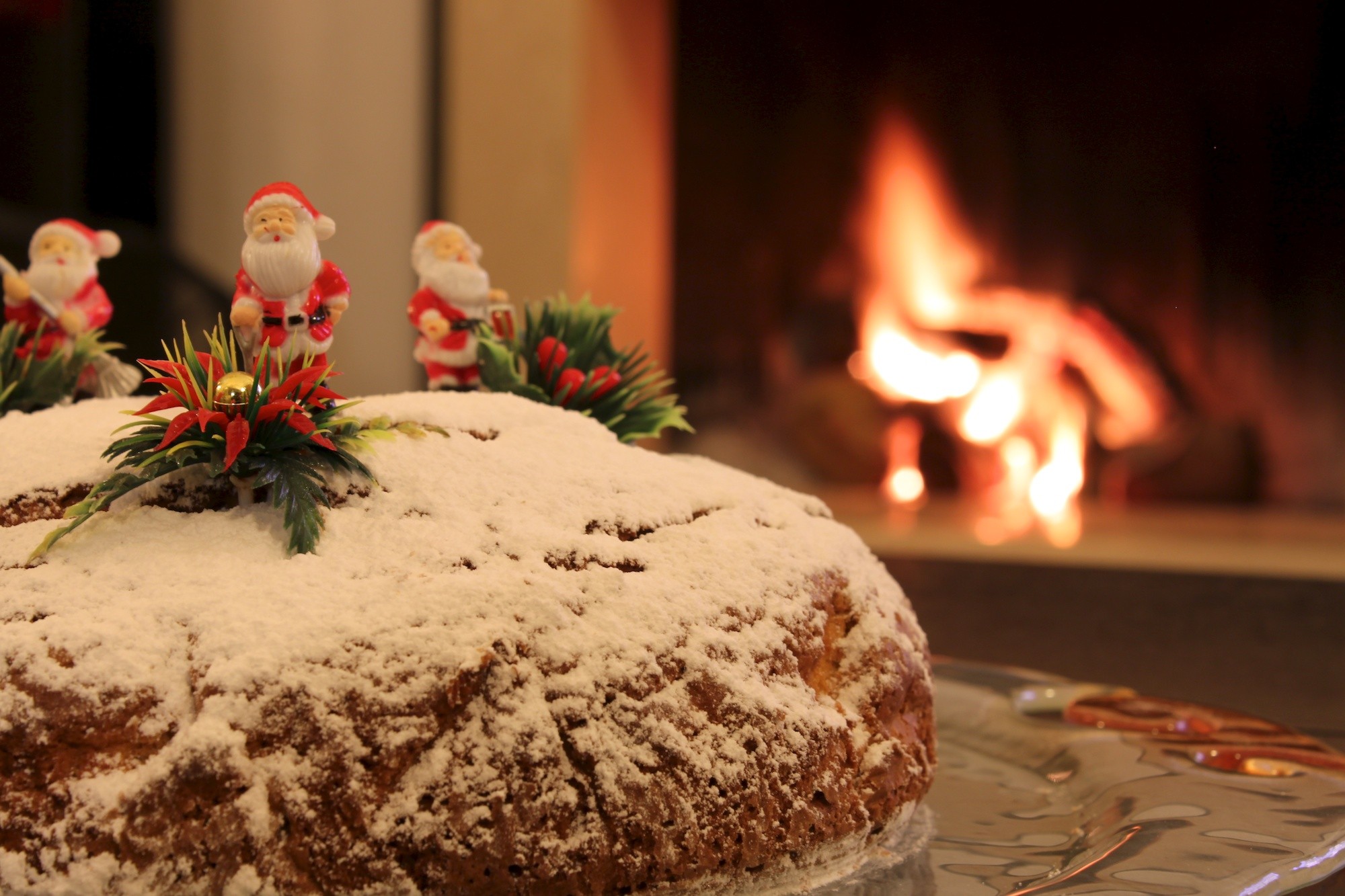
Vasilopita, known as “Basil Pie”, is a New Year’s Day bread or cake that contains a hidden coin. Families around Greece will be cutting this cake around the country at midnight on New Year’s Eve. A piece will be saved for Jesus, the Virgin Mary, St. Basil, the household , the poor and then all the other members of the household ranging from eldest to larger. The person who gets the coin is considered the lucky person of the year. Companies, schools, sports clubs and other organizations also cut Vasilopita cakes for their employees in January and as late as February and usually give a token gift to the lucky coin bearer.
The tradition is believed to be connected with the ancient Greek Kronia festival in honor of King Cronus that involved selecting a “king” by lot. The legend of St. Basil, however has it that he had called on the citizens of Caesarea to raise a ransom payment to stop the siege of the city. When the siege did not occur, St. Basil had to return the unpaid ransom but didn’t know which item of gold or trinket belonged to which family so he baked the jewelry into loaves of bread. Legend has it that each family miraculously received their own exact share. Other tellings of the legend state that it was St. Basil’s way of giving charity to the poor without embarrassing them. In Greece, gifts are also traditionally given on New Year’s Day instead of Christmas in honor of St. Basil whose feast day is held on this day.
For more Greek traditions related to New Year’s Eve CLICK HERE.
Ask me anything
Explore related questions




