





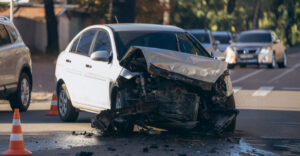
About half of drivers (47%) admit to driving with a mobile phone in hand, either always (1%), often (4%), sometimes (16%) or rarely (26%), according to a nationwide survey by Palmos Analysis presented to ERT. At the same time, the overwhelming majority is in favour of reducing the existing speed limits within residential areas, as well as of installing cameras on main roads to record traffic violations and impose fines.
According to the survey, nearly 9 in 10 drivers say they always use a safety belt or helmet (87%) and one in two drivers (48%) say they always stop at pedestrian crossings giving way. Just 10% say they never do so.
At least 87% of drivers say they never do.
About half (47%) admit to driving with a cellphone in hand, either always (1%), often (4%), sometimes (16%), or rarely (26%). About 6 in 10 (58%) report driving while using a cellphone via Bluetooth (always 14%, often 15%, sometimes 16%, rarely 12%).
65% of drivers admit to driving speeding over the speed limit (always 1%, often 5%, sometimes 34%, rarely 25%) and one in five (20%) admit to driving after consuming alcohol (often 1%, sometimes 4%, rarely 15%).
20% admit to running a red light (always 1%, often 1%, sometimes 1%, sometimes 4%, rarely 14%) and the same proportion say they let someone without a licence drive (often 2%, sometimes 2%, rarely 1%). 7% of drivers surveyed admit to allowing a minor under 16 to drive with (5%) or without (2%) their supervision.
The main causes of road accidents
Driving under the influence of alcohol is considered by the vast majority of respondents to be the main cause of road accidents in our country (64% among those who drive a vehicle and 73% among those who do not). This is followed by excessive speed (49% and 55% respectively), use of a mobile phone while driving (33% and 29% respectively), while poor road conditions are mentioned much lower (17% and 18% respectively), poor/lack of policing and punishment (16% and 9% respectively), poor vehicle condition (4% and 3% respectively) and poor signposting/signalling (4% and 2% respectively).
Among those who drive, improving driver education is recorded as the most appropriate way to reduce road accidents in the country (46%), while those who do not drive prefer to tighten penalties for traffic offences (49%). Among drivers, this is followed by more frequent checks/policing (44%), tightening penalties for traffic offences (41%), improving the road network and signposting (31%), lowering speed limits (14%) and introducing incentives to renew the vehicle fleet (9%).
Among those who do not drive, this is followed by improving driver education (44%), more frequent checks/policing (36%), improving the road network/signalling as well as reducing speed limits (23%) and incentives to renew the vehicle fleet (6%).
There is universal agreement (73%) to reduce the existing speed limit within residential areas. The proportion in agreement is even higher among those not driving (85%), but remains extremely majority among drivers (69%).
Universal agreement (87%) is recorded among drivers for the installation of cameras on main roads to record traffic violations and enforce penalties.
Regarding the details of those who drive, about 3 in 4 residents of the country’s major urban centres (73%) say they drive a car and about 1 in 20 drive a two-wheeler. On the flip side, about 1 in 5 (21%) do not drive a vehicle.
About half (1 in 21%) of all people (1 in 5) do not have a car.
Ask me anything
Explore related questions




