





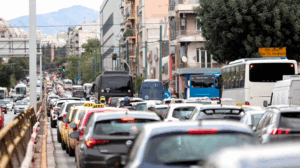
The landscape of road safety in Greece is rapidly and fundamentally changing with the adoption of pioneering solutions. The government’s commitment to protecting human life—by instilling a new culture of responsibility and creating conditions that significantly reduce traffic accidents and fatalities—is becoming reality through the launch of a pilot program jointly undertaken by three ministries: Digital Governance, Transport, and Citizen Protection.
The pilot includes the installation of cameras at eight selected locations in Attica and on 10 bus lines. At the same time, a series of changes are being initiated to enhance the efficiency and transparency of the traffic violation monitoring and penalty enforcement system.
The broader plan foresees the installation of more than 2,000 cameras in urban road networks under the guidance of the Hellenic Police (ELAS), while 500 specialized cameras will be installed on buses.
Additionally, 388 more cameras are already being implemented by the Attica Region, while existing cameras on the Attiki Odos highway, OASA buses, etc., will also contribute to traffic monitoring.
The core tool of this initiative is the implementation of a unified, integrated, and interoperable system for monitoring and recording violations.
Through this innovation, serious traffic offenses can be detected and addressed immediately and fairly.
The plan involves installing modern cameras at high-risk locations such as major road arteries, where automated detection and deterrent systems will operate.
This technology will reliably and instantly record violations such as speeding, red light running, failure to use seat belts or helmets, mobile phone use while driving, and pedestrian crosswalk violations. Additionally, a new information system will be developed to integrate all recordings, connect directly with relevant authorities, and facilitate swift processing, confirmation, and imposition of penalties.
Citizens Will Be Notified by SMS
With the use of this technology, speed, transparency, and effectiveness in traffic violation management are ensured.
Drivers and citizens will be instantly notified via SMS and through their digital Gov.gr Wallet inbox, where they will be able to view the violation footage, file objections online, and pay fines immediately—without bureaucratic obstacles.
Furthermore, the data will be automatically integrated into the national driving record system (point system), ensuring accuracy in tracking each driver’s history and contributing to a culture of accountability and compliance.
The common goal is clear: to create a modern, reliable, and functional framework for monitoring road behavior, reducing accidents, saving lives, and boosting public trust in the state.
Following best practices from Cyprus and other European countries, this new road safety model is part of a broader reform strategy where transparency, technology, and fairness converge for the benefit of citizens.
With these measures, Greece is entering a new era of road safety, where technology and transparency are the main tools for protecting life and maintaining order on the roads.
This effort goes beyond technical solutions. It also seeks a shift in mindset, active citizen participation, and the cultivation of a culture of responsibility and respect.
The foundation of this strategy is the belief that every person, every family, and every community deserves to travel on safe roads.
With innovative, simple, fair, and transparent solutions, Greece is taking a major step toward this vision.
Technology, proper governance, and collective effort define the new road safety standard, which serves both the rule of law and the citizen.
The hope is that soon our roads will be safer, and life more valued—because road safety is everyone’s duty, and the State has the obligation to uphold it by all means necessary.
Cameras at 8 Attica Locations and on 10 Bus Lines
“The use of technology enables us to achieve substantial changes with broad social impact, such as upgrading road safety levels. In cooperation with the Ministries of Citizen Protection, Infrastructure and Transport, and the Attica Region, we are implementing a comprehensive plan to install cameras at critical points of the road network and on buses. These cameras will detect and record violations of the Highway Code.
Soon, cameras will be piloted at 8 selected points in Attica and on 10 bus lines. At the same time, we are developing a unified information system to effectively monitor inspections and manage fines. Our aim is to address chronic issues, such as the unacceptable phenomenon of fines being issued years after the violation occurred.
Now, recording, verification, objections, and fine collection will be handled digitally, ensuring transparency and speed. Our ultimate goal is clear: to instill a new culture of responsibility on the roads. Each violation is not just a lapse or a number—it represents a potential risk to human life. It’s a family that can be protected. And that is our duty,” said Minister of Digital Governance, Dimitris Papastergiou, to the Athens News Agency (APE-MPE).
From his side, Minister of Citizen Protection Michalis Chrysochoidis stated:
“The installation of cameras at selected road locations is part of the government’s overall road safety enhancement plan.
Our aim is to protect human life and establish a sense of safety for all citizens.
The cameras will be used both to confirm traffic violations—such as speeding, red light running, not wearing a helmet or seatbelt, and reckless driving—and to facilitate traffic flow, with full respect for personal data and the legal framework.
This is not a surveillance measure against citizens, but a preventive and deterrent tool. Road and neighborhood safety is a priority, in a rule-of-law state that respects and protects citizens with modern tools, transparency, and accountability.”
Deputy Minister of Transport Konstantinos Kyranakis also emphasized that “the operation of road safety cameras is not just a technical option—it is a political decision aimed at protecting lives. We know it’s not popular, but it’s necessary to end impunity and give real meaning to the new Highway Code. Alongside Dimitris Papastergiou, we’re creating a reliable digital system that will detect violations, impose fair penalties, and restore accountability for everyone on the road.”
Key Actions
The main tool in this effort is the development of a unified and interoperable digital system for managing traffic violations.
The new system will include automatic camera integration, real-time electronic recording and notification of violations, and immediate SMS alerts to drivers.
It will also allow for digital management and enforcement of penalties—including license suspensions—through a transparent and efficient process.
The project is in its preparatory phase. Bid submissions were opened on June 13. A contractor will be selected by July, and the first pilot phase will begin in September 2025, with operational integration with existing cameras. Nationwide expansion, including all Attica Region cameras, will follow.
The program for developing and installing surveillance cameras includes the supply and installation of modern traffic enforcement cameras (e.g., red light violations, speeding, driving in bus lanes) at key points of the road network, all integrated into the unified information system.
The tender process will be conducted soon, with camera operations beginning in early 2026 and full system integration within that same year.
Modern cameras will be installed at high-risk areas across Attica.
Specifically, eight strategic locations—identified as areas of high traffic volume and risk—will see the installation of advanced surveillance cameras. These will monitor and record violations such as speeding, driving in bus lanes, red light running, and stopping at pedestrian crossings.
The data collected will feed directly into the new information system, enabling immediate response and enforcement of penalties in real time.
This system will help deter illegal behavior and promptly address dangerous situations. The targeted areas include the municipalities of Athens, Agia Paraskevi, Rafina-Pikermi, Vari-Voula-Vouliagmeni, Elliniko-Argyroupoli, Filothei-Psychiko, Alimos, and Kallithea.
At the same time, pilot camera installations will take place on 10 selected bus routes in Attica. These buses—new low-emission models operated by OSY S.A.—will monitor violations in bus lanes, road conditions, and traffic congestion.
As for violations within bus lanes, the cameras will initially detect issues such as unauthorized driving or parking in bus lanes, speeding, and stopping on pedestrian crossings.
Technology and Transparency
With these measures, Greece is entering a new era of road safety, where technology and transparency are the key tools for safeguarding life and maintaining road order.
This initiative is not just about applying technical solutions. It’s about changing attitudes, engaging citizens, and nurturing a culture of responsibility and respect.
At the core of this strategy is the belief that every person, every family, and every community deserves to travel on safe roads.
With innovative solutions that are simple, fair, and transparent, Greece is making a major step toward that vision.
Technology, good governance, and collective effort make up the new road safety model, which serves both the rule of law and the citizen.
The hope is that soon our roads will be safer and our lives more valued—because road safety is everyone’s duty, and it is the State’s obligation to uphold it in every way possible.
Ask me anything
Explore related questions




