





The diplomatic framework of the conflict between Tel Aviv and Tehran was definitively “overcome” seven days ago, casting into oblivion more than four decades during which tensions, threats, and even limited strikes occurred on both sides — but never before had Israel and Iran targeted each other within each other’s vital territory.
Protothema.gr is on the ground in Israel to document the impact of this latest escalation with the country’s age-old enemy, Iran.
In Haifa, Israel’s northernmost port, nothing suggests that just meters from the waters of the eastern Mediterranean, Tehran has found a way not only to breach the Iron Dome but also to strike strategically critical targets within Israel.
A week after Israel’s first strike on the Iranian border and Tehran’s response with three missile barrages, Haifa has sustained three significant strikes on vital infrastructure in the area.
Israel, even under a barrage of medium- and long-range missiles, and even without direct British and American air support, manages to intercept over 90% of incoming fire. But it’s that remaining 10% that paints a picture citizens are far from used to.
Haifa, in the span of just seven days, has been hit three times, in both its industrial and residential sectors — a clear sign that no one is untouchable, a message Iran has definitively succeeded in sending to Tel Aviv. Several people have been injured in the attacks — some critically.
This is also significant because, beyond its world-class air defense systems, Israelis are among the most highly trained populations when it comes to responding swiftly and orderly, regardless of the time or stress, by seeking refuge in fully operational and well-equipped shelters.
The port, the northern refineries, and military installations, just hundreds of meters from the cruise ship terminal that saw heavy traffic until 2023, have all been targeted by Iranian strikes on three separate occasions.
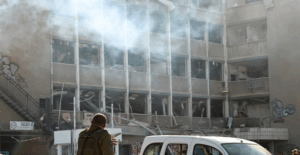
The damage is substantial and bears no resemblance to the rockets Hezbollah used to launch from Lebanon just a year ago. Buildings several hundred meters from the main impact zone at Haifa’s port have lost all windows, and debris from the impact — not the interception — of ballistic missiles has been scattered in a radius of nearly 700 meters, turning vehicles into twisted wrecks.
Iran’s message to Israel, as felt by citizens of both Haifa and Tel Aviv, differs greatly from the one Israel sent to Tehran. This is evident in the empty streets, low foot traffic, and the few stores that remain open, defying the situation in Israel’s urban centers.
According to protothema.gr’s sources, a large percentage of Tel Aviv’s population has left the city, heading toward the border and rural areas, a sign that the term “absolute security”, which held true from October 2023 until just a week ago, no longer resonates the same way.
Despite Tehran’s demonstrably accurate, targeted, and far from indiscriminate strikes, realistically, Iran has minimal chances of inflicting damage even remotely comparable to what it endures from the more than 200 Israeli fighter jets that have essentially dominated Iran’s airspace.
Sources at the U.S. Pentagon jokingly remarked that “today, Israeli pilots are paid better and with less risk, as Tehran is considered a dangerous mission only on paper.”
If the U.S. joins Israel’s operations, the question will no longer be if the theocratic regime in Tehran is completely defeated, but how many hours — not days — it will take before the Supreme Leader calls for a return to diplomacy.
No matter how many strikes Iran manages until that moment, they will be symbolic at best, never reaching Israel’s actual strategic limits. They will remain proof that no one is invincible, but they will never be enough to validate the Iranian theocratic narrative.
Ask me anything
Explore related questions




