






The new Digital Patient Experience Evaluation Tool for hospitals of the NHS, which is available to citizens from today, was presented today by the leadership of the Ministry of Health at a meeting chaired by the Prime Minister Kyriakos Mitsotakis at the Maximou Mansion.
This is an application through which the citizen, immediately after the completion of his hospitalization, has the opportunity, through axiologisi.esy.gov.gr, in a user-friendly way, in a few minutes, with complete anonymity and safeguarding of personal data, to evaluate the services provided in hospitals of the NHS, thus contributing to their upgrading.
The questionnaire is addressed to people over 18 years of age who have been hospitalised for at least one day in a public hospital, provided they have activated anonymous prescribing, and is structured around the following axes: patient accessibility to health services (how and when they are admitted to hospital), organisation and quality of care provided, interaction with staff (communication, courtesy, trust), cleanliness, hygiene and feeding, support and participation in decision-making, and support and support for patients’ health care.
Responses will be collected and stored in a historical database to produce specific scores per evaluation axis, per hospital and clinic, and to enable assessment of their progress over time, and will also be compiled in an annual activity report, which will highlight the positive points, weaknesses and actions taken to resolve the problems identified. An annual report will be issued with a codification of findings by health facility and recommendations for improvement.
The objectives of the new digital tool, funded by the Recovery and Resilience Fund, are to identify problems early and resolve them, identify and highlight good practice, improve the effectiveness and efficiency of public hospitals, develop evidence-based policies, and strengthen the person-centred dimension of the NHS.
During the meeting, the Prime Minister said: “From today, the voice of the citizen is becoming louder on issues related to their health. It is 11:00 am, the first sms evaluating the services of our hospitals will be sent in a few minutes from now to those who were discharged a few days ago. When we discussed with the Minister some months ago how we would evaluate the services provided by the National Health Service, we mutually agreed that we should, first and foremost, ask the users of the system themselves in detail. And that is exactly what we are doing with this very well-organised questionnaire, which, completely anonymously and with all the safeguards on personal data guaranteed, will now be sent to everyone who is discharged from the hospitals of the National Health System, except psychiatric, paediatric, and oncology hospitals. These will follow. Our goal, as stated in the message, is for patients themselves to help us become better. Because we cannot have a complete picture of the situation in a hospital. We get the picture from the official data, but also from what the hospital management often tells us. It is very important to listen to the patients themselves: what we are doing well, what we are not doing well, and how we can improve. And I am sure that when we add up enough of these data, the real picture of the National Health System will be better than the one that is often presented in the media, because ultimately, first and foremost, we have to get the opinion of those who use the National Health System, and there are so many of them. How many people use the National Health Service, Minister?”
Georgiades: We have 25 million cases a year, 85,000 cases a day.
Mitsotakis: “To get an idea of the magnitude. And, of course, it is very, very important for us to constantly get better. This project is funded by the Recovery Fund and will be a constant reference point in terms of data utilization, so that we can identify problems and focus our own initiatives based on the priorities that the citizens themselves, the users of the National Health System, indicate to us.
So, many congratulations on launching this programme. I want to ask those who receive this message not to ignore it. It’s a few minutes of your time. You’re going to help us be better. In an ongoing culture of evaluation and accountability, citizen opinion ultimately matters most to us. So, well done, Minister, and to you.”
For his part, Health Minister Adonis Georgiadis noted: “Mr. President, I want to thank the entire team at the Ministry of Health, Mr. Themistocleous, Ms. Vildiridis, and the entire leadership for the work they have done to get us here today. And Irene Agapidaki and I believe very much in this tool. I think it will bring about a big change in that,t for the first time, we will get information from the patients themselves. For many years, Mr President, we have been saying that we need to make the system patient-centred. This is a big and essential step to put the patient at the centre. And I would like to close by thanking in particular the Hellenic Patients’ Association for helping us to draft the questionnaire and to invite our fellow citizens to respond, making it clear that their data is safe and therefore they have nothing to fear from answering the questions.”

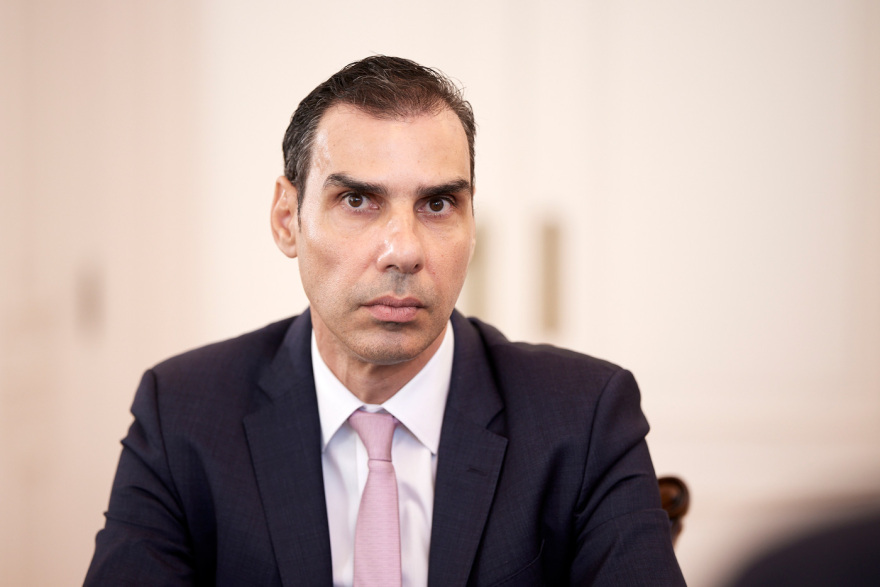

The meeting was also attended by State Minister Akis Skertos, Deputy Minister of Health Irini Agapidaki, Deputy Minister of Health Marios Themistokleous, Secretary General of the Prime Minister Stelios Koutnatzis, and Secretary General of Health Services Lilian Venetia Vildiridis.
Ask me anything
Explore related questions




