





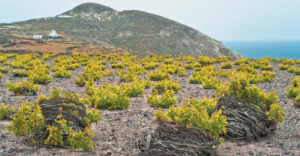
This year’s grape harvest in Santorini is making history—for all the wrong reasons. Total production is expected to hover around just 350–400 tons. That’s a symbolic volume for such a world-renowned appellation, when in the past decade yields averaged 2,500–3,000 tons, and as recently as 2003 production reached 5,000 tons.
Vines at their limits
“The vineyard’s crisis didn’t appear overnight,” explains Stefanos Koundouras, professor of viticulture at the Aristotle University of Thessaloniki. “It’s largely the result of years of neglect. Walk through the southern part of the island down to Akrotiri and you see abandoned basket vines—decades without proper care, pruning, renewal, or investment.”
Three consecutive years of drought and hail then struck, and the ancient vines couldn’t cope. Today, many vineyards are stripped bare, producing no more than 1–2 baskets per stremma (about 0.25 acres)—a fraction of what they once delivered.
The economic impact is equally dramatic. Grape prices have skyrocketed from €0.85/kg in 2010 to €10–12/kg this year, with talk of reaching €15. Since a single 750 ml bottle of Santorini requires about 1.4 kg of grapes, producers are struggling to remain competitive in international markets.
A vicious cycle has formed: growers, understandably, raised their prices to survive, while winemakers entered bidding wars, offering increasingly unsustainable sums. With average vineyard holdings at just 5 stremmata per grower, investment remains minimal, further deepening the problem. Competition for “a handful of grapes” has become fiercer than ever.
Institutional inertia
The crisis is not just environmental or economic, but institutional. Petros Vamvakousis, president of the Santorini Winemakers Association (currently 10 of the island’s 18 wineries are members), is blunt: the situation stems from “the wineries’ inertia and inability to act collectively, in a vineyard that should be unified and clearly defined in terms of varieties.”
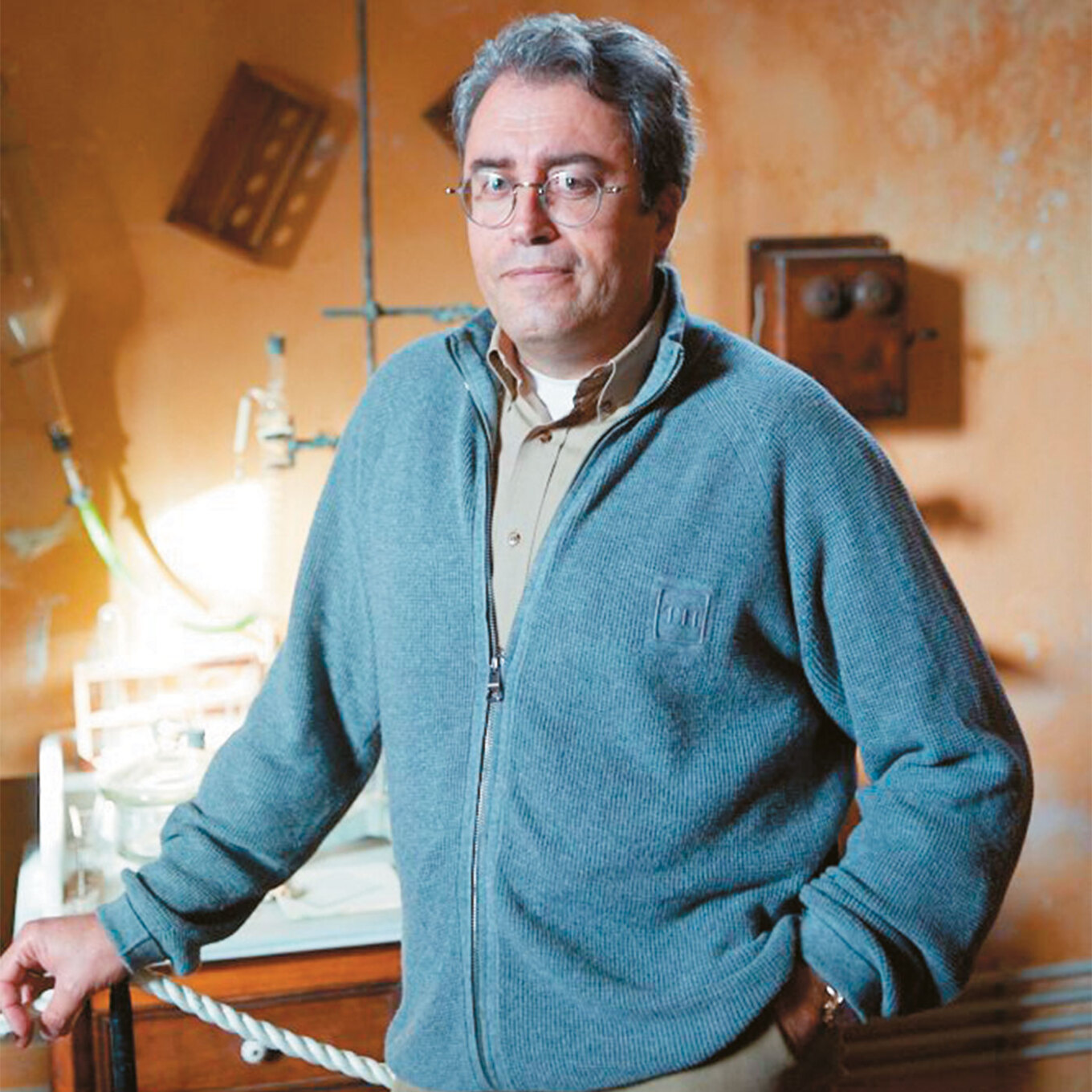
Petros Vamvakousis, president of the Santorini Winemakers’ Association
Efforts at collective action have repeatedly stalled. The interprofessional union formed in 1993 dissolved after a few years, losing critical time. A new attempt in 2010 also faltered, leaving the sector uncoordinated until a relaunch in 2023. Decades of disunity and short-sightedness have undermined the vineyard.
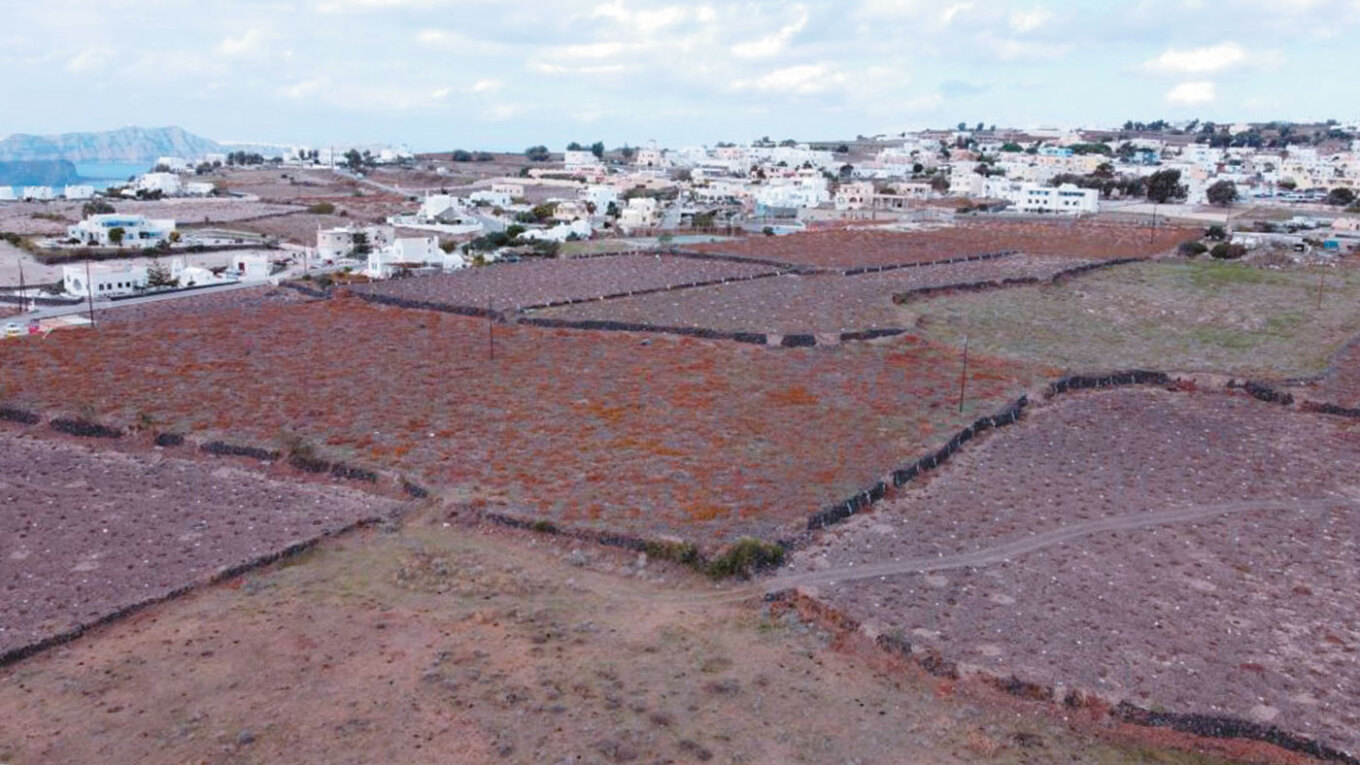
Meanwhile, growers turned to other trades—hoteliers, tavern owners, contractors, even boatmen. Sections of the vineyard were lost to unchecked construction, as fertile land became plots for villas and rentals.
The wineries’ share of blame
Matthaios Argyros, head of Estate Argyros and cultivator of 1,200 stremmata, criticizes the lack of winery investment: “Most wineries never seriously engaged with the vineyards. They remain entirely dependent on growers, producing very little of their own fruit. If each had invested in even 100–150 stremmata, we would not be facing this crisis.”
He also highlights unfair competition driving grape prices to unsustainable levels: “Instead of channeling that extra money into restructuring programs to support growers, it’s wasted in bidding wars. Quality doesn’t improve when a winery sees the grapes only a day before harvest.”
At Estate Argyros, he notes, over 500 stremmata of grower vineyards have been grafted, and more than 200 newly planted—an approach he sees as essential for the future.
No one without blame
Professor Koundouras adds a sobering reminder: “The Santorini vineyard has always been at risk, and with climate change it was bound to be one of the first to suffer. Everyone—winemakers, growers, scientists, the state—ignored the warning signs. No one is blameless.”
But for him, the point is not finger-pointing but action: “What’s needed is what should have happened years ago—a broad team of scientists, producers, and people genuinely committed to the island.”
The desertification threat
The gravest danger is looming desertification. From around 30,000 stremmata a few decades ago, only about 10,000 remain today—and the trend is downward. In five years, the vineyard could shrink to just 5,000 stremmata, with massive loss of Assyrtiko’s unique genetic diversity and other local varieties.
Future plantings may rely less on traditional basket training and more on modern pruning forms that allow better water management and higher yields. The key question is whether this transition will be guided—or forced chaotically by necessity.
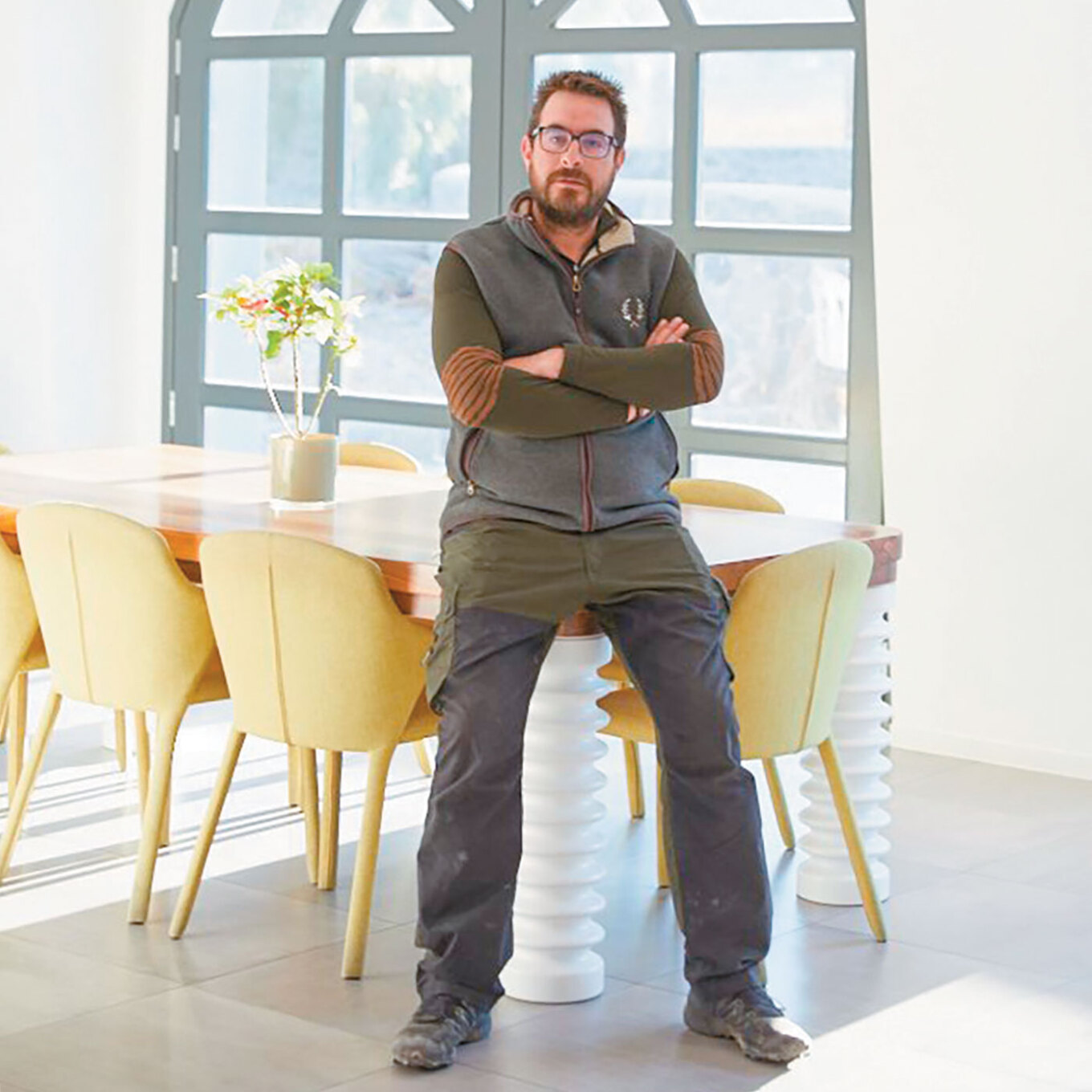
Matthaios Argyros, head of the eponymous Estate, which cultivates 1,200 stremmata (about 120 hectares / 300 acres) on the island
Quality in drops
Paradoxically, while quantity collapses, quality remains outstanding—for now. Extremely low yields are producing wines of remarkable intensity and concentration, with Assyrtiko expressing the island’s terroir in its purest form. But continued climate stress threatens even this strength.
And “quality in drops” cannot sustain the market or the island’s wine economy. Santorini is at a crossroads: its brand alone is not enough. Strategic decisions are needed now—from replanting and vineyard support to policies balancing tourism with agriculture.
Without a change in mindset and a holistic model of management, this vineyard—shaped by fire, wind, and sea—risks vanishing entirely, moving from symbolic production to outright extinction.
Yiannis Karakasis MW, one of the world’s 418 Masters of Wine and founder of Great Greek Wines.
Ask me anything
Explore related questions




