





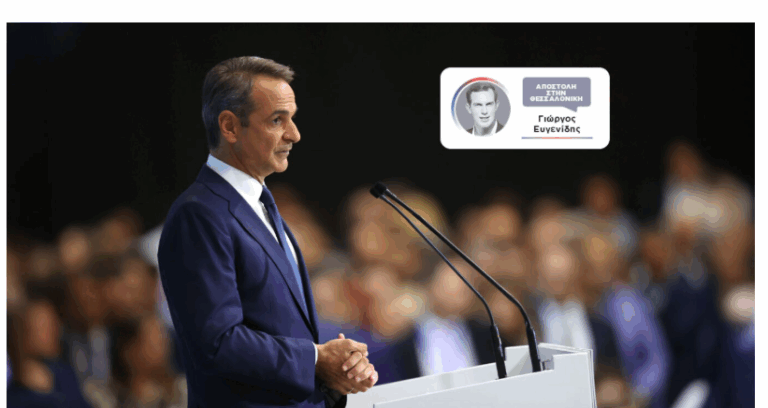
“We’re back to the factory settings of 2019–2023: a tax-cutting agenda and sober political discourse.” With this phrase, a senior government official summed up Prime Minister Kyriakos Mitsotakis’ keynote speech at the Thessaloniki International Fair, where he announced the most significant tax reform in years and attempted a full political reset.
Mitsotakis’ central message was that tax cuts are not handouts, but a way to return part of Greece’s sustainable growth dividend to citizens while safeguarding fiscal balance. The package is designed to cover a broad range of groups — not with token measures, but with targeted structural relief. Families with children stand out as the biggest winners, with some cases seeing tax brackets reduced to zero, reflecting a clear ideological choice amid rising living costs that weigh most heavily on households.
Pensioners will see the “personal difference” phased out within two years alongside increases expected in 2026, while freelancers gain income relief even though asset imputation rules and corporate tax remain unchanged. Young people up to 30 are also a new focus: zero tax on the first €20,000 for those under 25, and reduced rates for those 26–30, signaling an effort to reach voters who traditionally haven’t supported New Democracy. At the same time, core ND bases such as retirees and uniformed officers heard pledges that improve their incomes.
Under the banner “Raising Greece Higher – Caring for Every Citizen,” Mitsotakis chose a modest tone for his 10th appearance at the Fair, underlining continuity with his liberal vision since 2016. He highlighted New Democracy’s identity as the party of economic freedom and positioned tax cuts as tools for growth and stronger incomes.
The regions are also included: ENFIA property tax will be eliminated for primary residences in villages of up to 1,500 residents by 2027, while VAT will be cut by 30% in remote islands with fewer than 20,000 inhabitants.
Politically, the speech marked a recalibration. Acknowledging challenges like high living costs, scandals, and reform fatigue, Mitsotakis leaned on the formula that won him two majorities in 2019 and 2023: broad-based relief, moderate tone, and outreach to diverse groups. He avoided divisive rhetoric, stressing stability but rejecting the “Mitsotakis or chaos” framing.
Finally, he emphasized four major reforms — a National Graduation Certificate, a revamped National Health System, transferring urban planning offices under the Land Registry, and a new energy strategy — signaling that lasting changes require broader consensus. At the same time, he issued warnings about “burdens of the past” and their backers, making clear the state is ready to confront entrenched interests.
Ask me anything
Explore related questions




