





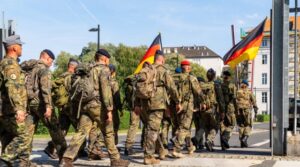
Plans to treat up to 1,000 wounded soldiers a day in the event of a major conflict between NATO and Russia are being drawn up by Germany’s armed forces amid growing concerns about a possible escalation.
The contingency plan is part of a broader framework to prepare European militaries against the possibility of a major confrontation with Moscow, at a time when NATO has long warned that Russia could be in a position to launch an attack by 2029.
Despite Kremlin assurances that it is not preparing for war with the Atlantic Alliance, recent violations of its airspace (in Poland and Estonia) by Russian aircraft and drones have heightened fears of escalation.
The chief medical officer of the German armed forces, Ralf Hoffmann, said the number of wounded would depend on the intensity of the fighting and the units involved.“Realistically, we are talking about a number of about 1,000 wounded soldiers a day,” he said.
Since 2022, when the Russian invasion of Ukraine began – the largest conflict in Europe since World War II – European militaries, including their health services, have stepped up their preparation for the possibility of future conflicts with Russia.
Germany, Hoffman pointed out, is constantly adapting its medical training, drawing lessons from the war in Ukraine. “The nature of war has changed dramatically in Ukraine, he said, noting that injuries now come less from gunfire and more from explosions and burns caused by drones and roving munitions.
Germany is also designing bomb-resistant shelters
As was made known over the summer, Germany plans to expand the number of its bomb-resistant shelters in fear of an attack by Russia in the next 4 years.
These plans were made known by the head of the Federal Office for Civil Protection and Disaster Response (BBK), Ralf Tischler, who said that Europe’s largest economy must realize the reality in which it lives and that Germany should be prepared for a possible war.
“For a long time, there was a belief in Germany that war was not a scenario for which we had to prepare. That has changed. We are concerned about the risk of a major war of aggression in Europe,” Tysler had said.
Shelters to hold a million people
Tissler called for a “national effort” to identify and convert tunnels, subway stations, underground garages, car parks and underground public buildings into shelters to “quickly create space for 1 million people”.
He added that the country is in a race against time and that it is not enough to rely on the construction of new shelter facilities. These shelters will take a long time to design and build and will be very expensive, Tissler said . Therefore, existing structures need to be looked at more immediately.
Tischler added he said information systems within the road network of German cities – such as signage – on where people can locate shelters should also be improved, and warning sirens should be upgraded.
It is noted that of the roughly 2,000 shelters and shelter rooms in Germany left over from the Cold War, only about 580 are in working order and most need multi-million euro renovations.
Major spending to boost defence
Speaking about the funding of the project, Tisler stressed that every effort should be made to secure the required amount, which the Merch government has agreed to, but there is currently no official approval for the use of the funds, which are also claimed by the intelligence services and cybersecurity structures.
The money is expected to come from billions released after Germany’s debt brake is suspended by parliament in March, which will allow for major spending in defence, vital infrastructure – such as bridges and roads that allow for the transport of tanks and supplies – and civil defence.
Intelligence agencies and cybersecurity structures, which are in vital need of investment, are also competing for funds.
Tissler estimated that it would take at least €10 billion over the next four years to meet civil defence needs and at least €30 billion over the next decade. He also called for the creation of a mandatory or voluntary civil protection service and urged citizens to help build the country’s resilience by stockpiling emergency supplies in case of power and water cuts. “Our appeal is: stock up on supplies that will last you for 10 days, if possible,” he told the newspaper, echoing similar calls from other European governments.
Ask me anything
Explore related questions




