





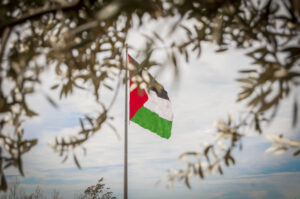
Most European Countries Now Recognize the State of Palestine Following the UN Announcements
The majority of countries in Europe have now officially recognized the State of Palestine, following announcements from the UN podium yesterday (Monday) by France, Belgium, Luxembourg, Malta, Andorra, and Monaco—nearly two years after the outbreak of war in the Gaza Strip.
Here’s a closer look at what diplomatic recognition of the state declared by the exiled Palestinian leadership in 1988 actually means, at a time when Israel continues to occupy the West Bank, and the Gaza Strip has been almost destroyed.
Which Countries Recognize or Intend to Recognize the State of Palestine?
Almost 80% of UN member states recognize Palestine.
According to AFP, at least 151 out of 193 UN member states officially recognize the State of Palestine, with confirmation pending from three African countries.
Yesterday, six European countries—France, Belgium, Luxembourg, Malta, Andorra, and Monaco—formally recognized Palestine. The day before, Britain and Canada—the first G7 nations to take this step—made similar announcements, followed by Australia and Portugal.
In addition, Russia, Arab nations, nearly all of Africa and Latin America, and the vast majority of Asian countries, including India and China, already recognize Palestine.
Algeria was the first country to recognize the State of Palestine on November 15, 1988, immediately after Yasser Arafat, the historic leader of the Palestine Liberation Organization, made the declaration in Algiers.
Dozens of countries followed shortly afterward, with a second wave of recognition occurring 20 years later.
The war in Gaza, which erupted after Hamas’s unprecedented attack on Israel on October 7, 2023, has triggered a new wave of recognitions, with 19 countries joining the list.
Which Countries Do Not Recognize the State of Palestine?
At least 39 countries have not recognized Palestine, led by the United States and Israel. Israeli Prime Minister Benjamin Netanyahu rejects the idea of a Palestinian state, and in 2024 the Israeli parliament passed a resolution opposing its creation.
Other countries that do not recognize Palestine include Japan, South Korea, Cameroon, Panama, and most countries in Oceania.
Until recently, Europe was highly divided on this issue. Before the 2010s, only Turkey and the countries of the former Soviet bloc had recognized Palestine. Hungary and the Czech Republic now consider themselves as not having engaged in bilateral recognition.
Until the start of the Gaza war, most Western and Northern European countries had not recognized a Palestinian state, with the exception of Sweden in 2014. In 2024, Norway, Spain, Ireland, and Slovenia were the first to follow suit. Italy and Germany, however, are still not considering recognition.
What Does Recognition of a State Actually Mean?
Recognition is a complex issue in international law, “somewhere between politics and law,” according to Roman Le Beuf, professor of international law at Aix-Marseille University.
“States are free to decide the timing and manner of recognition,” he explained, noting that “there is no official registry of recognitions.”
International law, he stressed, is clear: recognition does not create a state, nor does the absence of recognition prevent a state from existing. The key elements of a state are territory, population, and an independent government.
While recognition is “largely symbolic and political,” in the case of Palestine, three-quarters of countries “consider that Palestine meets the criteria” to be a state, Le Beuf noted.
Philip Sands, lawyer and law professor, commented in mid-August: “Once the status of the State of Palestine is recognized, it effectively places Palestine and Israel on an equal footing in terms of their treatment under international law.”
Ask me anything
Explore related questions




