





It seems that there is indeed both smoke and fire in the dispute that has erupted between Turkey and the U.S.—or more specifically, between two opposing camps: on one side, U.S. diplomat Marco Rubio and Fox News; on the other, Recep Tayyip Erdogan and the Turkish Presidency.
The spark that ignited the fire
Last Monday, the Turkish President gave an exclusive interview to the American network, specifically to Bret Baier, regarding his upcoming meeting with Donald Trump at the White House. The American host and journalist asked Erdogan how he believed a solution could be found to the ongoing conflicts in Gaza and Ukraine. The Turkish President’s answer—broadcast by the network with voice-over translation, since Erdogan responded in Turkish—appeared to be a direct attack on the White House, with Erdogan stressing that Trump himself had declared from the very beginning of his presidency that he would end both the war in Ukraine and the crisis in the Middle East.
See here the excerpt from Erdogan’s interview
A few hours later, U.S. diplomat Marco Rubio appeared on the same network during its morning news segment and directly responded to Erdogan’s comments. His reaction went beyond mere annoyance, clearly signaling serious concern from Washington on the eve of the two presidents’ meeting at the White House. Specifically, Rubio emphasized that Trump remains the only leader with the real ability to bring peace, both to the war in Ukraine and to the Gaza conflict. He went on to say that “everyone comes to the White House, everyone wants to talk with President Trump,” seeking to highlight Trump’s role as a global mediator.
The seat to Trump’s right and the effort to bridge the gap
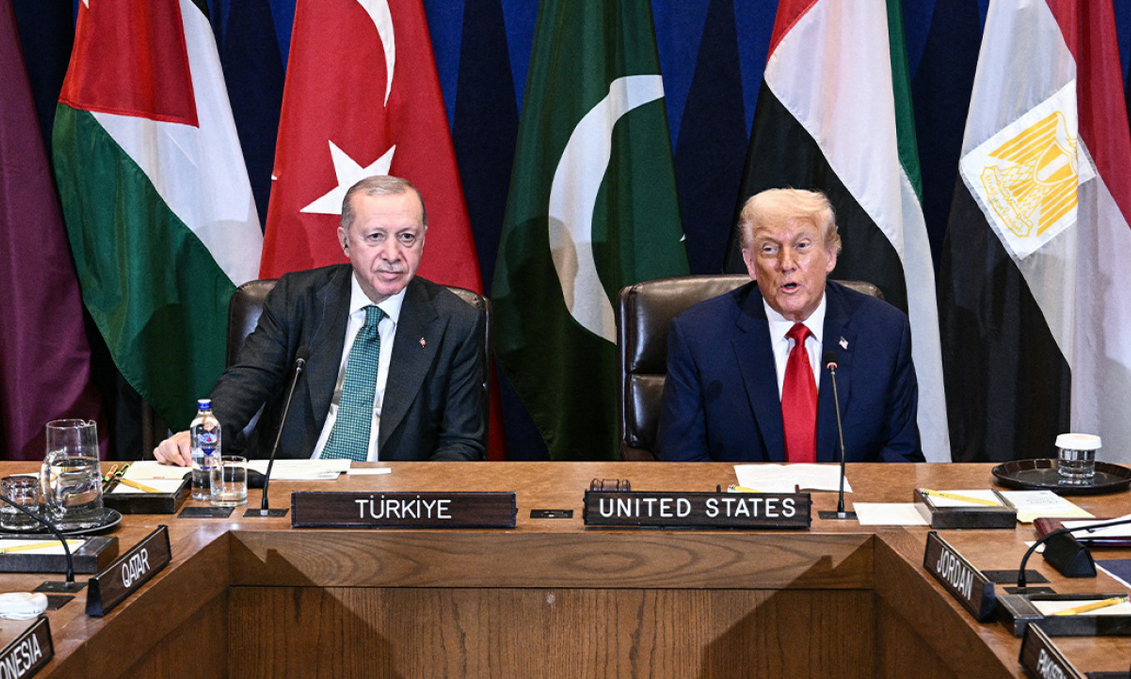
Shortly after tensions escalated, the American President took center stage at a summit of Arab and Middle Eastern nations, where the crisis in Gaza was the main topic. Trump chose to have the Turkish President by his side rather than Qatar, a move that both Turkish and American diplomacy interpreted as signaling the end of this particular flare-up.
However, all this appears to have been just maneuvering on the American chessboard. Fox News and Bret Baier later relayed a public statement from Turkey’s head of communications in Washington, D.C., suggesting that the U.S. network was responsible for the cold atmosphere, claiming that things had essentially been “lost in translation.”
Specifically, the Turkish side’s statement read:
“President Erdogan’s response to a question regarding the end of wars lost its meaning in translation. During that particular interview, President Erdogan emphasized that ending wars entails significant challenges and costs, and he stressed President Trump’s contributions and efforts in that direction.”
The network, through its journalist, nevertheless replied to Ankara by stressing:
“We stand by the accuracy of our translation,” setting the tone for what is expected later today in the Oval Office.
Ask me anything
Explore related questions




