





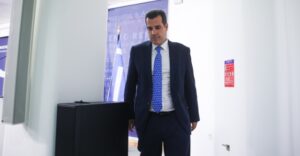
Kyriakos Mitsotakis, just as he did from the UN General Assembly podium—where he spotlighted his tax-cutting policy—wants, on Greek soil, to keep the pro-people character of the measures announced at TIF in the foreground.
That is why, at the first cabinet meeting following Thessaloniki, the legislation on tax relief dominates, which, according to the government, will increase the disposable income of four million Greeks and help them better defend against the pressures of rising costs. According to reports, the Prime Minister, in his introductory remarks, will illustrate with concrete examples how these measures benefit employees, pensioners, professionals, and young people.
In this context, government sources note, he is expected to emphasize the permanent nature of the income tax changes, while sending messages in two directions: First, to the beneficiaries, using specific examples to show that these interventions strengthen wages and pensions, and therefore their protection against imported inflation. Additionally, Mitsotakis will highlight that citizens will continue to see increased income in their pockets, even when inflation no longer strains daily life.
On the other hand, using the cabinet agenda as leverage, the Prime Minister will aim to weaken the opposition’s narrative. As expected, he will point out that the matters approved by the cabinet demonstrate that the government is aligned with society and the country. At the same time, he will seize the opportunity to expose opposition falsehoods, which he is expected to describe as “the work that enacts our program.”
Emphasis will be placed on cabinet issues concerning the transition roadmap for the Armed Forces into a new era—covering interventions in military service and reserve duty—but even more so on advancing legal migration policies. According to competent sources, the bill is an important link in ensuring the smooth functioning of critical economic sectors. It is a measure announced by the Prime Minister at TIF, which has been ready for months, and after final adjustments to its provisions, was presented by the Ministry of Migration leadership before Mitsotakis traveled to the United States.
Setting out the legislative direction, Minister of Migration and Asylum, Thanos Plevris, in an exclusive statement to newmoney, clarified:
“Legal migration is necessary because it provides labor and allows us to select who will come, for how long, and under what terms. We are focusing on pending permits, on the recruitment of workers through intergovernmental agreements, and thirdly, on those granted asylum.” According to newmoney.gr, the central philosophy of the bill is to simplify procedures and reduce the processing time for relevant permits by half. The drafters describe it as providing “enough time to meet market needs.”
Ask me anything
Explore related questions




