





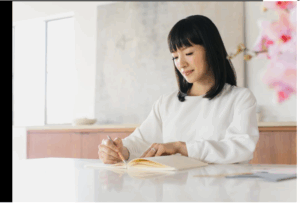
It’s been almost 10 years since we learned that we need to listen to the feelings a sweater brings out in us before we decide to part with it. All it took was the question: “Does it make me happy?” to decide what its fate would be: “Into the bin or back into the wardrobe”. The same was true of an outgrown pair of socks, or a torn white t-shirt lying forgotten in the corner of the drawer. Despite its poor condition, if when we took it in our arms, we felt deep emotions, then we had to keep it. Otherwise, like heartless executioners, we should, without a second thought… carve it up.
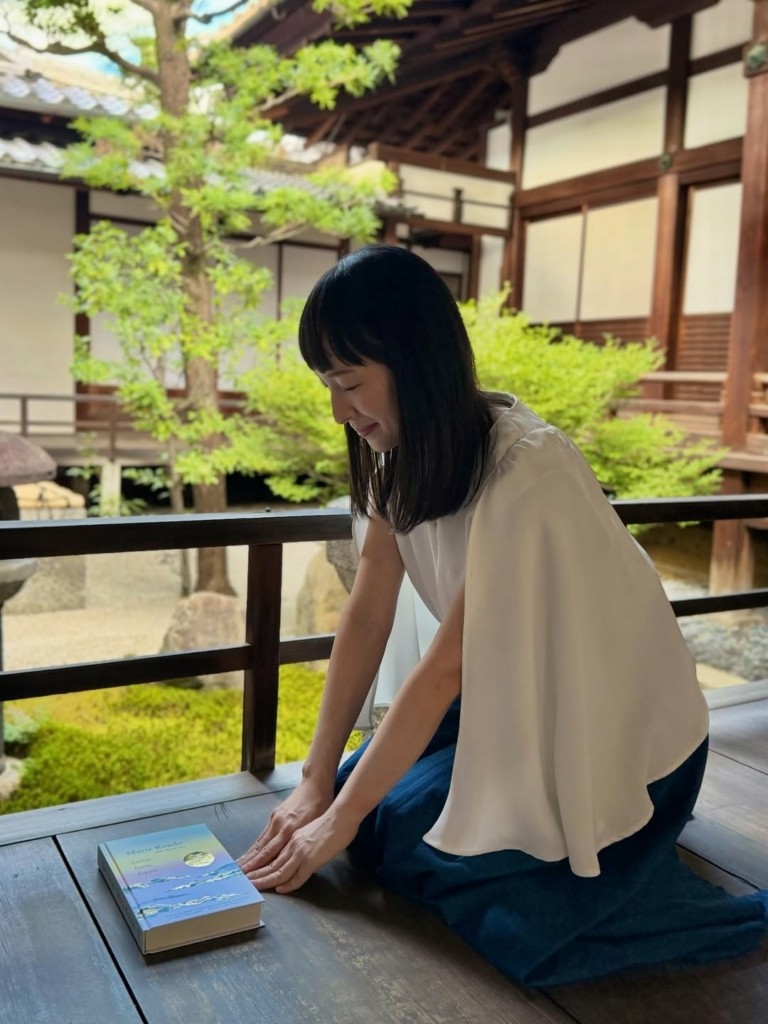
That’s how an entire philosophy was born—one that changed the way we look at our belongings. Behind it stands the high priestess of order, the guru of organization, and the sworn enemy of clutter: Marie Kondo.
The Japanese “KonMari,” as she is widely known, showed an interest in tidiness from an early age. While other children ran out for recess, she would rush to arrange books on the shelves. In past interviews, she has admitted that she used to be obsessed with throwing things away. One day, after fainting and remaining unconscious for two hours, she heard a voice telling her to look more carefully at her possessions before discarding them. That was when she realized her approach had been wrong: she shouldn’t just be throwing things out—she needed to identify what she truly wanted to keep. To recognize the joy within them.
At just 19 years old, she founded her own organizing consultancy. After completing her sociology studies, she devoted herself fully to her mission: to bring order to everything. Through dozens of TV shows, bestselling books that sold millions of copies, and interviews in major international publications, Marie Kondo entered readers’ homes like a Japanese dragon, sprinkling wisdom and secrets for the perfect closet and home organization.
Even Marie Kondo Got Tired of Perfection
And yet, as she recently confessed, even she now struggles to maintain absolute order. Perhaps true “joy” lies somewhere between chaos and tidiness. After all, following the birth of her three children, the queen of organization came to understand firsthand what a messy house really means—just like millions of parents around the world.
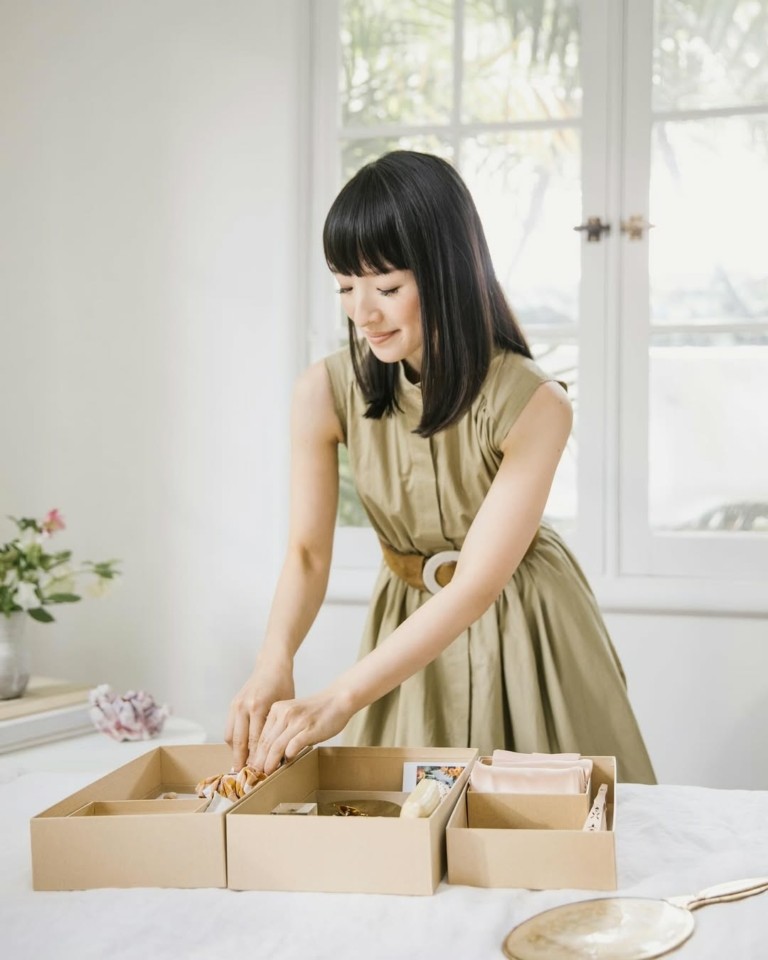
Her new book, titled “A Letter from Japan”, which was released abroad just a few days ago, serves as a way for readers to discover Japanese traditions and ways of life. During a press conference in Milan following the book’s presentation, Marie Kondo admitted that even she sometimes lets disorder take over her home:
“I’m not a perfectionist, nor am I perfect. I’m human, too—and when I’m tired, I don’t cook. When I’m really exhausted and see chaos spreading around the house, I pretend nothing’s happening and just go to sleep.”
The creator of the KonMari method—which revolutionized the world of tidiness (and at times exhausted it with perfectly folded socks)—shifts her focus in this new book to inner harmony, introducing six principles inspired by Japanese tradition.
At the heart of her new philosophy lies the concept of “Ma”: a moment of pause and reflection that we must reclaim amid our frantic pace of life—a brief interlude to reconnect with ourselves.
“Even in Japan, we’re always rushing. We’re constantly bombarded with information and stimuli, but we need that moment, that tiny crack in time—it might last fifteen minutes or just a few each day,” she told La Repubblica.
Her inspiration came from the Japanese tea ceremony, where the goal is not merely to drink the tea, but to appreciate every step of its preparation and enjoyment.
A practical piece of advice Kondo shared during her talk is to give undivided attention to whatever task you are doing—whether it’s cooking or folding clothes—without distractions. She also emphasized the importance of sometimes “switching off” the mind.
“You should thank the objects before discarding them, and greet your home before tidying it. Then, it will come naturally,” she said—simple instructions for finding harmony and order in everyday life.
The Six Japanese Concepts We Should All Know
In an interview, Marie Kondo introduced six concepts deeply rooted in Japanese culture. These principles, she explains, can be applied not only to our homes and closets but to the way we see the world—our relationships, our daily routines, and our approach to life itself.
– Love – Mederu
The concept of mederu means “to love, to care for.” Kondo refers to the idea of Yaoyorozu no Kami—“eight million gods”—which teaches that even inanimate objects can carry something divine. That’s why, before parting with something, we should thank it for what it has given us.
– Perfection – Kiwameru
Here, “perfection” doesn’t mean flawlessness, but rather “order” or “being in its right place.” Tidying up is a conscious act of choosing the space we want to live in and the objects we wish to keep. Life doesn’t have to be minimalist—only intentional, focused on what we truly need.
– Awareness – Kidzukau
This is the idea of mindfulness in our relationship with the things we own. It’s not just about seeing our belongings, but about acknowledging and examining our connection with them.
– Enjoyment – Ajiwau
The concept of ajiwau is about savoring the joy that our possessions bring us. We should devote time and attention to them. Kondo notes that in today’s digital world, we often become disconnected, losing our emotional bond with both our environment and our belongings. We need to let objects “speak” to us again.
– Purification – Kiyomeru
Tidying up as a form of cleansing. Kondo associates decluttering with purification rituals—not just a practical task, but one with spiritual meaning. A cluttered space breeds anxiety, while a clean one restores calm.
– Harmony – Chōwasaseru
Harmony is the ultimate goal—not only within our physical space but also in our relationships and our connection with the world around us. When we choose carefully, express gratitude, and organize our surroundings, Kondo says, “the world becomes a more beautiful place.”
Ask me anything
Explore related questions




