





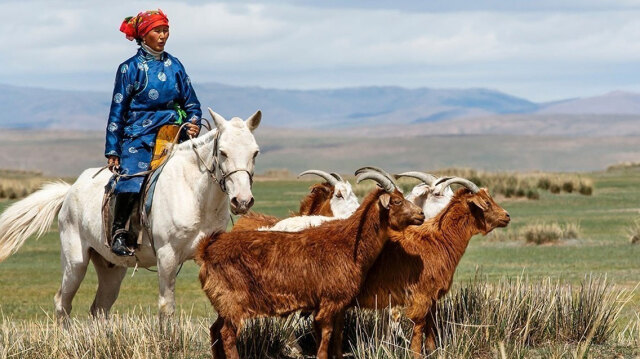
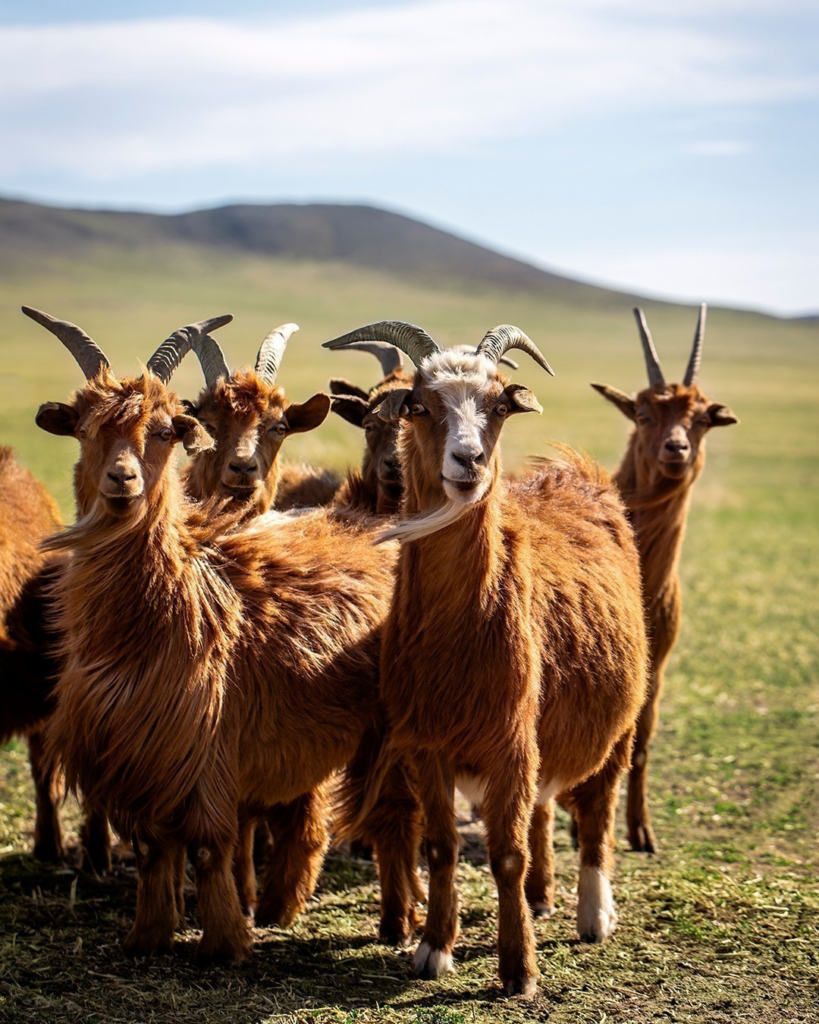
From the highlands of Mongolia to the Italian textile mills, cashmere remains one of the few materials that mass production has been unable to touch. And at a time when most textiles are mass-produced and almost monotonous, it still stands out as one of the few materials that remind us of what real quality means. The origins of cashmere remain special and challenging: it comes from the highlands of Mongolia and the Himalayas, where the cashmere goat develops a thin, highly insulating substrate of fur to withstand the harsh winter.
The rarity that determines the value of cashmere
Collection takes place in spring, by combing—not shearing—and this delicate process is only the beginning. The fibers, often finer than 16–19 micrometers (μm), are what give cashmere its soft, almost weightless feel and its renowned ability to keep the wearer warm without heaviness. It is one of luxury’s most striking contradictions: a material that feels minimal in the hand but delivers maximum comfort on the body.

Quality in cashmere is not an abstract idea. It is reflected in durability, natural sheen, and a fabric structure that does not loosen after a few wears. A single goat produces only a very small amount of usable fiber—one of the main reasons behind the true cost of the material.

Often, the fibers from three to five goats are needed to produce a single medium-weight sweater. Production cannot be industrially scaled; neither the animals’ feeding conditions nor the collection process can be “sped up.” This limitation, combined with sustained global demand for high-quality materials, has created a market valued at more than $3.5 billion annually.
Mongolia and China remain the largest producers, while Italy has become the premier “finisher,” giving the final product the refinement and tactile quality recognized by connoisseurs of luxury.
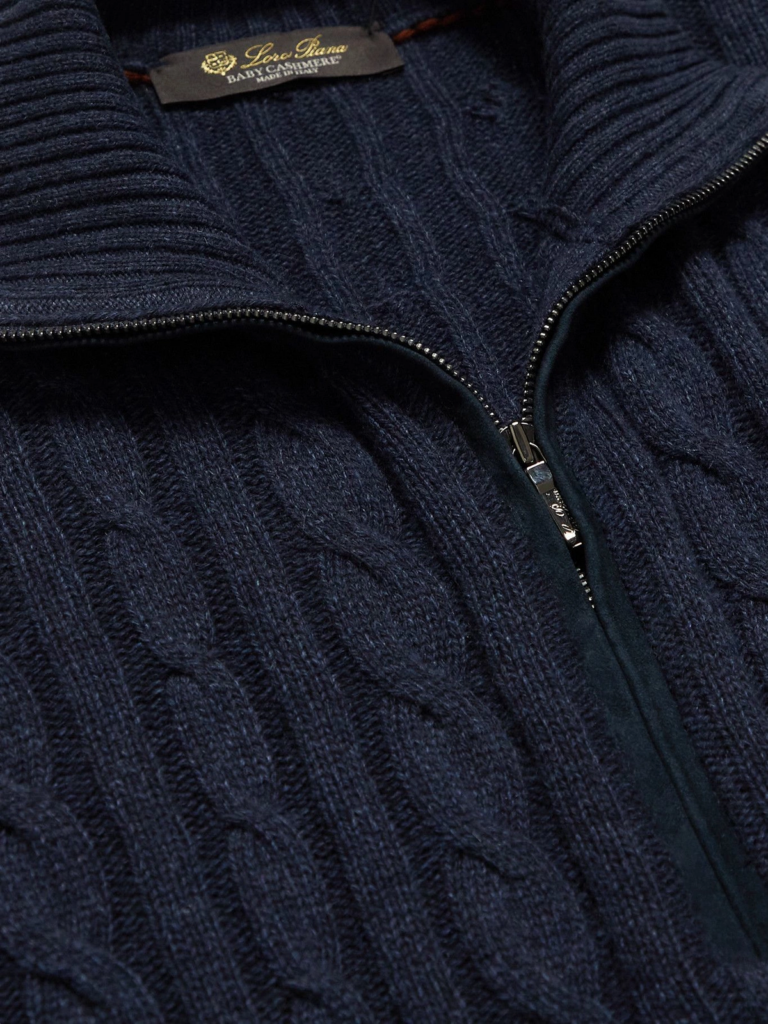
Within this landscape, certain houses have tied their names so closely to cashmere that they have shaped our modern perception of the material. Loro Piana remains the ultimate benchmark for high quality. It invests not in spectacle but in the rarity of raw materials, precision processing, and an almost ritualistic sense of simplicity. Its knitwear drapes effortlessly on the body and withstands time in a way that justifies its cost.
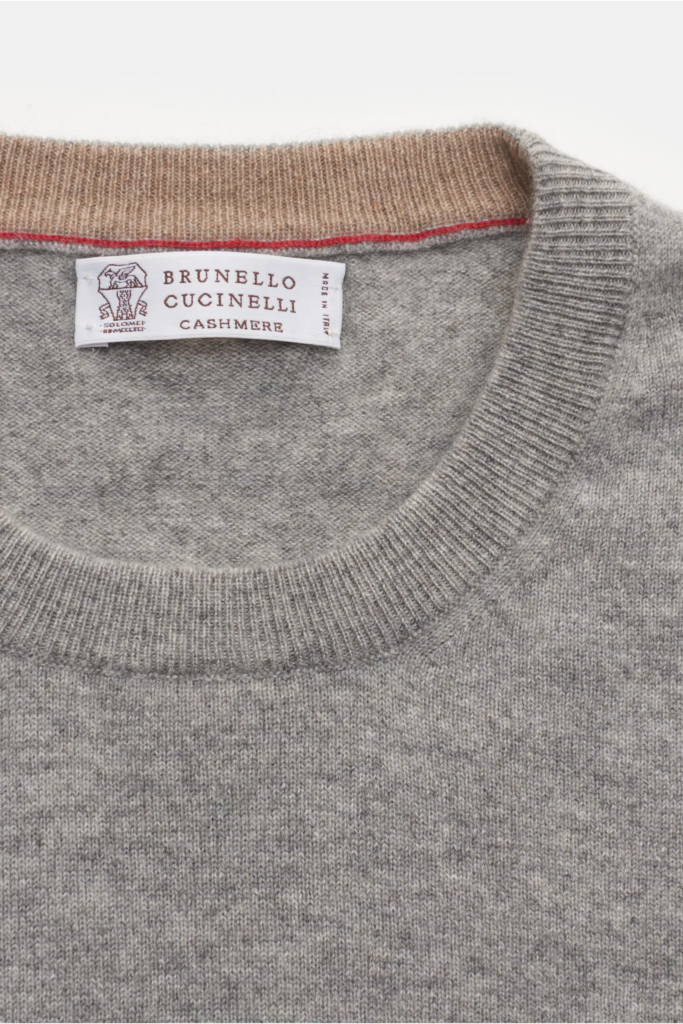
Brunello Cucinelli, on the other hand, has associated cashmere with a more human-centered philosophy. Its aesthetic is calm, neutral, and warm, while its approach to the material remains faithful to Italian craftsmanship, with an emphasis on color and quiet detail—luxury that doesn’t need to shout. For many, Cucinelli knitwear represents the golden balance between elegance and everyday practicality.
In Scotland, Johnstons of Elgin, with a history dating back to 1797, proves that tradition remains a powerful advantage. There, production takes place entirely within the same mills—from raw fiber to finished garment. The result is knitwear known for its durability, textural consistency, and reliable performance.
Moving in a more contemporary direction, brands like Naked Cashmere use direct-to-consumer models to offer more accessible pricing, emphasizing transparency, sustainability, and an everyday aesthetic.
At the same time, brands such as Todd Snyder, ASKET, and Guest in Residence have brought cashmere into the world of casual dressing, incorporating it naturally into wardrobes that transition easily from office to evening without pretense.
Cashmere is booming – The history and economics behind the world’s most coveted fabric
What unites all these approaches is a single promise: that when produced properly, cashmere is not just fabric. It is an experience that moves from hand to body, and from body to the relationship each person forms with their clothing. It doesn’t promise spectacle but longevity. It doesn’t seek noise, but substance. And in today’s attention economy, that may be the greatest luxury of all.
Ask me anything
Explore related questions




