





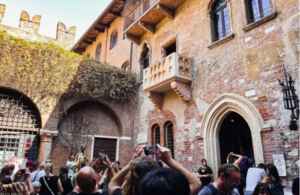
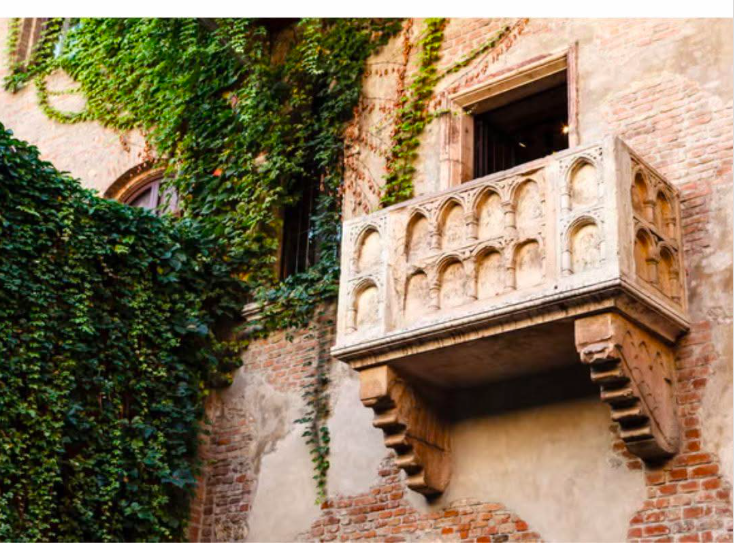
The famous courtyard and balcony associated with Romeo and Juliet in Verona are now accessible only with an entry ticket. As of December 6, visitors wishing to take photographs in the area must purchase a ticket to the house museum, priced at €12 for adults.
The small balcony overlooking the courtyard is considered analogous to the one where Shakespeare’s doomed lovers declare their love in the play. The site has become a symbol of romance, drawing crowds who gather for selfies and to touch the bronze statue of Juliet.
Under the new regulations, couples taking photos on the balcony will be limited to 60 seconds, while the maximum number of visitors allowed inside the house at any given time has been reduced from 130 to 100, prompting reactions from tourists. Marta Ugolini, Verona’s councillor for culture and tourism, stated that the city aims to protect both visitors and the historic site, particularly during peak periods such as Christmas.
Local shop owners have expressed concerns about the potential impact on their businesses. However, Verona is not the only Italian city imposing restrictions to address overtourism. Venice, for example, introduced entry fees for day-trippers last year and plans to expand the measure in 2026.
Ticket Also Introduced at Rome’s Trevi Fountain
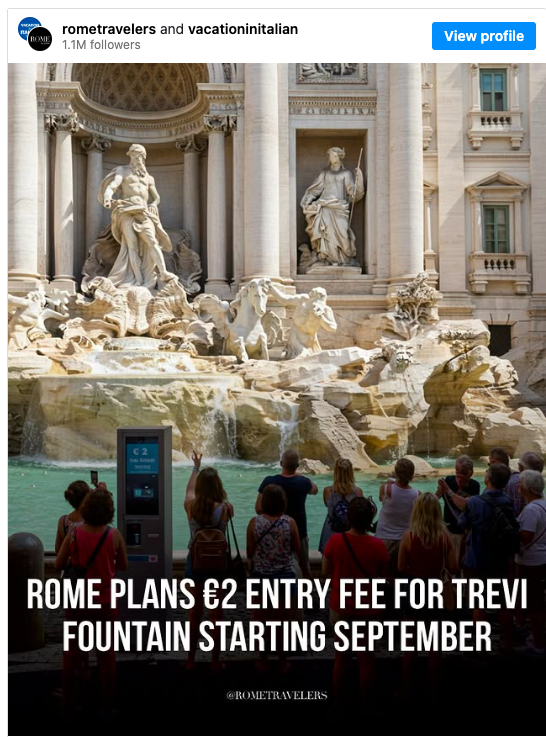
Following Venice and Verona, Rome is the next Italian city to introduce restrictions at one of its most iconic landmarks. From January 7, 2026, the Trevi Fountain will require an entry ticket for tourists, while city residents will be granted free access. The ticket will cost €2, with revenues invested in area management and the hiring of staff to oversee visitor flows.
The ticketing system was proposed to reduce overcrowding in the square, where more than 5.3 million tourists visited the Trevi Fountain in the first half of 2025 alone—a figure higher than the total number of visitors to the Pantheon throughout 2024.
Overtourism appears to be a growing concern across many European cities. In the summer of 2025, for example, Barcelona witnessed thousands of residents protesting against the heavy tourist flows that disrupted daily life in the city center. Beyond congestion, overtourism also drives up prices for goods and housing.
“In Italy, introducing entry fees for well-known landmarks represents an initial effort to transform a long-standing problem into a more controlled and sustainable model of management,” experts say.
Ask me anything
Explore related questions




