






With a car stuck in Athens traffic, you’ve probably fleetingly thought, “I’d get there faster on foot.” In fact, this is increasingly close to reality. As average speeds in the capital continue to drop, in some areas cars are already moving at the same pace as pedestrians — and soon, pedestrians may overtake them, scientists say.
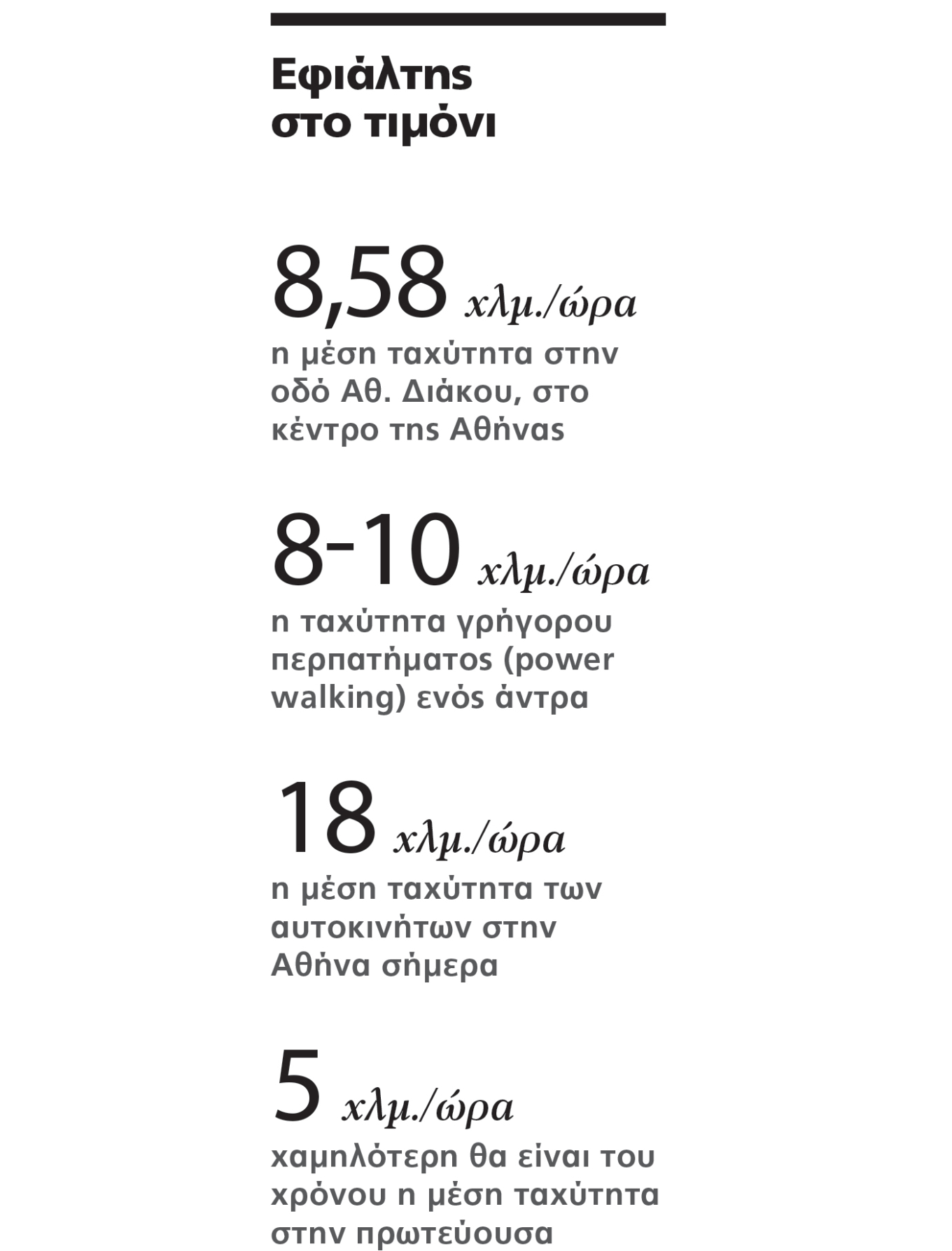
Measurements from the Traffic Engineering Lab at the National Technical University of Athens (NTUA) reveal that on Athanasiou Diakou Street in central Athens (between Amalias and Kallirrois), average speeds during evening peak hours are 8.58 km/h — equivalent to the brisk walking speed of an average man.
This means it would often be faster for drivers to walk to their destination, considering not only the cost of fuel, car wear, lost work hours, and stress, but also the time needed to find parking, which can exceed 40 minutes.
Things Will Get Worse
Average vehicle speed today is slightly under 18 km/h, and by the end of 2026, it is expected to drop by up to 5 km/h. This implies that traffic jams will more than double in length over the next decade, extending peak congestion times.
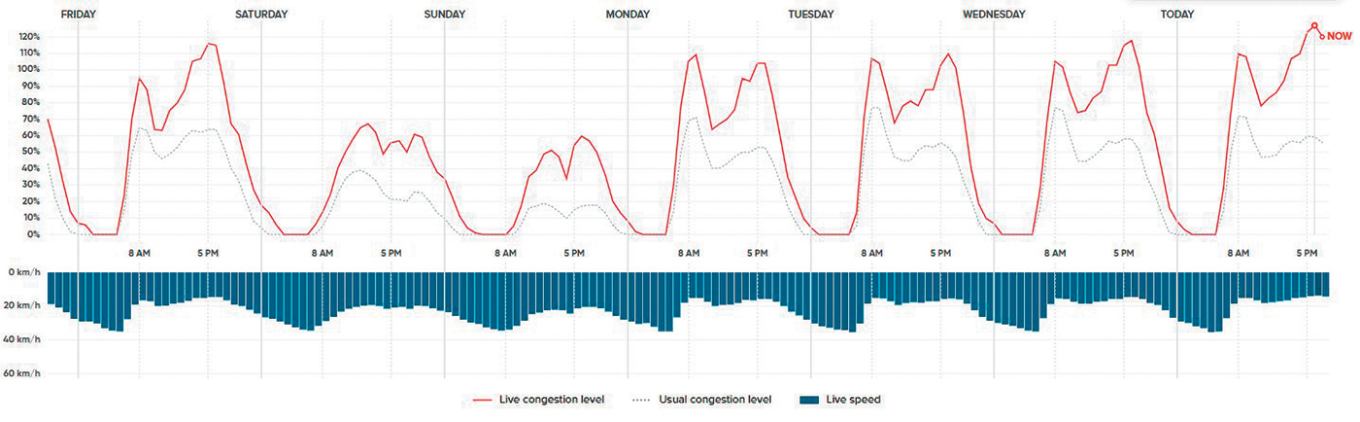
According to GPS company TomTom, on Thursday, December 18, at 6 p.m., it took an average of 42 minutes and 20 seconds to cover 10 km in Athens — 11 minutes and 40 seconds longer than TomTom’s average. Average speeds on city roads were just 14.2 km/h, 5.4 km/h below the usual TomTom average.
Traffic Congestion Patterns
TomTom data shows the peak in traffic last Thursday occurred at 6 p.m., when average speeds dropped to 14 km/h. On that day, the city recorded 292 traffic jams totaling 146.2 km. Experts predict that by the end of the decade, Athens could resemble an endless traffic jam, with cars barely moving. Average vehicle speeds could drop to 5–8 km/h, comparable to a camel caravan in the Sahara.
Holiday Traffic Nightmare
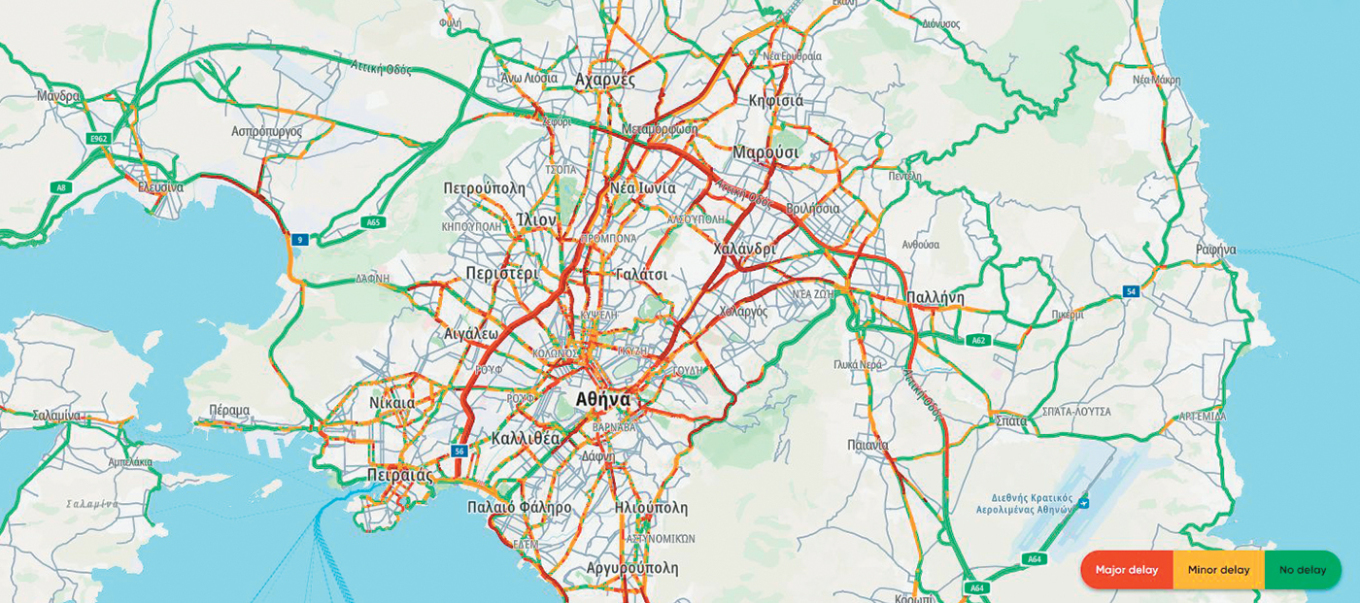
During holidays, congestion worsens as more cars and trucks circulate to festive areas and commercial streets. Lower temperatures also lead more people to drive. Parking violations and double parking exacerbate delays, meaning traveling even short distances can take 30 minutes or more in busy areas like Nea Smyrni, Kifisias Avenue, and other commercial hubs.
Future Outlook
Traffic experts warn that as 120,000 cars are added annually to Athens streets, congestion will worsen. Peak-hour average speeds, currently under 18 km/h, may drop 5 km/h further by next year, doubling traffic jam times and distances within a decade.
Walking Speeds vs. Driving Speeds
In central Athens, streets like Achilleos (9.31 km/h), Mitropoleos (10.24 km/h), and Evripidou (9.95 km/h) already have average speeds equal to brisk walking or light jogging. Traffic-induced stress contributes to cardiovascular problems, unlike walking, which is healthy. Streets like Panepistimiou (16.73 km/h), Stadiou (13.51 km/h), Vasilissis Amalias (12.65 km/h), and Katechaki (17.35 km/h) remain slightly faster.
Morning peak hours show severe congestion on Syngrou Avenue (12.09 km/h), Pireos (10.05 km/h), Vasilissis Konstantinou (11.08 km/h), and Kallirrois (11.48 km/h).
Attiki Odos Saturation
Even modern highways like Attiki Odos face near-saturation during Christmas, with traffic increasing over 30% above average daily volumes and sometimes exceeding 290,000 vehicles per day. Daily traffic now surpasses 255,000 vehicles, up 5% from last year, highlighting exponential annual growth.
TomTom Rankings
Athens ranks 8th in Europe and 37th globally for road congestion. Drivers lose an average of 111 hours per year, equivalent to a 10-minute commute twice daily. London tops Europe at 113 hours, followed by Dublin, Barcelona, Bucharest, and Bordeaux. Thessaloniki ranks 131st globally and 68th in Europe, with 80 lost hours and almost 23 minutes per peak trip. Athens’ traffic situation remains the worst in Greece.
Ask me anything
Explore related questions




