





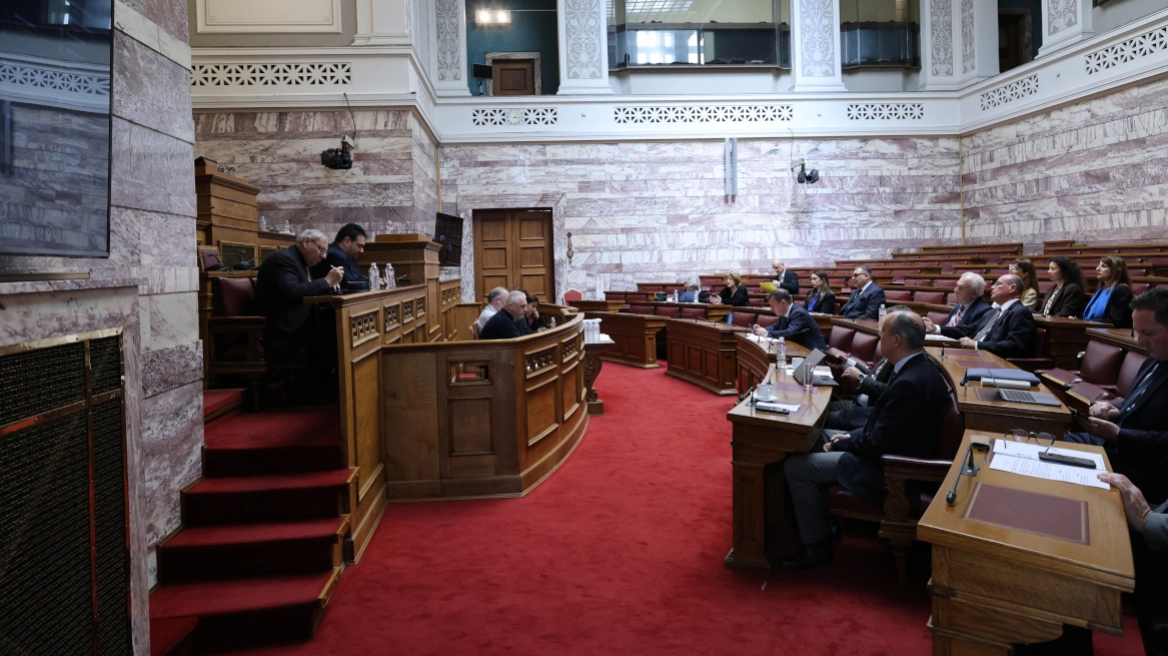
An appeal to all parliamentary parties to support the Interior Ministry’s bill on postal voting and the new three-seat overseas constituency was made by nearly all representatives of the Greek diaspora during their hearing before the competent parliamentary committee.
Panos Drosinakis, President of the Federation of Greek Communities in Germany, stated that postal voting and a separate overseas electoral constituency had long been standing demands of Greeks abroad, which the government is now fulfilling.
Seta Theodoridou, President of the Greek Community of Paris and Surrounding Areas, described the bill as “positive,” while Moses Nikolaidis of the Federation of Greek Communities of Sweden also expressed his support.
“The provisions ensure the equal participation of all Greeks in elections. With this bill, Greece grows bigger,” said Filippos Kotsaridis of the Greek Community of Brussels. Vasilis Papastergiadis, President of the Greek Communities of Australia, also described it as a positive initiative. Support for the bill was likewise expressed by Stefanos Tambakis, former President of the World Council of Hellenes Abroad (SAE), and Christina Tsardikou, representative of Greeks in Argentina. The only opposition to postal voting came from Christina Lambrakou, President of the Greek Community of Denmark.
For his part, Interior Minister Thodoris Livanios urged the opposition to approve both the postal voting provision for Greeks abroad and the creation of the three-seat constituency, so that the new arrangement can take effect in the very next national elections rather than the ones after that.
Mr. Livanios also responded to claims that Greeks living abroad “will not face the consequences of their vote,” emphasizing that every citizen has the right to freely choose the party or candidate of their preference.
He made special reference to the issue of the three-seat constituency, addressing reservations that have been raised. As he explained, this provision does not prevent parties from including additional candidates on their ballots, describing the regulation as an “initial implementation estimate.”
Regarding the preference vote, the minister clarified that abolishing it is not practically feasible, as it constitutes a fundamental element of voter choice. At the same time, he noted that, in theory, separate constituencies could be created in regions such as Oceania; however, this could raise proportionality issues if the number of voters were very small.
Ask me anything
Explore related questions




