





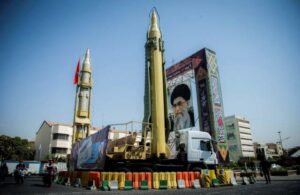
U.S. Vice President J.D. Vance assured in an interview with the Washington Post that “there is no possibility” of a long-running war between US and Iran, but did not rule out new aerial bombings as the third round of indirect negotiations in Geneva concluded without agreement.
“We prefer the diplomatic option”
“The idea that we will be engaged in a war in the Middle East for years, with no end in sight – there is no chance of that happening,” Vance told The Washington Post. At the same time, he noted that “I think we all prefer the diplomatic option,” adding that developments will “really depend on what the Iranians do and say.”
On Thursday, envoys from Donald Trump’s administration held the third round of indirect talks with Tehran in Geneva, brokered by the Sultanate of Oman. The Islamic Republic’s foreign minister, Abbas Araghchi, spoke via X of the “most intensive” talks “so far,” referring to “further progress.”
No deal, with new technical contacts
Despite declarations of progress, the latest round of talks in Geneva ended without agreement. U.S. officials, speaking on condition of anonymity, said that envoys Stiv Whitcoff and Jared Kushner set as a key condition the destruction of the three main nuclear facilities of Iran at Fordow, Natanz and Isfahan, and the delivery of all remaining enriched uranium to the US.
Washington is calling for a new agreement of a permanent nature, with no sunset clauses as in the Obama-era Joint Comprehensive Plan of Action (JCPOA), from which Donald Trump withdrew the US during his first term, reinstating tough sanctions.
Tehran has rejected the proposal to transfer uranium stockpiles overseas and objected to ending enrichment, dismantling facilities or imposing permanent restrictions. At the same time, it insists on its right to enrichment, proposing alternatives such as a reduction from 60% to 1.5% or a temporary suspension.
Increasing pressure and military presence
The US demands were made days after Donald Trump made a speech to Congress in which he accused Iran of pursuing a nuclear weapon and intercontinental ballistic missiles, accusations Tehran rejects. The US president has threatened military action if the talks fail.
Militarily, the U.S. has made a significant boost to its air presence in the region, deploying refueling aircraft, A-10 attack aircraft and two aircraft carriers in one of the largest concentrations of power since 2003.
Foreign Minister Marco Rubio said “I won’t speculate how close they are, but it’s clear they are pursuing intercontinental ballistic missiles,” adding that Iran’s refusal to discuss its ballistic program is a “big, big problem.”
Caveats within the US
At home in the US, Republican lawmakers are expressing reservations about a potential deal that would allow limited enrichment. Senator Linsey Graham said that “if consideration is given to allowing Iran even very little enrichment for pretextual reasons, then no deal.”
The lifting of sanctions also remains a point of friction. The US is reportedly offering limited relief, while Tehran is seeking substantial relief for its economy. Talks in Geneva focused primarily on preventing the acquisition of a nuclear weapon, while technical negotiations are expected to resume in Vienna next week.
Ask me anything
Explore related questions




