





The war in Iran is causing the biggest energy crisis of all time, according to the head of the International Energy Agency (IEA), Fatih Birol, who warned that it will take at least six months for the full restoration of oil and natural gas flows from the Gulf region.
Birol pointed out that the disruption in natural gas flows is twice as severe as in 2022 due to the Russian invasion of Ukraine. He also stated that the loss of oil is even greater than the shocks of the 1970s, which caused recession and fuel shortages worldwide.
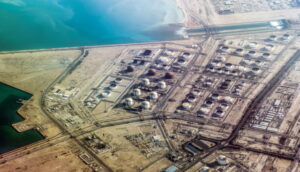
Oil prices reached nearly $120 per barrel last week, as Israel and Iran launched missile attacks on key energy hubs in the Gulf, such as the South Pars gas field and the massive Ras Laffan complex in Qatar. Despite this escalation, Birol argued that policymakers and markets are still underestimating the scale of the crisis.
He stressed that the problem will grow as long as energy flows from the Middle East remain blocked, a region that exports 20% of the world’s oil and liquefied natural gas. “People understand this is a major challenge, but I am not sure they fully grasp the depth and consequences of the situation,” he said in an interview.
Even if the war ends and the Strait of Hormuz reopens, Birol noted that “it will take a long time” for oil and gas fields—many of which have been shut down or damaged—to recover. “Some areas will need six months to resume operations, while others will take much longer,” he said.
Birol emphasized that the destruction of vital supply chains—affecting global supplies of fertilizers, petrochemicals, as well as sulfur and helium—will severely impact the global economy. “These products are essential to the global economy,” he noted.
Last week, the IEA announced the release of 400 million barrels of oil and refined products from global reserves to ease market shortages, an amount representing only 20% of its reserves. “We still have 80% in hand,” Birol stressed, adding that he has discussed increasing oil and gas production with countries such as Canada, Mexico, Brazil, and Norway.
However, he underlined that additional flows will not offset the loss of energy from the Middle East. “The most important action is restoring transit through the straits,” he said.
Additionally, he warned policymakers in Europe not to relax restrictions on Russian energy, saying they must not repeat the mistake of excessive dependence on energy flows from Russia.
Birol argued that using Russian natural gas is economically unjustified, as its price is traditionally linked to oil prices. “Russian gas would cost close to current gas prices in Europe,” he said. He also referred to the destruction of the Nord Stream pipelines and the erosion of Russia’s reputation as a reliable long-term supplier.
He further predicted that the energy crisis will trigger a wave of political changes in governments worldwide, comparing it to the reactions following the oil shocks of 1973 and 1979.
“There were three responses. More than 40% of the nuclear energy we have today was built in response to that crisis. The amount of fuel consumed by the average car was halved within 10 years after the shock. And countries changed their trade routes,” he said.
Regarding the response to the war in Iran, he predicted renewed momentum for the transition to renewable energy sources, a resurgence of nuclear energy, increased adoption of electric vehicles, and also a return to greater use of coal instead of natural gas.
Ask me anything
Explore related questions




