





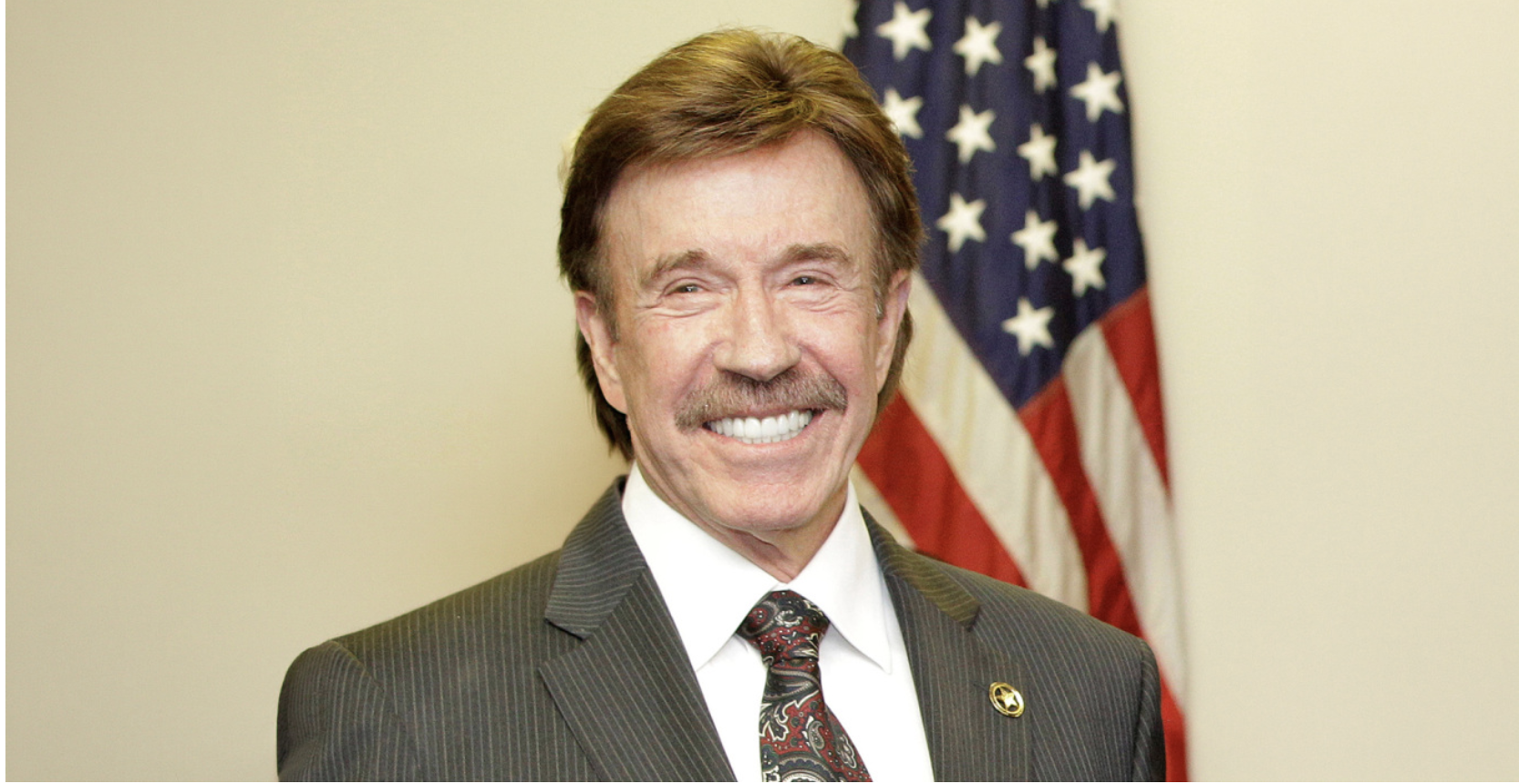
At the age of 86, Chuck Norris passed away after being rushed to a hospital in Hawaii on Thursday, March 19. The veteran cinematic commando, who inspired countless hilarious jokes that elevated him into the realm of mythology, had a dynamic career on the big screen with war and police films, earning the title of a superstar in his genre, alongside Sylvester Stallone, Steven Seagal, and Arnold Schwarzenegger.
It was a golden decade for Norris, as Stallone had paved the way with Rambo: First Blood, while it was no coincidence that at the time Ronald Reagan was President of the United States, whose policies strongly expressed conservatism, U.S. power, reverence for wealth, individualism, and the “revival” of the American Dream. A period that further reinforced the doctrine of the “American way of life” that had to be “protected” at all costs.
The poor man’s Stallone
More precisely, and especially outside U.S. borders, Chuck Norris was considered the “poor man’s Stallone,” given that the productions he appeared in had lower budgets, largely superficial scripts designed mainly for action-packed fights, and second-tier directors—often even more so than the supporting cast surrounding the “lone wolf” superhero.
The trend of jokes
The trend of the famous jokes about the American actor and martial arts expert began in the early 2000s, from the popular American TV show Late Night with Conan O’Brien, when host Conan O’Brien mocked Norris’ highly successful TV series Walker, Texas Ranger, although it likely started earlier with a high school senior. These jokes multiplied at an incredible rate, boosting Chuck Norris’ fame and truly propelling him into the realm of mythology.
Cherokee origins
On March 10, 1940, shortly before the U.S. entered World War II, a small blond boy was born: Carlos Ray Norris, to a truck driver father of distant Cherokee descent and a mother of Irish origin. At 16, his parents divorced, though his struggles had begun earlier. At school, classmates teased him for his Native American heritage. Shy and unsuccessful in both academics and sports, young Chuck dreamed of becoming strong and one day beating them all.
Marriage, military, and karate
Growing up without the support of his alcoholic father, he supported his two younger brothers and his mother, barely finished high school, and in 1958 married his childhood sweetheart, Diana Holechek, with whom he had two children and spent 30 years. Shortly after, he enlisted in the Air Force as an air policeman, far from combat, serving from a distance during the Korean War.
Norris, well-liked among his colleagues, gained the nickname “Chuck,” which he later adopted in cinema. During that time, he became fascinated by a new martial art from Korea that was gaining popularity: Tang Soo Do Moo Duk Kwan. His instructor was martial arts legend Jhoon Rhee. After leaving the military, he opened his own school, training famous students such as Steve McQueen and Priscilla Presley. He began competing—initially losing—but later won consecutive U.S. National Karate Championships, the Professional World Championship, and many others, finishing with an impressive record of 65 wins and only five losses before retiring in 1974.
Beating opponents and healing wounds
Shortly before that, he turned to cinema—reportedly encouraged by Steve McQueen—and in 1972 appeared opposite martial arts legend Bruce Lee in The Way of the Dragon. His first leading role came in the action film Breaker! Breaker!, followed by Good Guys Wear Black and The Octagon.
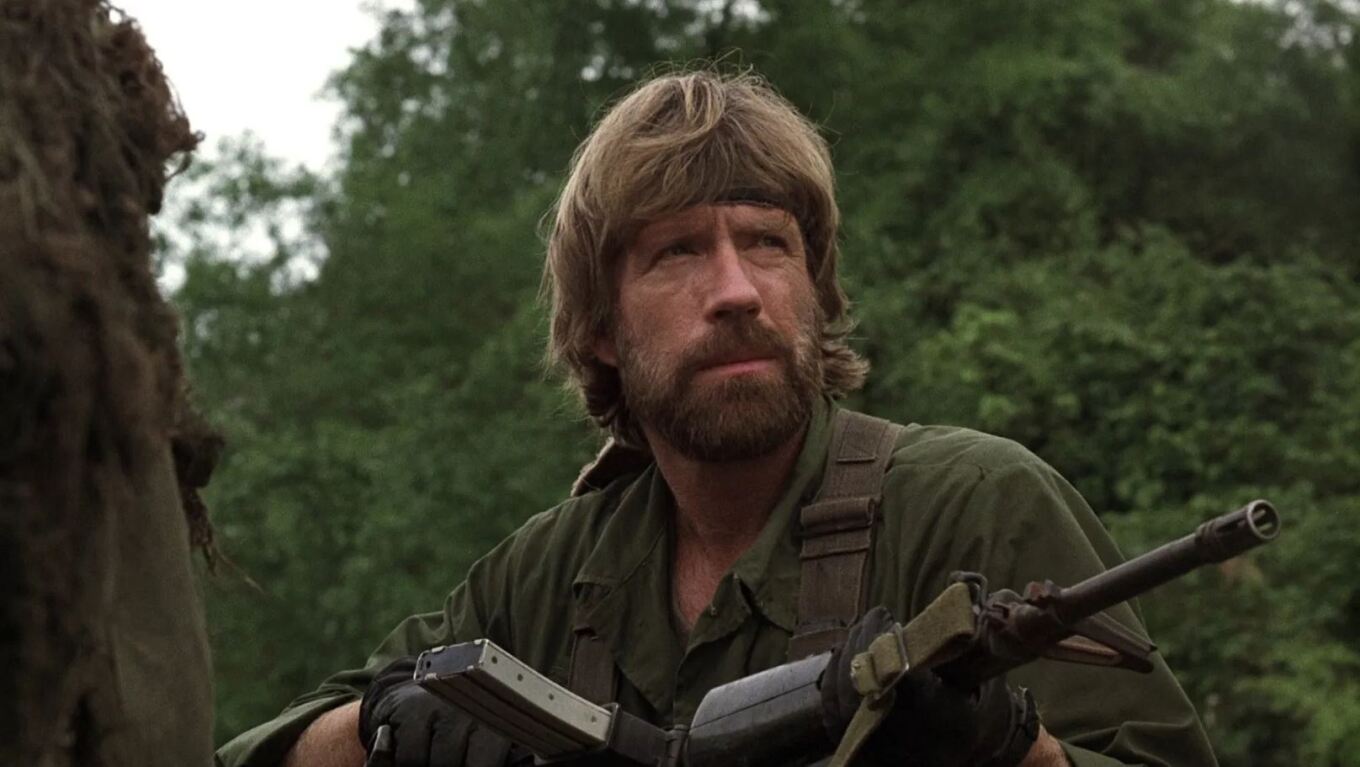
As martial arts films gained popularity worldwide, Norris starred in the war film Missing in Action (1984), playing a former prisoner returning to Vietnam to rescue American POWs. Its success led to two sequels, part of Reagan-era America’s effort to “heal” the wounds of the Vietnam War—essentially offering a cinematic revenge where the U.S. had lost in reality.
Rambo, Rando, and Delta Force
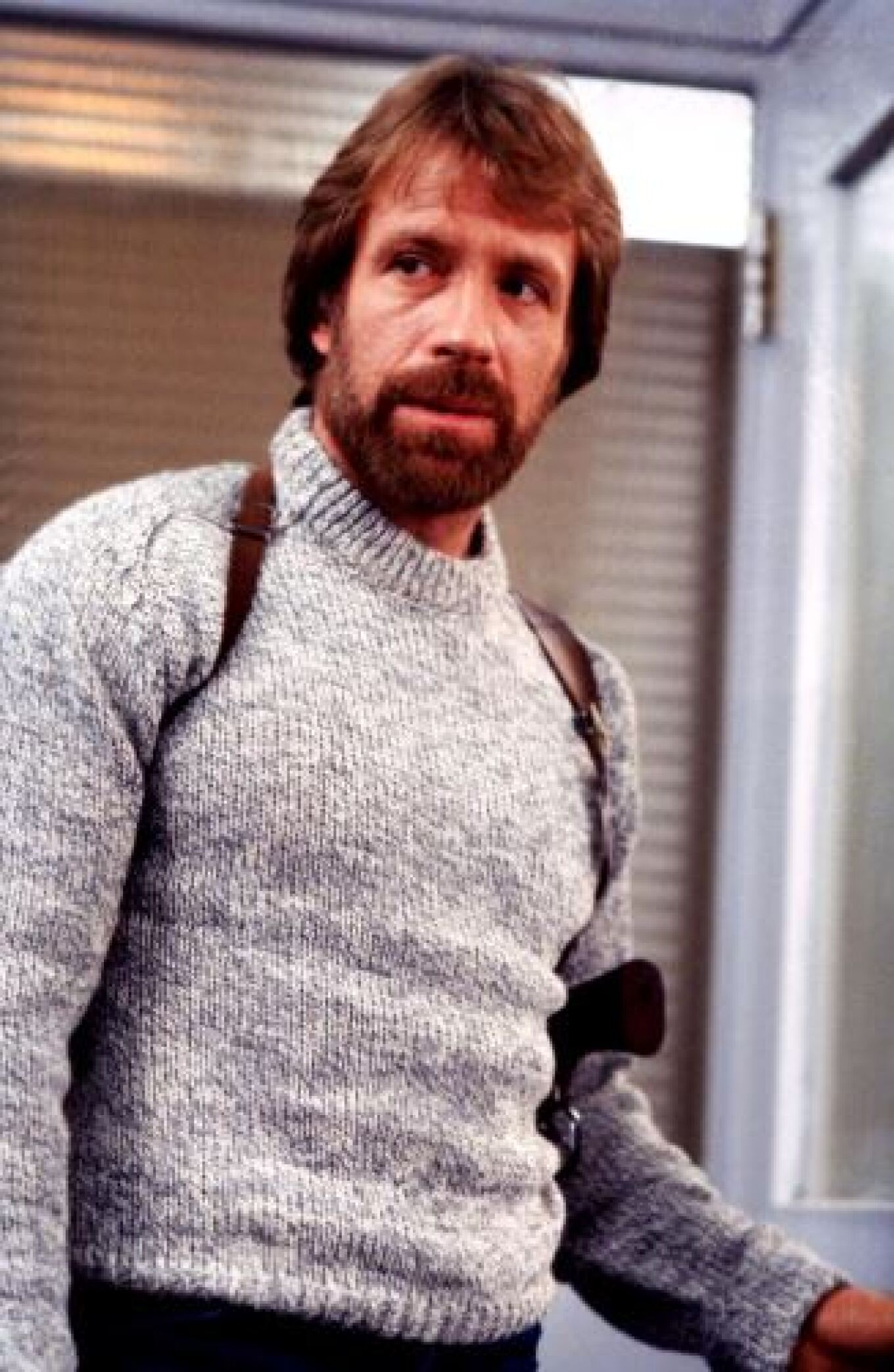
In 1985, while producing films at machine-gun speed, and following the huge success of Rambo: First Blood, Norris achieved another cinematic victory with Invasion U.S.A., which, beyond pleasing fans, also provided plenty of laughs. However, in the police thriller Code of Silence (1985), which had at least a basic storyline, he received relatively good reviews. The following year, he starred in the action film The Delta Force, alongside Hollywood tough guy Lee Marvin—a film about a commando team attempting to eliminate Palestinian terrorists who had hijacked a passenger plane on the Athens–Rome route.
Boosting national morale
Chuck Norris continued to make films at an intense pace, targeting at times “yellow” and “dark” enemies, at others Soviets and dangerous criminals, boosting national morale. Greek film titles reflected this tone: Lone Wolf McQuade, Eye for an Eye, Hero and the Terror, The President’s Man.
Relentless TV crime fighter
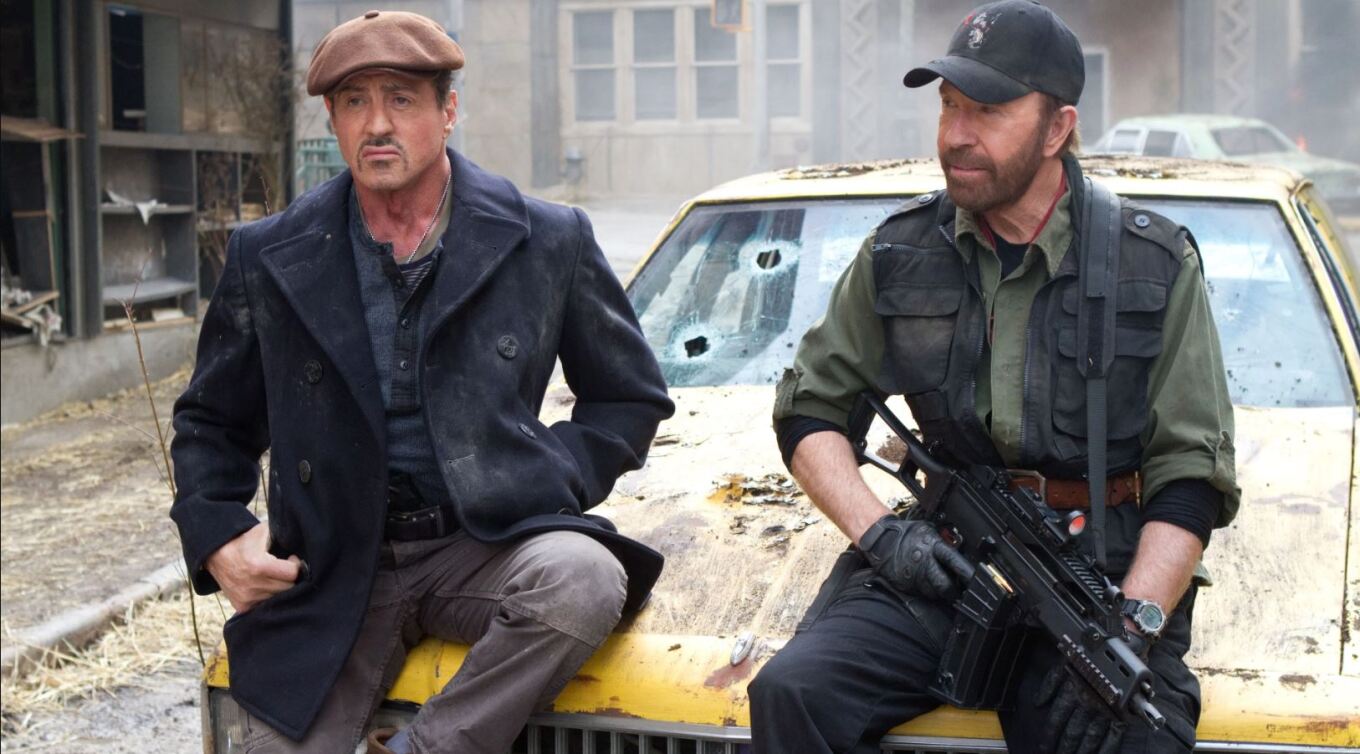
However, from the early 1990s, as much changed in the U.S. and globally, Norris saw his films lose popularity and box office numbers drop sharply. He began appearing less frequently in cinema and shifted focus to television, where he found unexpected success with Walker, Texas Ranger, playing the relentless crime fighter Walker for eight years, until 2001. After that, aside from occasional film appearances such as The Expendables 2, he mainly appeared in fitness equipment commercials.
A fan of Reagan
Known for his strongly conservative views—though initially a Democrat—he became an active Republican and supporter of Donald Trump, as well as Benjamin Netanyahu. He identified as a devout Christian and was firmly pro-gun rights. His personal life was relatively calm; in 1998, he married model Gena O’Kelley, with whom he had two more children.
A joke
Most likely, Chuck Norris will remain in history as a somewhat iconic cinematic figure, a phenomenon of a bygone Cold War era—but also for the hundreds of jokes made in his name.
Ask me anything
Explore related questions




