






The Eurogroup meeting on May 11 did result in a statement of progress for Greece but it was not one exulting resounding success. All eyes now turn to the European Central Bank (ECB) where it is hoped that the ECB will reinstate its waiver on Greek banks’ collatoral.
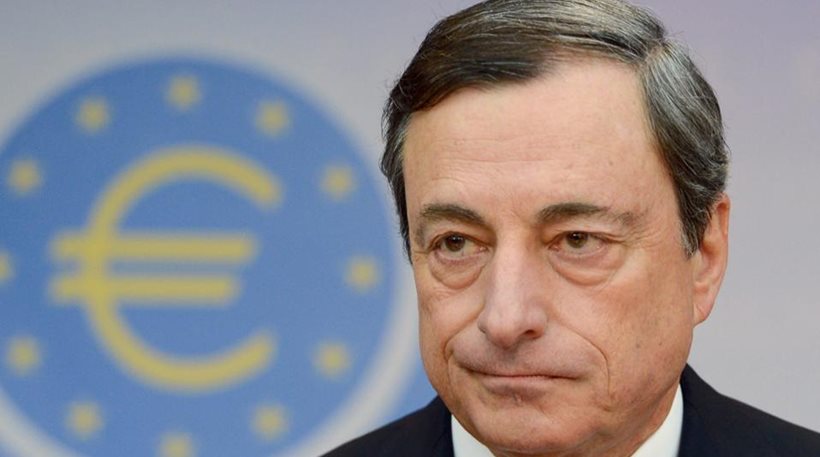
Proto Thema’s sources state that the alarm was raised in Athens following the meeting between Greek Deputy Prime Minister Giannis Dragasakis and European Central Bank Chief Mario Draghi last week. Draghi had sent the message that he cannot control the reaction of central bankers of other eurozone members and stated that unless there is significant change noted in Greece, he cannot guarantee more aid following the 2 billion euros that had been decided on last Thursday from the European Liquidity Assistance fund.
Eurogroup’s statement fell short of being a glowing report on Greece that would be enough to release the pursestrings of sceptical bankers. On the other hand, pressure is mounting. Finance Minister Yanis Varoufakis may have said that differences on taxation issues have been practically zeroed on most matters there are still basic thorns even in this sector with creditors pushing for a 21-23% joint VAT tax if VAT on basic items are reduced. All up, Greece’s creditors want measures to yield 5 billion euros from tax alone, but Athens has just formulated reforms that would gather 3 billion euros at best.
Varoufakis claims that a decision will be reached within two weeks, however his estimation is rather optimistic bearing in mind that any reforms would need to be approved from within the country first.
So as not to prompt the ECB’s wrath, despite claims to the contrary on Sunday evening, the government decided to pay the 740-mln-euro installment to the International Monetary Fund from the Bank of Greece’s reserves (800 mln euros). The government has 600 mln euros to pay fortnightly wages to public sector employees however it has now depleted its emergency funds.
The situation is due to get tougher towards the end of of the month when 1.1 billion euros needs to be paid for wages and pensions on May 27.
Government circles state that the government is eyeing funds from the National Strategic Reference Framework to make ends meet. However, even if it manages to avert a credit crunch in May without the release of the 7.2-bln-euro tranche benchmarked for Greece, it will still need to find another 3 bln euros for the payment of loans, wages and pensions in June:
June 5: 300 million euros to the IMF
June 12: 600 million euros for fortnightly public-sector wages and pensions
June 12: 300 million euros to the IMF
June 16: 600 million euros to the IMF
June 19: 300 million euros to the IMF
End of June: 1.1 bn euros for public-sector wages and pensions
Ask me anything
Explore related questions




