





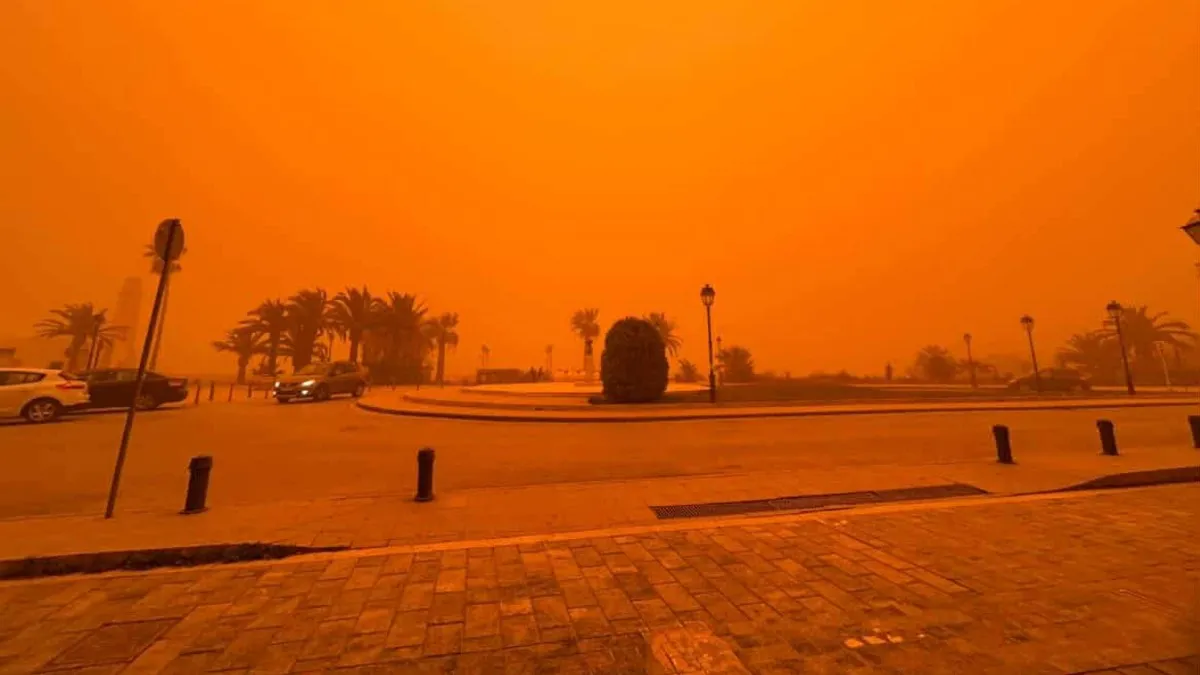
A new wave of African dust is expected to affect large parts of Greece in the coming days, just shortly after a previous intense episode that severely degraded air quality, particularly in Crete. Meteorologists are warning that the phenomenon will once again create elevated concentrations of airborne particles across several regions of the country, prompting health experts to issue public guidance.
The recent dust event was among the most severe recorded in Crete, with particle concentrations reportedly exceeding 1,000 micrograms per cubic meter of air. The result was an almost surreal atmosphere, with visibility reduced and the sky taking on a dense, opaque appearance that many described as otherworldly.
In anticipation of the new episode, the Hellenic Pulmonology Association is urging citizens to take precautions, emphasizing that African dust is not merely a temporary inconvenience but a significant environmental and public health risk. According to specialists, the dust particles do not only consist of mineral matter but can also carry pollen, bacteria, and fungi, forming a complex mixture that may irritate or damage the respiratory system.
Medical experts warn that inhaling these particles can trigger symptoms or worsen existing conditions, especially in vulnerable groups. Individuals with chronic respiratory or cardiovascular diseases, the elderly, young children, and pregnant women are considered at higher risk and should take extra care during periods of elevated dust levels.
Health professionals recommend limiting time spent outdoors, avoiding physical activity in open spaces, and using protective masks when exposure cannot be avoided. They also advise maintaining good hydration, avoiding smoking, and seeking medical attention if symptoms such as shortness of breath, persistent coughing, chest discomfort, sneezing, or eye irritation occur.
Authorities stress that such dust events appear to be becoming more frequent in recent years, raising concerns about their long-term impact on air quality and public health. As a result, timely public awareness and adherence to safety guidelines are considered essential in minimizing health risks during these atmospheric episodes.
Ask me anything
Explore related questions




