





The two opinion polls published yesterday (Pulse for SKAI and Opinion Poll for Action24) paint roughly the same picture, with only minor differences among the top three positions: New Democracy is comfortably in first place, with double the score of the party in second place, and is “holding” at 30% in voting-intention estimates. Mr Tsipras’s ELAS remains in second place with just over 15%, but without any particular momentum to approach 20%, while PASOK remains in third place with slightly more than 12%, without any significant momentum to overtake and leave behind Tsipras’s newly established party, despite Nikos Androulakis’s efforts to improve PASOK’s performance in the electoral constituencies of Attica, which until recently had been a “black hole” for Harilaou Trikoupi.
Against this backdrop, the political balance at the end of the year remains stable. New Democracy continues to lead comfortably and could even move slightly higher, but it remains a long way from securing an outright majority, as the current figures put it in the region of 120-plus seats. ELAS appears to have the momentum to remain in second place, but is not particularly appealing, while PASOK is struggling to make a breakthrough. At the same time, a significant portion of its electoral base has a positive view of the government and Kyriakos Mitsotakis on a range of issues, such as national affairs, as well as in its assessment of the leader himself.
Strategy for a single election after Easter
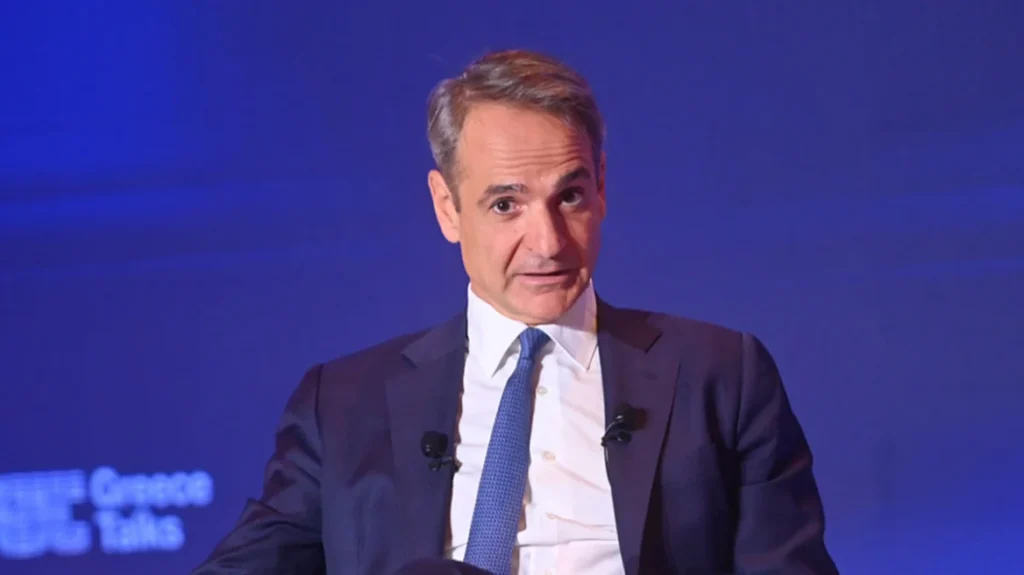
Against this backdrop, Mr Mitsotakis was politically clear a week ago at the Greece Talks conference, organised on Tuesday by protothema.gr and travel.gr: the elections will not interfere with Greeks’ plans for Easter holidays.
After all, as THEMA has previously reported, the dates being seriously discussed within the government’s inner circle for holding the elections are either mid-May or mid-June.
An election in May would provide flexibility regarding a possible second election, without affecting Greece’s assumption of the EU Council Presidency on 1 July.
An election in June would reinforce the impression that the elections are a one-off event and that there will be no second round, thereby favouring the presentation of even more forceful electoral dilemmas.
The most likely dates being discussed are 16 May or 13 June.
The “key” to the electoral strategy, however, lies in the qualitative data and focus groups. According to information obtained by THEMA, fresh qualitative findings, building on the quantitative data, recently reached the Maximos Mansion. These qualitative findings highlight the government’s strengths and weaknesses, while also identifying New Democracy’s potential pools of voters, enabling it to achieve a percentage higher than the one it currently appears to be receiving in the polls.
Starting with the latter, the analysis points out that New Democracy currently has two main pools of potential voters: approximately 5% of the electorate who voted for it in 2023 but are now among the undecided, as well as approximately 25–30% of PASOK voters.
As regards New Democracy voters from 2023, the analysis notes that they are dissatisfied with a series of government choices and actions, but have not “divorced” themselves from the governing party and continue to listen to Kyriakos Mitsotakis.
As for voters with PASOK backgrounds, these are citizens who place themselves in the political centre, have a positive personal opinion of Mr Mitsotakis, consider him capable of serving as prime minister and view positively the possibility of a coalition government between New Democracy and PASOK, along the lines of the 2012–2015 period.
As for the government’s positive points, these include its digital policy, its efforts on infrastructure, as well as its strategy on defence and foreign policy, despite the flanking attacks from Samaras and other political forces.
The negatives attributed to the government include high prices and the perception of corruption (this observation was made before the Tsavdaridis affair, which obviously did not help).
The broader observation, however, is that Mr Mitsotakis continues to retain his “appeal” among key voter groups, particularly when the discussion concerns the present and the future rather than the past.
“People are not in love with Mitsotakis; they want him to get the job done and recognise that he is credible in what he says,” a source familiar with the research findings told THEMA.
Carrot and stick with PASOK
From this perspective, the strategy pursued by Mr Mitsotakis and New Democracy towards PASOK is of particular interest, as it can be summed up in the doctrine of “carrot and stick”, with an eye on those centrist voters of Harilaou Trikoupi who may be receptive to Mr Mitsotakis.
On the one hand, during his discussion with Antonis Sroiter at Greece Talks, the Prime Minister described PASOK as the only potential coalition partner, rejecting scenarios involving cooperation with parties to the right of New Democracy, which are being discussed extensively in Kolonaki cafés and various salons (primarily in relation to Kyriakos Velopoulos’s Greek Solution party).
On the other hand, whenever an opportunity arises, New Democracy “goes after” PASOK. The latest incident was the attack launched last Friday, prompted by the fact that, at the Conference of Presidents of Parliament, Nikitas Kaklamanis proposed Professor Alkis Dervitsiotis for the position of president of the Hellenic Data Protection Authority. PASOK had previously proposed him for the position of Ombudsman; nevertheless, PASOK, through its representative Panagiotis Doudonis, abstained.
“We leave this contradiction to the judgement of citizens and, above all, PASOK supporters, who see their party increasingly turning into a protest movement,” government spokesperson Pavlos Marinakis commented pointedly afterwards.
Mr Marinakis’s remark was not accidental: if PASOK does not want to cooperate with New Democracy in any way, New Democracy will attempt to win over those of its voters who may be receptive to it.
From this perspective, the continuous flanking attacks over the party’s stance on a range of issues should be viewed in context: from the vote on regulations governing minors’ access to social media to the fierce clash between Pierrakakis and Androulakis in Parliament, when an opportunity arose to debate the regulations concerning loan servicers and the measures announced at the Thessaloniki International Fair.
The Venizelos factor
In this environment, the renewed political activity of former PASOK president Evangelos Venizelos has not gone unnoticed.
Mr Venizelos has strongly criticised the government, but has never “cut off” his personal channels of communication with Kyriakos Mitsotakis. It was recently revealed that the two had dined together in the recent past, in the presence of Foreign Minister Giorgos Gerapetritis.
“I want to maintain my ability to engage in dialogue with everyone,” Mr Venizelos stressed when asked about the matter on ERTNEWS.
In this context, a few days ago he visited Kostas Tasoulas at the Presidential Palace, where the two spent more than an hour and a half together.
The meeting was interesting in itself, since Tasoulas and Venizelos had been the final two names on Mitsotakis’s shortlist when he was considering candidates for the Presidency of the Republic.
According to information obtained by THEMA, Mr Venizelos appears concerned about the absence of any form of political consensus within the political system and believes this is an issue that will come back to haunt us.
He has no intention of standing for election (there have repeatedly been scenarios suggesting that he could be included on PASOK’s State ballot), and it is clear that he envisages for himself a role extending beyond party-political balances, one that could potentially prove more substantive in the event of an inability to reach political agreement after the elections.
Ask me anything
Explore related questions




