





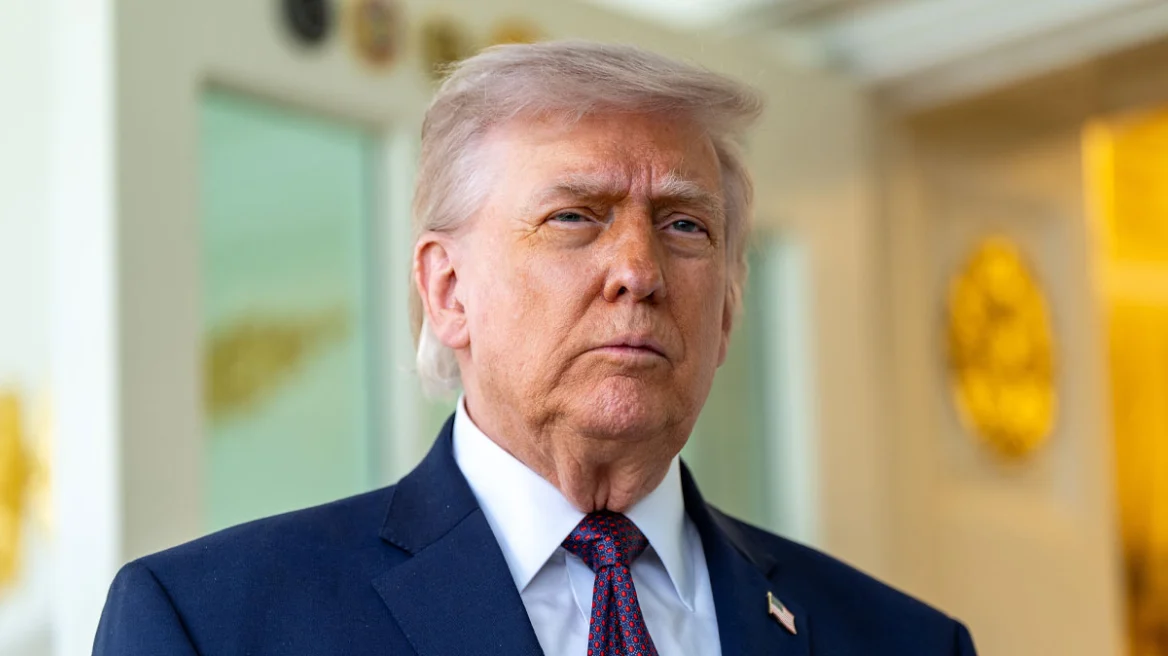
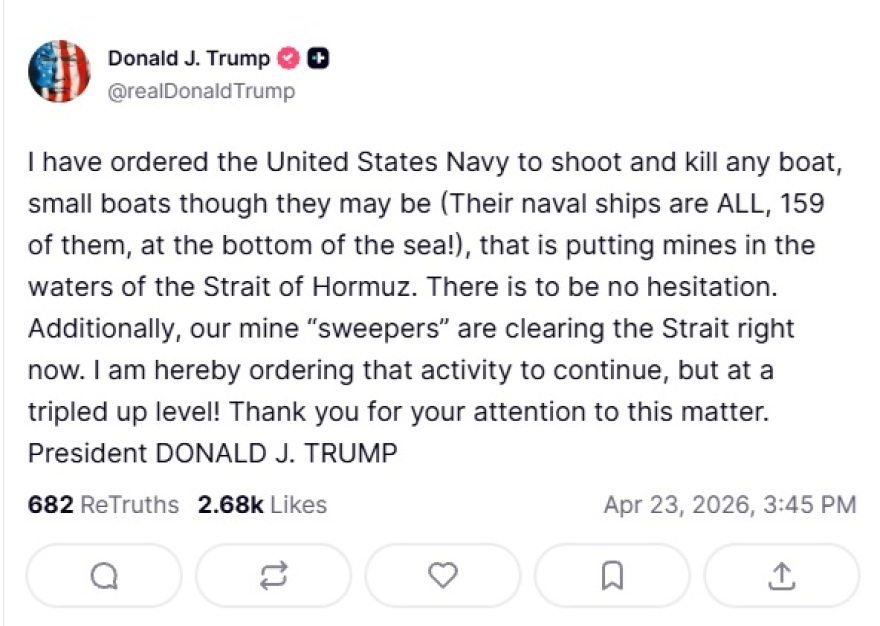
In a new post on Truth Social, Donald Trump stated that he has ordered the U.S. Navy to strike any vessel (presumably Iranian) that lays mines in the waters of the Strait of Hormuz.
Without explicitly naming Iran, the U.S. president repeated that the United States has sunk 159 of Tehran’s warships and added that he has instructed American minesweepers to intensify their efforts to clear the Strait.
Tehran collects first toll revenues from the Strait of Hormuz
Earlier, Iran announced that it had received its first revenues from imposing tolls on the strategically vital Strait of Hormuz, as the U.S. naval blockade is disrupting—but not halting—the country’s oil flows.
According to Iranian parliament vice president Hamidreza Haji Babaei, “the first toll revenues from the Strait of Hormuz have been deposited into the Central Bank’s account,” as reported by the Tasnim agency. No further details were provided about the amount or how the measure is being implemented.
Meanwhile, Alireza Salimi, a member of the Iranian Parliament’s presidium, said the toll levels are determined by the type and volume of cargo, as well as the level of risk involved in its transport.
At the same time, the U.S. naval blockade imposed on Iranian ports has caused serious disruptions to the country’s oil activity, though it has not completely stopped it. According to maritime analytics firm Kpler, loading infrastructure remains operational and exports continue, mainly toward China.
U.S. Central Command (CENTCOM) announced that around 30 ships were forced to return to port or change course as part of the blockade, most of them tankers. Meanwhile, U.S. forces seized an Iranian-flagged vessel in the Gulf of Oman and boarded another sanctioned ship in the Indian Ocean.
Nearly 985,000 barrels of Iranian oil exported daily to China
However, Kpler data shows that tankers remain in Iran’s loading zones, while crude oil flows to China reached about 985,000 barrels per day in the first half of April and have not been interrupted since.
Particularly important is the export terminal at Jask, which allows bypassing the Strait of Hormuz. There, stockpiles have reached a record high of 5.8 million barrels, while tankers can head toward the Gulf of Oman without passing through the Strait.
“The blockade has disrupted oil activity, but it has not destroyed it,” Kpler notes, summarizing the current situation in the region.
Ask me anything
Explore related questions




