





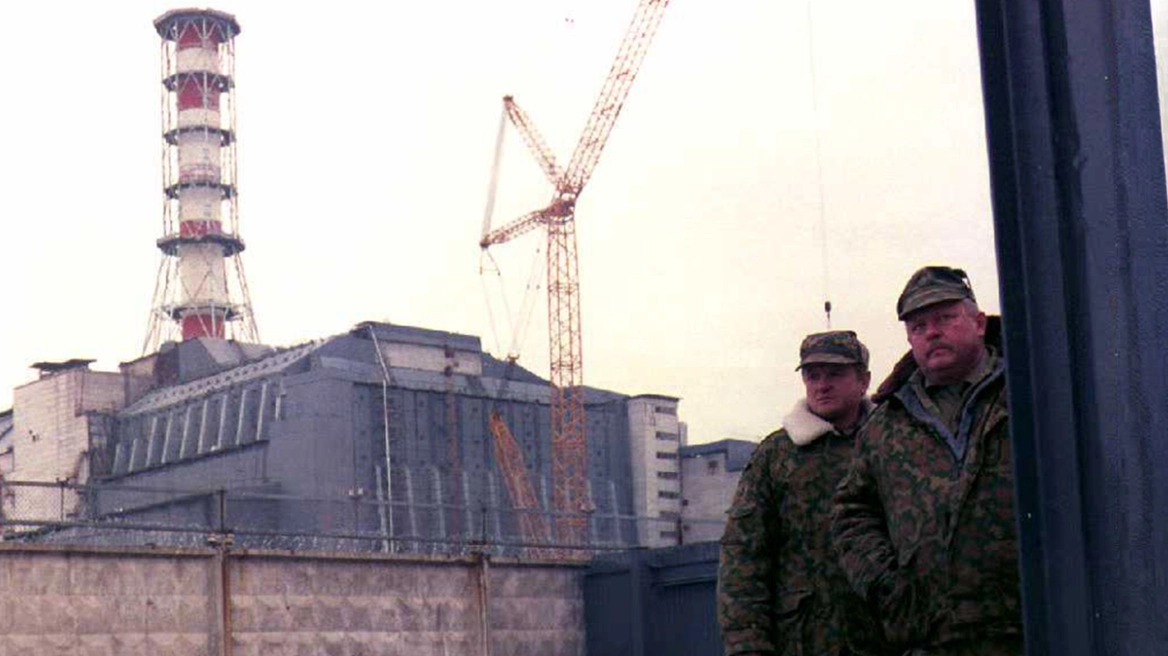
“Everyone of us received a dose from Chernobyl, the radioactive cloud covered Greece for days.” This is one of the most common phrases used by older generations when referring to the terrifying nuclear accident of 1986.
A pivotal event that led to a large number of deaths—only in the first months around 31 workers and firefighters, with thousands more estimated in the long term—caused the displacement of hundreds of thousands of people due to evacuations and triggered a wave of panic across Europe, which, according to some, was even heavier than the radioactive cloud itself.
On May 5, 1986, the cloud reached Greece as well, causing great upheaval and extreme reactions. Publications and statements by state authorities sparked widespread concern about food safety, especially dairy products, as well as fruits and vegetables. At the same time, according to unofficial data, from May 1986 to May the following year, between 1,500 and 2,500 abortions were recorded in Greece due to fears of birth defects caused by radiation.
What were the real causes of the Chernobyl disaster? What was the true impact and consequences of the radioactive cloud on Greece and its population? Could such a “nightmare” return with another nuclear accident of similar or greater scale in the near future?
“At first we didn’t pay attention, but the measurements proved us wrong”
A few dozen meters from the busy Katechaki Avenue, in the well-known area between Papagou and Zografou, and specifically in Building K, lies the Nuclear Technology Laboratory of the National Technical University of Athens.
In this building, 1,500 samples collected from Greek soil between 1986 and 1987, and another 1,000 collected between 1987 and 2007, are still preserved today as silent local witnesses of Chernobyl. These confirmed that the radioactive cloud did reach Greece.
“As citizens at the time, we initially didn’t pay much attention. I, as a student familiar with the subject, and many scientists thought nothing measurable would reach Greece. But we were proven wrong—inside the lab itself, where we normally measured a baseline of 3, suddenly we were seeing 33,” says Nikolaos Petropoulos, speaking to Orange Press Agency.
The first measurements showed something more serious was happening. “They signaled that something beyond our expectations had occurred and that the byproducts of the accident had indeed reached Greece. However, we knew very well from the beginning that although residues arrived, they were not in dangerous quantities. There are many urban myths claiming they caused cancer and other effects. That is not true,” he adds.
What really happened at Chernobyl
The Chernobyl accident has been extensively studied and widely portrayed in media and fiction. According to Petropoulos, it was fundamentally a human error.
“The Chernobyl accident is definitely a human mistake. It doesn’t mean the reactor technology was perfect, but it could have operated safely if rules were followed. Many similar reactors still operate today without issues.”
He emphasizes that multiple failures accumulated: “When many factors coincide and warning signs are ignored, the system eventually ‘punishes’ those actions.”
Political context and panic in Greece
The situation in Greece was worsened by political polarization and misinformation at the time, ranging from denial to exaggerated panic. Scientists were unprepared for the flood of food samples—milk, cheese, and produce—that citizens brought in for testing.
Mapping radiation in Greece
According to official data, about 1% of Greece—approximately 1,200 square kilometers—was affected by Chernobyl fallout. However, the reality was less dramatic than the figure suggests.
Karditsa and Naousa showed higher levels, as did Athens, though still low overall. “Higher does not mean dangerous,” Petropoulos clarifies. “Even today, traces can still be measured.”
Natural radiation vs Chernobyl exposure
Petropoulos compares exposure levels: natural background radiation over 50 years equals about 200 units, while someone living in the most affected Greek areas would have received about 10 units from Chernobyl over the same period—essentially negligible in comparison.
“The perception of danger was far greater than the actual risk,” he notes.
Misconceptions and real consequences
He argues that panic led to unnecessary abortions and long-term misconceptions, while other environmental risks—such as chemical pesticides—remain more significant public health concerns today.
Could it happen again?
“Today, no,” he says firmly. Modern nuclear reactors are significantly safer. Unlike Chernobyl’s graphite-based design, today’s systems use water-based safety mechanisms that prevent large-scale radioactive dispersal.
Ask me anything
Explore related questions




