





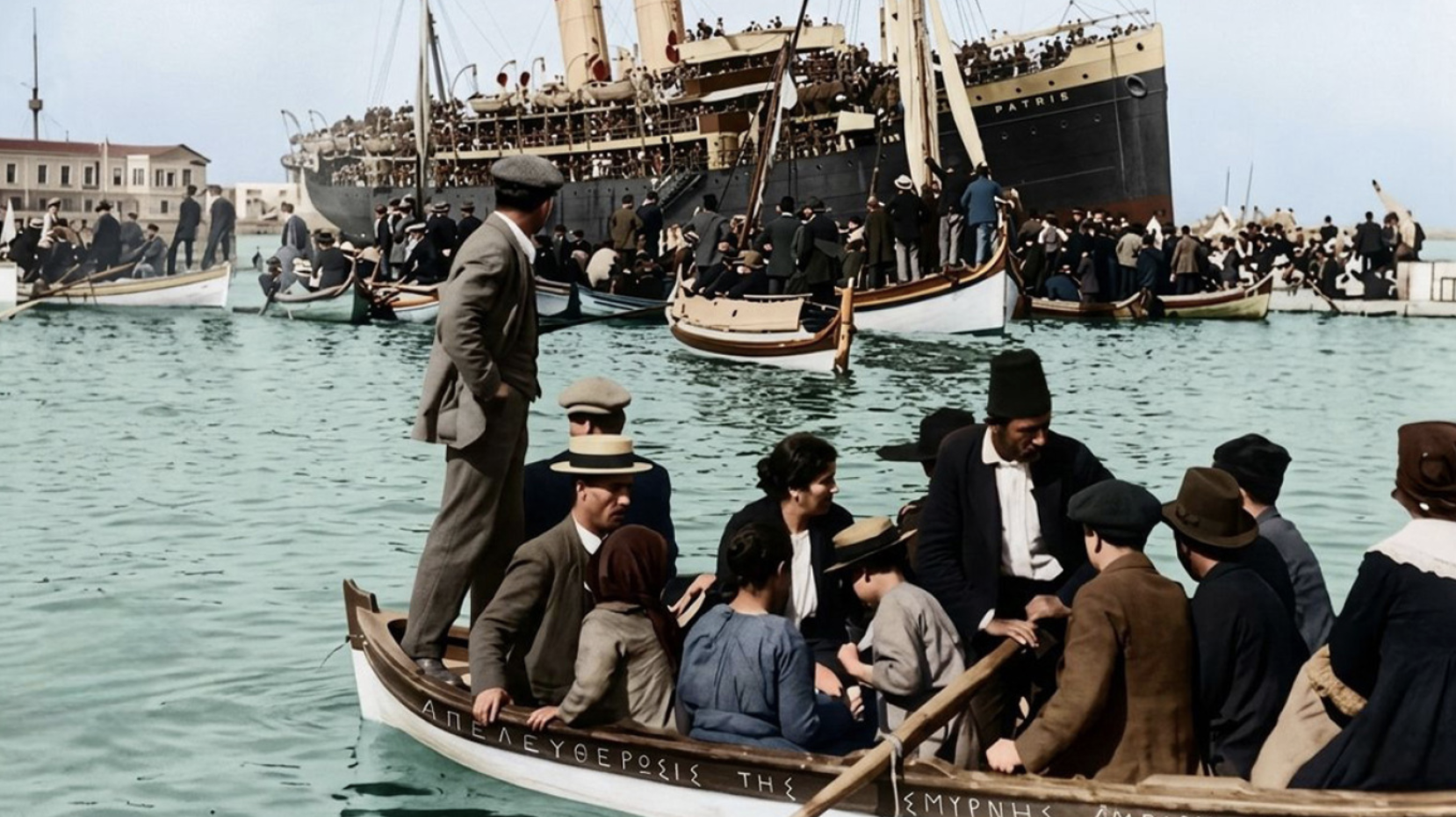
In April 1919, 107 years ago, Greece received the order from the Allies to land in Asia Minor. The first Greek troops landed in Smyrna on May 2/15, 1919; however, they came under fire from the Government House. There were hundreds of casualties from the clashes that followed. These events overshadowed the celebratory atmosphere created by the thousands of Greeks of Smyrna and proved a bad omen for what was to follow…
The diplomatic moves of Eleftherios Venizelos
The end of World War I caused enthusiasm among the Entente states. Venizelos felt vindicated for bringing Greece into the war on the side of the victors. However, he had pushed matters to extremes with the “National Schism.” Greece’s delayed entry into WWI, despite its significant contribution, placed it at a disadvantage afterward. Some countries, chiefly Italy, considered the Greek contribution negligible. This created problems for Venizelos, who in October and November 1918 stayed in London for a long period seeking to secure British support.
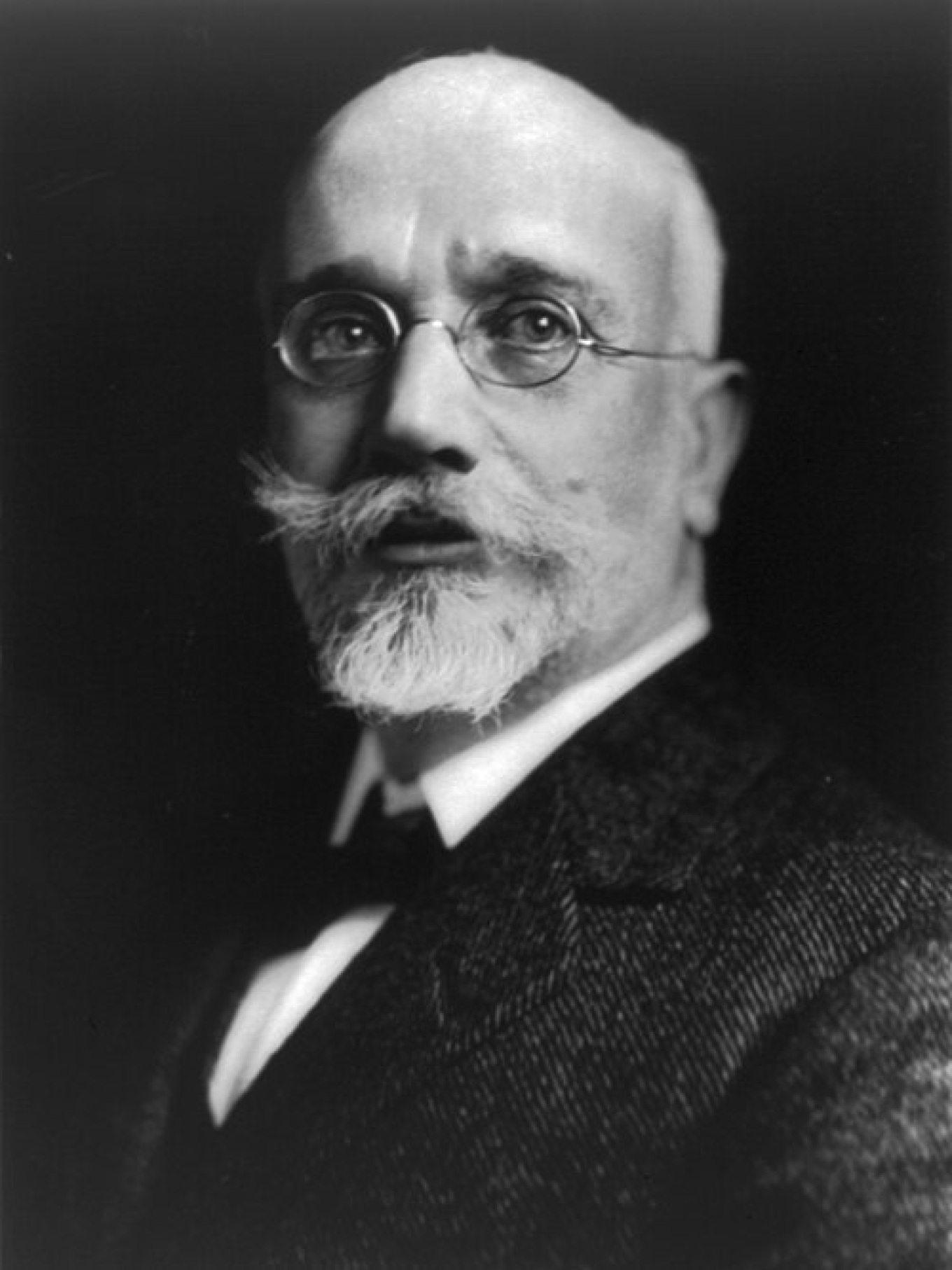
He had already presented Greek demands to his British counterpart David Lloyd George. On November 2/11, 1918, he sent him a letter explicitly raising the issue of Greek expansion into Asia Minor. He then went to Paris to prepare for the “Peace Conference.” There, he received even low-ranking diplomats at his hotel, making excellent impressions, including on the British diplomat Nicolson. On December 17/30, 1918, he submitted a memorandum to the Conference outlining Greek claims, titled:
“The complete victory of the Allied and associated states provides the opportunity to define the political borders of European states based on, or at least approximating, the boundaries of their national territories. In this way, the necessary foundation of the League of Nations will be created.”
Greek claims
The Greek government requested the cession of Constantinople—something Venizelos had deeply desired since at least 1917. According to Christos Zalokostas, friend and biographer of King Alexander, who had succeeded his deposed father Constantine, Venizelos told the young king in September 1917:
“If they would leave me alone, I am capable of taking the City. When I promise you the City, consider it not as words of the moment but as a betrothal between us. I will take you to Constantinople.”
Alexander, whose initial relations with Venizelos were cold (he even called him “Satan”), later said:
“This man dreams. And yet he has such power of imagination that you believed what he dreamed. Even more, he compels others to believe it. When he left the palace, I crossed myself and said: ‘May he prove right.’”
If this proved impossible, Venizelos proposed creating an independent state including the Bosporus, the Dardanelles, and the Sea of Marmara under the League of Nations. There were also claims concerning the Dodecanese (including Kastellorizo), Northern Epirus, Western Thrace, and western Asia Minor. Venizelos did not claim all of Asia Minor but a zone stretching from Makri to the region of Panormos (in the Sea of Marmara). Regarding the Pontic issue, he proposed incorporating Pontus into Armenia, forming a unified state.
Overall, his stance on Pontus was inconsistent. As Georgios Roussos notes, this proposal triggered reactions from Pontic Greeks, who attempted to intervene through Chrysanthos, Metropolitan of Trebizond. Pontic Greeks had long demanded the creation of a second Greek state along the southern Black Sea coast as their only means of survival.
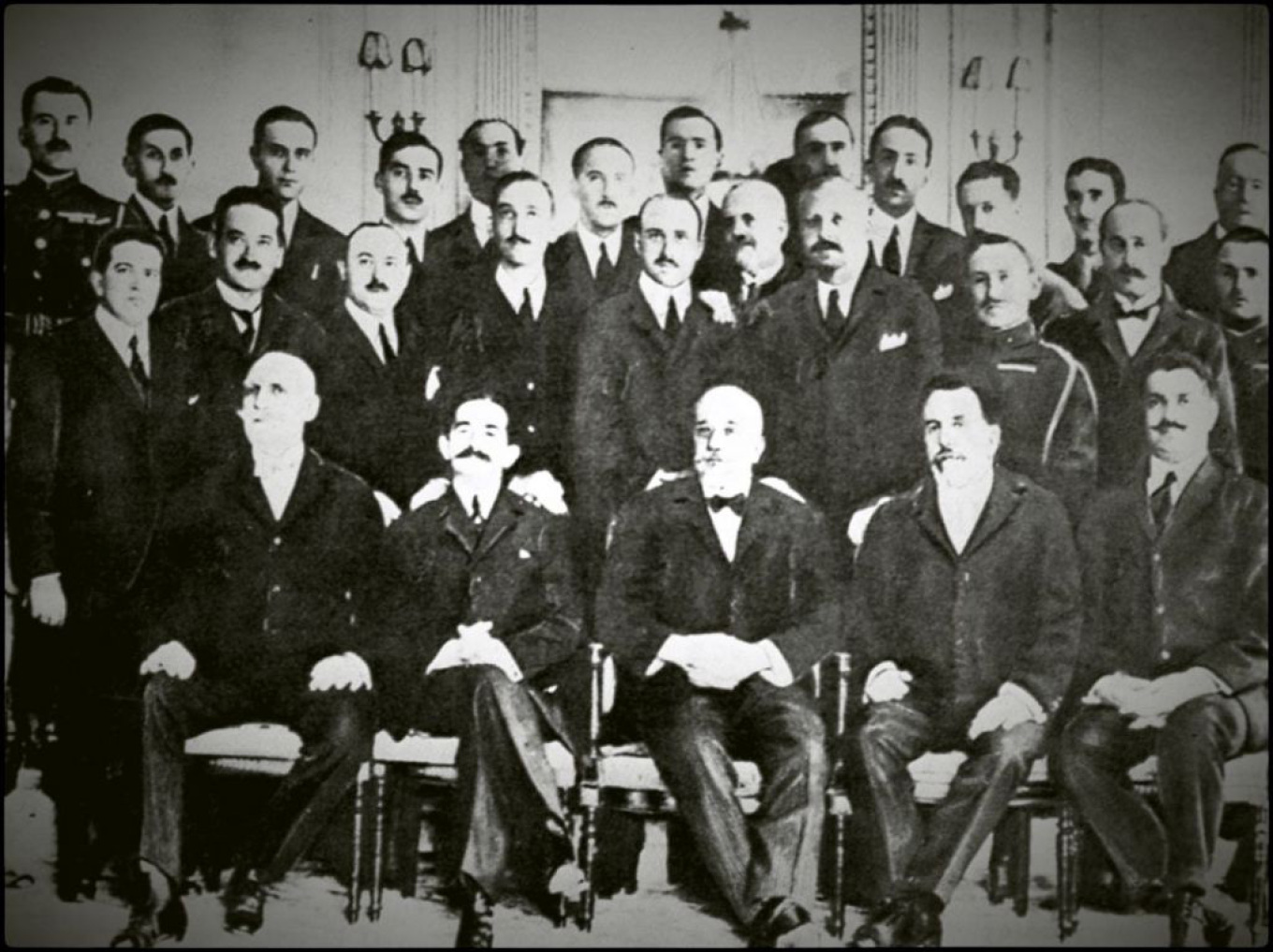
In October 1917, K. Konstantinidis, a leader of the Pontic movement, informed Venizelos, who appeared hesitant. Ultimately, the Pontic-Armenian Federation solution prevailed, and in January 1920 an agreement was signed between Metropolitan Chrysanthos and Armenian President Khatisian. Military cooperation between Greece and Armenia was also agreed upon to protect Pontus from Turkish forces. However, the refusal of the British to allow implementation of the military aspect contributed to the Armenian defeat at Erzurum, their capitulation to Kemal (December 1920), and the abandonment of the Pontic population.
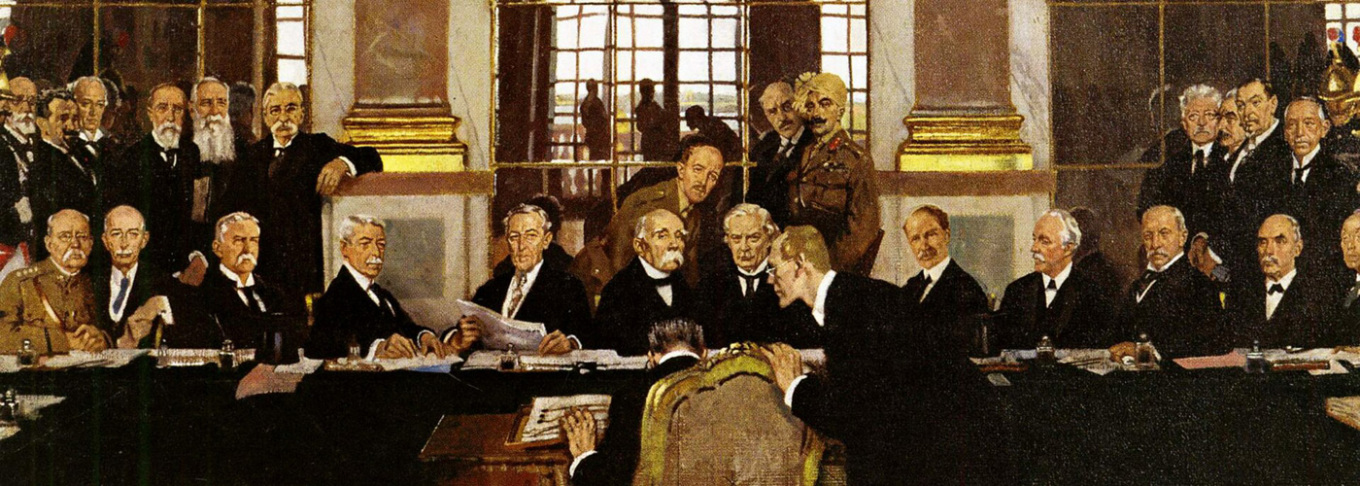
The Conference began officially on January 5/18, 1919, and concluded on May 12 (new calendar). Its operations were guided by the “Supreme Council” or “Council of Ten” (U.S. President and Secretary of State, Prime Ministers and Foreign Ministers of Britain, France, and Italy, and two Japanese representatives). On March 24, the “Council of Four” (U.S. President and the prime ministers of Britain, France, and Italy) became dominant.
Thirty-two countries participated. After its conclusion, negotiations continued until August 1920 to draft individual treaties. Venizelos focused Greek claims on Asia Minor, avoiding mention of Northern Epirus and Cyprus in private discussions. He told Nicolson that Greece would find its true future only once it crossed the Aegean.
Many have written that the liberation of Asia Minor was his childhood dream. As a student, he had hung a map above his desk showing Constantinople, Ionia, the Dodecanese, and Northern Macedonia within Greece’s borders. Others, like Georgios Ventiris, argue that his Asia Minor vision matured gradually, especially due to Italian expansionist policy.
The Italian factor and Allied decisions
The Italians believed the Asia Minor issue had been settled by the Treaty of London (1915) and the Agreement of Saint-Jean-de-Maurienne (1917), both favorable to them. They were unaware that the British and French had already divided the Ottoman Empire in 1916 via the Sykes–Picot Agreement, with Russia’s knowledge. However, the Bolshevik rise and Italian involvement led to changes.
Venizelos’ performance at the Conference was outstanding. He even addressed Lloyd George in Welsh, praised American teachers’ work in Northern Epirus to appeal to President Wilson, and moved audiences with photographs of Dodecanese sponge divers.
Meanwhile, Italy acted aggressively, sending 17,000 troops to Antalya in 1917 and expanding control in the southeastern Aegean. Italian misconduct angered especially the Americans. A major development was the revelation of a Turkish plan to exterminate Greeks in Aydın, allegedly documented in papers implicating the governor Nureddin Pasha and even Italian involvement. Though authenticity is debated, these reports influenced Allied reactions.
In April 1919, after the Italians temporarily withdrew from Paris, the Allies moved forward. On April 22, Lloyd George proposed occupation of key Ottoman areas by Allied troops, including Greek forces to protect Greeks in Smyrna.
Despite objections, it was decided that the Greek mission would be temporary, covering about 17,000 square kilometers around Smyrna. The Allies implied support for Greek claims in the future partition of the Ottoman Empire.
The secret mission and landing in Smyrna
Between April 24–29, 1919, troops of the 1st Division gathered at the port of Eleftheres in Kavala. They sailed on April 30 aboard 18 transports escorted by 4 destroyers. Only the leadership knew the destination—Smyrna; the soldiers believed they were heading to southern Russia.
On May 1/14, British Admiral Calthorpe notified the Ottoman governor of the Allied decision to occupy Smyrna, requesting Turkish troops remain in barracks. That night, however, crowds gathered, suggesting preparations for resistance.
On May 2/15, 1919, Greek forces arrived off Smyrna. At 7:30 a.m., the landing began. The 4th Infantry Regiment advanced toward the Greek-Turkish quarters, while the Evzones moved toward the Hunters’ Club pier. Greeks welcomed them enthusiastically with flowers and wreaths.
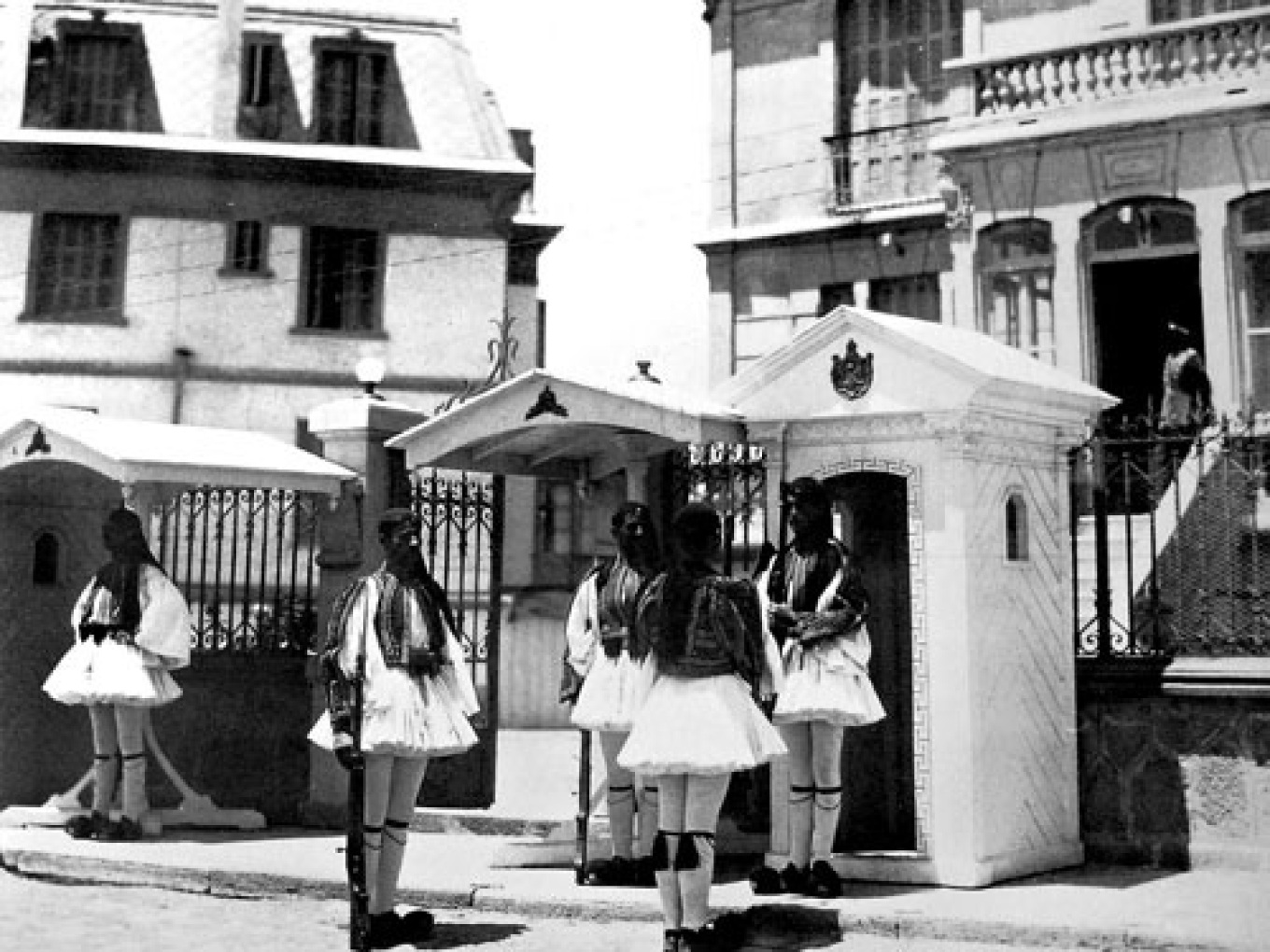
Suddenly, the vanguard came under heavy fire from the Government House. Greek troops dispersed and responded, entering the building and neutralizing the attackers. Two Evzones were killed and eight wounded. Civilian casualties were unclear. Violence continued throughout the day: about 100 Greeks and 300–400 Turks were killed.
These events tarnished what had been a moment of celebration and foreshadowed the tragic developments that followed…
Sources:
HISTORY OF THE GREEK NATION, Vol. XV, Ekdotiki Athinon
Dr. Ioannis S. Papafloratos, “History of the Greek Army (1833–1949)”, Vol. II
Georgios Roussos, “Modern History of the Greek Nation, 1926–1974”, Hellenic Educational Society
Ask me anything
Explore related questions




